Learning to fly in a taildragger: historical
Moderators: Sulako, Right Seat Captain, lilfssister, North Shore, sky's the limit, sepia
Learning to fly in a taildragger: historical
I offer this interesting extract from the maintenance notes of a 1939 Luscombe. (Did you know you can have the FAA's entire offline archive about an aircraft sent to you on CD-ROM for $10? Fascinating!)
It's evidence (if it were needed) that flight instruction "way back" wasn't guaranteed of a high standard, and that learning ab-initio in a taildragger can, sometimes, bite. It's just one data point, but it is a datapoint.
DId you hear the one about the jurisprudence fetishist? He got off on a technicality.
Re: Learning to fly in a taildragger: historical
Just one data point - acknowledged.and that learning ab-initio in a taildragger can, sometimes, bite.
The student groundlooped a plane, which he would not have done had it been a tricycle, or the instruction he had been given stuck more. However, All of the other students who did not groundloop the taildragger trainer were very likely superior pilots compared to the standard commonly set today.
Some skills are no longer, or rarely taught - probably for lack of need. Hand propping comes to mind as an example. all modern certified GA aircraft have starter motors - no need to hand prop to get it running. So pilots can now go a whole career without ever hand propping. One might say those pilots are lesser trained, no, they're differently trained The pilot who had to learn to hand prop, did not have to learn as much about electrical systems.
I have occasion to meet many turbine DC-3 pilots. I find it interesting that for many of them, they state that the DC-3 was their first taildragger. They have usually come from King Airs or Twin Otters. Had they not chosen DC-3, they likely would have gone their whole career without flying taildragger. They fly the DC-3 like an airliner - excellent, as it should be, that's its role with this operator. I'm not certain that many of these DC-3 taildragger pilots would be at ease flying a light taildragger. They're fine pilots, and they are taildragger pilots, but like any of us, they are not pilots of all types of planes.
Training appropriate to the type is pretty important for new pilots.
- Cat Driver
- Top Poster

- Posts: 18921
- Joined: Sun Feb 15, 2004 8:31 pm
Re: Learning to fly in a taildragger: historical
The question of what quality of instruction did pilots receive back in the era before there were nose wheel trainers comes up quite frequently and there are many who claim the quality of flight training was inferior because the accident rate was so high in those years.
Well from my own experience that opinion does not hold true.
I was trained at Central Airways when the Wong brothers owned it and I flew with and for Central Airways from mid 1953 until around 1960.
We taught on tail wheel trainers for the bacic PPL during that time on paved runways with a control tower.
I do not recall any accidents during the training or rentals at Central during that time frame but there were thousands of hours flown.
And in that era the PPL minimum time was 30 hours which many managed to complete their training in.
Maybe how good the training was depended on who gave the training?
Well from my own experience that opinion does not hold true.
I was trained at Central Airways when the Wong brothers owned it and I flew with and for Central Airways from mid 1953 until around 1960.
We taught on tail wheel trainers for the bacic PPL during that time on paved runways with a control tower.
I do not recall any accidents during the training or rentals at Central during that time frame but there were thousands of hours flown.
And in that era the PPL minimum time was 30 hours which many managed to complete their training in.
Maybe how good the training was depended on who gave the training?
The hardest thing about flying is knowing when to say no
After over a half a century of flying no one ever died because of my decision not to fly.
- Beefitarian
- Top Poster

- Posts: 6610
- Joined: Wed Dec 01, 2010 10:53 am
- Location: A couple of meters away from others.
Re: Learning to fly in a taildragger: historical
I think it is a bit unfair to say Mr Pierson's instruction was lacking based on Mr Bowden's ground loop. What happened with Mr Pierson's other students? Did Mr. Bowden go on to fly accident free after that? I'd like more information and will reserve judgement until we have more to go on.
- WastedFlyer
- Rank 2

- Posts: 56
- Joined: Thu Mar 23, 2017 10:45 pm
Re: Learning to fly in a taildragger: historical
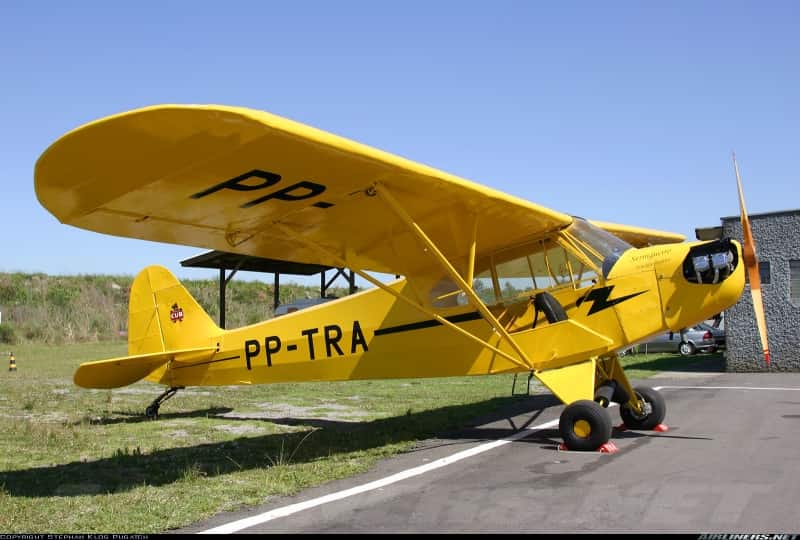
I did my PPL in small-town Brazil in 1982, in a 1940s Piper J3 (and its Brazilian-made cousin, the Neiva Paulistinha), which were pretty much the standard Brazilian trainer aircraft in those days. I never had any "close-call" and never heard of any accident or incident while I was there. The PPL requirement then and there were 40 hours, all uneventful. Later on, I did 60 hours in a C152, which I loathed (never had any incident with it, but the handling bothered me somehow, it seemed to be hyper-sensitive to any minor touch). To this day I'm mystified why is that taildraggers are considered "hard to fly", apparently.
The note on that accident report, "Sharp application of the right rudder could have prevented the groundloop", called to mind my first takeoff, when I was trying to be "gentle" with the rudder and my instructor unceremoniously told me not be be a sissy and "work the rudders" (or something to that effect)... Indeed, I also recall my first take off on the C152 and my instructor being alarmed at my "overly-aggressive" rudder adjustments...
We did "hand-propping" back then by the way (with the J3 and the Paulistinhas), but I wasn't good at it... Having strong arms was an important factor for proper hand propping, and I struggled to give those propellers half a turn...
This is the one and only PP-TRA, loathed by every student pilot for being slow, old and under-powered... It's now the most prized possession of that flying club, a "vintage" classic that only a few people are given the privilege of flying....

The note on that accident report, "Sharp application of the right rudder could have prevented the groundloop", called to mind my first takeoff, when I was trying to be "gentle" with the rudder and my instructor unceremoniously told me not be be a sissy and "work the rudders" (or something to that effect)... Indeed, I also recall my first take off on the C152 and my instructor being alarmed at my "overly-aggressive" rudder adjustments...
We did "hand-propping" back then by the way (with the J3 and the Paulistinhas), but I wasn't good at it... Having strong arms was an important factor for proper hand propping, and I struggled to give those propellers half a turn...
This is the one and only PP-TRA, loathed by every student pilot for being slow, old and under-powered... It's now the most prized possession of that flying club, a "vintage" classic that only a few people are given the privilege of flying....

Re: Learning to fly in a taildragger: historical
I would think that you would remember the fatal accident that happened while you were flying there.Cat Driver wrote:I was trained at Central Airways when the Wong brothers owned it and I flew with and for Central Airways from mid 1953 until around 1960.
We taught on tail wheel trainers for the bacic PPL during that time on paved runways with a control tower.
I do not recall any accidents during the training or rentals at Central during that time frame but there were thousands of hours flown.
- Cat Driver
- Top Poster

- Posts: 18921
- Joined: Sun Feb 15, 2004 8:31 pm
Re: Learning to fly in a taildragger: historical
Refresh my memory.I would think that you would remember the fatal accident that happened while you were flying there.
I'm getting old.
Was it an instructor doing aerobatics and went into the roof of a house?
The hardest thing about flying is knowing when to say no
After over a half a century of flying no one ever died because of my decision not to fly.
Re: Learning to fly in a taildragger: historical
Exactly. While you were working there as it was 1955. Fairly big news at the time. And you seem to remember it so you are not that old yet.
- Cat Driver
- Top Poster

- Posts: 18921
- Joined: Sun Feb 15, 2004 8:31 pm
Re: Learning to fly in a taildragger: historical
It is one of those kinds of accidents one does not file in the memory banks under " Training accident "
I was thinking of accidents that happened under normal training and that was not normal.
When comparing the number of accidents fifty years ago and the number now it is only reasonable to expect the rates to be lower now if for no other reason the aircraft are fare more reliable today.
I was thinking of accidents that happened under normal training and that was not normal.
When comparing the number of accidents fifty years ago and the number now it is only reasonable to expect the rates to be lower now if for no other reason the aircraft are fare more reliable today.
The hardest thing about flying is knowing when to say no
After over a half a century of flying no one ever died because of my decision not to fly.
Re: Learning to fly in a taildragger: historical
This is where I heard about it. An article about the Wong brothers.
https://www.thestar.com/business/2015/0 ... ronto.html
- Cat Driver
- Top Poster

- Posts: 18921
- Joined: Sun Feb 15, 2004 8:31 pm
Re: Learning to fly in a taildragger: historical
Thanks, great read.
Bob and Tom were my mentors and treated me like family.
Thanks to them my first real break in flying was being accepted to train as an Ag. pilot in St Thomas, there were 25 of us in the class and only two of were hired to fly spraying tobacco in a Cub.
The training was free, boy those were the days.
Anyhow their mentoring prepared me for my career and I never forgot their advise...when in doubt, don't.
I can remember Bob teaching me spin recovery in the Cessna 140 under two stage amber and using only limited panel, just like it was an hour ago.
Thanks again for the read.
. E.
Bob and Tom were my mentors and treated me like family.
Thanks to them my first real break in flying was being accepted to train as an Ag. pilot in St Thomas, there were 25 of us in the class and only two of were hired to fly spraying tobacco in a Cub.
The training was free, boy those were the days.
Anyhow their mentoring prepared me for my career and I never forgot their advise...when in doubt, don't.
I can remember Bob teaching me spin recovery in the Cessna 140 under two stage amber and using only limited panel, just like it was an hour ago.
Thanks again for the read.
. E.
The hardest thing about flying is knowing when to say no
After over a half a century of flying no one ever died because of my decision not to fly.
-
Old Dog Flying
- Rank (9)

- Posts: 1259
- Joined: Sun Jul 27, 2008 5:18 pm
Re: Learning to fly in a taildragger: historical
I learned the art of flying in 1952 in the deadly Fleet Canuck and the only ground loop was in a Tiger Moth on a calm day when I opened the rear canopy on the roll out. No damage but embarrassing to say the least...but I learned a lesson!
Was the training better on an old taildragger? No but it required your fullest attention. Accident wise, in the 3 years working as an AME apprentice for the club, we had one accident during training and that was a stall-spin turning final during a slipping turn...non-fatal but it was ugly.
Like the old Pussy Cat above I instructed on many types of taildraggers over my 60+ years of flying and I prefer one to the other type with the training wheel under the nose.
Barney
Was the training better on an old taildragger? No but it required your fullest attention. Accident wise, in the 3 years working as an AME apprentice for the club, we had one accident during training and that was a stall-spin turning final during a slipping turn...non-fatal but it was ugly.
Like the old Pussy Cat above I instructed on many types of taildraggers over my 60+ years of flying and I prefer one to the other type with the training wheel under the nose.
Barney
- Cat Driver
- Top Poster

- Posts: 18921
- Joined: Sun Feb 15, 2004 8:31 pm
Re: Learning to fly in a taildragger: historical
How's it hangin Barney?
The Fleet Canuck in my opinion is the best all around training airplane I ever flew.
The hardest thing about flying is knowing when to say no
After over a half a century of flying no one ever died because of my decision not to fly.
- WastedFlyer
- Rank 2

- Posts: 56
- Joined: Thu Mar 23, 2017 10:45 pm
Re: Learning to fly in a taildragger: historical
Why exactly...? I'm not disagreeing, I learned to fly in a J3 and have no complaints at all, but, specifically / scientifically, why are taildraggers better to learn to fly? Just curious...Old Dog Flying wrote: Like the old Pussy Cat above I instructed on many types of taildraggers over my 60+ years of flying and I prefer one to the other type with the training wheel under the nose.
Barney
-
Old Dog Flying
- Rank (9)

- Posts: 1259
- Joined: Sun Jul 27, 2008 5:18 pm
Re: Learning to fly in a taildragger: historical
Simply put...you have to use your hands, feet and head in the proper sequence to accomplish a smooth flight particularly on landing and take-off. Mess one thing up and it gets exciting. I let a friend who has thousands of hours in old tail-draggers, fly my Grumman AA1A. His theory on rudder use was kick the hell out of it during t/o and ldg and he tried that with my wee beast..needless to say we were all over the bloody runway..
The scientific factors are all laid out in "From the Ground Up"
Barney
The scientific factors are all laid out in "From the Ground Up"
Barney
- WastedFlyer
- Rank 2

- Posts: 56
- Joined: Thu Mar 23, 2017 10:45 pm
Re: Learning to fly in a taildragger: historical
I know exactly what you mean... Glad to know I wasn't the only one (refer to my note above, about my 1st takeoff in a C152, after doing the PPL in the J3...) The trouble w/ that is that my inexperienced instructor had never flown a taildragger in his life, so we was very confused, and probably thought I was just a really bad pilot... Live and learn...Old Dog Flying wrote:I let a friend who has thousands of hours in old tail-draggers, fly my Grumman AA1A. His theory on rudder use was kick the hell out of it during t/o and ldg and he tried that with my wee beast..needless to say we were all over the bloody runway..
Re: Learning to fly in a taildragger: historical
A pilot who has learned to fly in a simple taildragger will naturally have better coordination of hands and feet, be much more aware of the aircraft position and heading on the runway, and probably have better side slipping skills. Taildraggers simply will not tolerate casual use of the pedals, precision required.
Re: Learning to fly in a taildragger: historical
"kick the hell out of .."
Bizarre .. I can't imagine any aircraft where you should kick the hell out of any of the controls including old tail draggers and I can't imagine that technique being successful. What was he flying that demanded such aggressive rudder use?
-
Old Dog Flying
- Rank (9)

- Posts: 1259
- Joined: Sun Jul 27, 2008 5:18 pm
Re: Learning to fly in a taildragger: historical
It wasn't just rudder but all flight controls that got this type of input. I was only too happy to end that light.
He flew mainly antiqued!
Barney
He flew mainly antiqued!
Barney
Re: Learning to fly in a taildragger: historical
I think Old Dog put it nicely that a tail dragger needs your fullest attention.
Tail draggers are not inherently difficult to fly. They, simply put, keep you honest. Finesse is the heart of tail wheel flying -- this should be taught regardless of configuration.
You can get away with murder in a nose wheel aircraft. Slam the power forward with your feet on the floor for take off, land it cockeye of centre line, land with completely incorrect crosswind technique, put your head down and down and do paperwork while taxiiing...you can get away with sloppy flying in a nose wheel aircraft. You simply can not be sloppy in a tail dragger or it will bite you and you will bend metal.
Regarding instruction back in the day vs today. Maybe it was better, maybe not. But what can certainly be said, is that you can not be complacent in a tail dragger...thus tail wheel instructors must pay more attention to detail and they must teach how to properly fly the aircraft in the cleanest manner from chock to chock. You must be well ahead of the aircraft even more so then a nose wheel aircraft...including ground handling. I have faith that regardless of the position of the third wheel, there are instructors out there (instructor rating or not) that teach flying in the cleanest manner possible and teach to be well ahead of the aircraft.
In my time of teaching tail wheel, I should also note that float pilots tend to make an easier transition to tail draggers vs seasoned nose wheel pilots. Glider pilots are next in line for pilots that make smooth transitions.
Tail draggers are not inherently difficult to fly. They, simply put, keep you honest. Finesse is the heart of tail wheel flying -- this should be taught regardless of configuration.
You can get away with murder in a nose wheel aircraft. Slam the power forward with your feet on the floor for take off, land it cockeye of centre line, land with completely incorrect crosswind technique, put your head down and down and do paperwork while taxiiing...you can get away with sloppy flying in a nose wheel aircraft. You simply can not be sloppy in a tail dragger or it will bite you and you will bend metal.
Regarding instruction back in the day vs today. Maybe it was better, maybe not. But what can certainly be said, is that you can not be complacent in a tail dragger...thus tail wheel instructors must pay more attention to detail and they must teach how to properly fly the aircraft in the cleanest manner from chock to chock. You must be well ahead of the aircraft even more so then a nose wheel aircraft...including ground handling. I have faith that regardless of the position of the third wheel, there are instructors out there (instructor rating or not) that teach flying in the cleanest manner possible and teach to be well ahead of the aircraft.
In my time of teaching tail wheel, I should also note that float pilots tend to make an easier transition to tail draggers vs seasoned nose wheel pilots. Glider pilots are next in line for pilots that make smooth transitions.
--Air to Ground Chemical Transfer Technician turned 4 Bar Switch Flicker and Flap Operator--
Re: Learning to fly in a taildragger: historical
Nobody ever told me there was a mystique to tail wheel aircraft. Keep it straight, proper inputs, etc. It was a Chief. I'd equate it to driving RWD vs FWD,, pretty much the same in normal circumstances, but RWD gets a lot more exciting if you mash the throttle in a hard turn.
Only differences was lifting the tail and that I didn't have to nail an attitude like a nose wheel or float plane to keep from digging in. You could fly it on at any speed provided you nailed the round out and checked forward. The Aussies used to do that in the Caribou, but most nose wheel aircraft will be destroyed from such carelessness.
It was only after a pilot I knew ground looped his Maule and I started going through YouTube that I realized tail draggers were so dangerous.
And anyone who says you don't need rudder to fly a nosewheel aircraft has never done a V1 cut with no autofeather.
Only differences was lifting the tail and that I didn't have to nail an attitude like a nose wheel or float plane to keep from digging in. You could fly it on at any speed provided you nailed the round out and checked forward. The Aussies used to do that in the Caribou, but most nose wheel aircraft will be destroyed from such carelessness.
It was only after a pilot I knew ground looped his Maule and I started going through YouTube that I realized tail draggers were so dangerous.
And anyone who says you don't need rudder to fly a nosewheel aircraft has never done a V1 cut with no autofeather.
- Cat Driver
- Top Poster

- Posts: 18921
- Joined: Sun Feb 15, 2004 8:31 pm
Re: Learning to fly in a taildragger: historical
Wow that sounds really difficult, can you give us a full description of how to deal with such an event?And anyone who says you don't need rudder to fly a nosewheel aircraft has never done a V1 cut with no autofeather.
The hardest thing about flying is knowing when to say no
After over a half a century of flying no one ever died because of my decision not to fly.
- Shiny Side Up
- Top Poster

- Posts: 5335
- Joined: Tue Feb 17, 2004 5:02 pm
- Location: Group W bench
Re: Learning to fly in a taildragger: historical
In my mind the fact that in its first year of production the nose dragger 172 outsold every other then tailwheel model of airplane in the training class speaks volumes. And that was in 1956, in case anyone is keeping track. If the level of instruction was as superb as we keep getting told across the board, the 170 should have stayed in production until today, and the 172 relegated to the curiosity page of aviation history. While the survivors here can say that their instruction was superb, and the environment they trained in was excellent - and there's no reason to doubt that - I do doubt that instruction was that level universally, or maybe even mostly for that matter. It would be like me postulating that everyone is trained excellently based upon my own experiences taking flying lessons and giving them. If my memory narrowed the sample size to that base, then yes it would be true from my point of view. But I know that in the wider world of flight training that is far from the case.Adam Oke wrote:
Regarding instruction back in the day vs today. Maybe it was better, maybe not. But what can certainly be said, is that you can not be complacent in a tail dragger...thus tail wheel instructors must pay more attention to detail and they must teach how to properly fly the aircraft in the cleanest manner from chock to chock.
I suspect that instructors over the years have followed the same bell curve that any other segment of the population follows. There are good and bad and every level in between. "Bad" instructors aren't a new development. After all, instruction being a generational thing quality of instruction passing from one to another over the years, theoretically if every instructor was excellent back in the day, which one of them started teaching bad techniques to pass on? Wouldn't that make him/her a "bad" instructor. I know that kind of thought makes people uncomfortable.
I might add, that if I could enter another data point, or rather maybe a load of them, in all my time flying I have yet to encounter a taildragger made before the aviation slump of the 80's that didn't have an accident history, many of them a large one of repaired wing tips, new props and all other assorted other evidence of mishandling, most of this long before I was born. That doesn't say "universal excellent training" to me. But I'm aware how these things get swept under the rug of history. A notable incident when I was shopping for an airplane a while back when I was perusing the logs of an airplane advertised as "accident free history" had a lot of repair entries that I had to ask about. "Well I've never had any major accidents" replied the second owner of the aircraft which he had been flying since 1969.
Many of the old tube and fabric planes have corrosion issues stemming from being welded back together poorly. One spectacular instance was a Cessna that the my pre-purchase guys pointed out how many times in the landing structure it had been re-built that he didn't think it could be rebuilt anymore - too many doublers and over-sized rivets...
And for that we can be thankful. I get that sometimes it seems that they're in the minority, but I suspect that bad and good instructors tend to congregate in their respective groups. After all, bad instructors will produce more bad instructors, and good instructors should be able to produce or influence more good instructors. Like my Chief pilot said once. "If you fly an airplane really well, no one notices or cares." With more people flying now, and the advent of the internet, its simply easier to see now the product of the bad instructors. I would wager that there were a lot of bad instructing things done "back in the day" that secret never left the grass field it occurred on.You must be well ahead of the aircraft even more so then a nose wheel aircraft...including ground handling. I have faith that regardless of the position of the third wheel, there are instructors out there (instructor rating or not) that teach flying in the cleanest manner possible and teach to be well ahead of the aircraft.
We can't stop here! This is BAT country!
-
Old Dog Flying
- Rank (9)

- Posts: 1259
- Joined: Sun Jul 27, 2008 5:18 pm
Re: Learning to fly in a taildragger: historical
The reason that the C172 sold so well in the stone-age was because of the hypr put on it by Cessna's sales department! Who wouldn't want a "modern" all metal airplane with "land-o-matic" landing gear for $9000.00
-
fixedpitch
- Rank 2

- Posts: 56
- Joined: Sun Nov 02, 2014 11:52 am
Re: Learning to fly in a taildragger: historical
Exactly. The C172 was -- and is -- an engineering marvel. There's a reason there are 45,000 copies of it.The reason that the C172 sold so well in the stone-age was because of the hypr put on it by Cessna's sales department! Who wouldn't want a "modern" all metal airplane with "land-o-matic" landing gear for $9000.00
And let's not forget that GA accident rates in 1950s were over twice what they are today despite the alleged superiority of flight instruction in that era. Pilots were trained in tail wheel airplanes in 40 hours or less -- and then died.