
I was told the other day that there is an industry standard for working with two radios. The standard was Comm 1 tuned to working frequency (Tower, ATC, MF, ATF) and Comm 2 tuned to ancillary frequencies (126.7 ATIS)
Is this in fact how everyone does it? Is it a standard? Are there any reasons for this standard? The only reason i have had so far was from the gentleman pointing this out, who said "Thousands of pilots can't be wrong". I have never put much stock in the "because that's how everyone does it" rationale but that does not invalidate the basic point.
I tend to go from one radio to another at the beginning and end. Ground on comm 1, tower on 2, departure back on 1, then stay on 1 until at destination, where tower goes on 2, then ground on 1.
Working Radio Choice
Moderators: sky's the limit, sepia, Sulako, lilfssister, North Shore, I WAS Birddog

I've also been shown to switch radios that way Ahramin. Things do get interesting when you add standby frequencies on the radios.
After all, radios, whether they are com1 or com2, are pretty much com radios.
(Edit: typo)
After all, radios, whether they are com1 or com2, are pretty much com radios.
(Edit: typo)
Last edited by Louis on Fri Jun 25, 2004 9:40 pm, edited 1 time in total.


I do not know of any industry standard but it is more of an individual thing. One plus for using one then the other radio is that the last frequency used is retained in case there is nobody home at the handoff. In the Gulfstream, we had flip - flop dual frequency selectors on the *1 radio so it was set on ATC and the single selector *2 was company. But those radios were in the center pedastal, convenient for both pilots. In the Metro, the flip flop dual frequency selector radio is on the right side of the row, in front of the right seat pilot to prevent "reach over" distractions because in the American way of doing things, the right seater is a voive-activated autopilot / fright attendant who is tasked with all radio communications where in Canada, we all have 2 trained pilots so the "reach over" is a bit of a pain but we still use *2 for ATC and * 1 for company. Force of habit. The newer Collins radios have up to 6 stored frequencies and both radio's are identical. In the Metro, the radio selectors are in a row along the top of the instrument panel, just below the glareshield. A stupid, awkward arraingement, but that is a "Metro thing". Earlier Kingairs had the flip flop on *1 and single on *2.
The average pilot, despite the somewhat swaggering exterior, is very much capable of such feelings as love, affection, intimacy and caring.
These feelings just don't involve anyone else.
These feelings just don't involve anyone else.
I should have specified. Both radios are are flip-flop. One is on a Garmin 430 and the other has ten memory frequencies. So no matter how you do it, the last frequency is always available on the flip-flop.
I use both radios so that once my checks are done i can be on both tower and ground as i head for the runway. On departure i listen to departure from the start of the roll, and keep monitoring the MF or tower until clear of the zone. On arrival i like to listen to the tower frequency from the top of the descent.
I use both radios so that once my checks are done i can be on both tower and ground as i head for the runway. On departure i listen to departure from the start of the roll, and keep monitoring the MF or tower until clear of the zone. On arrival i like to listen to the tower frequency from the top of the descent.
-
Nod for da sod
- Rank 0

- Posts: 7
- Joined: Thu Mar 04, 2004 12:43 pm
- Location: stinkvilleyyz
I dunno about industry standered, but common sense should play a part in how you set your comms.
THe machine I fly has the collins proline package, with 2 individual comms both with the second freq stnby.
With this system it possible to listen to comm 1 while the other pilot listens or talks on comm 2.
We always have the ATC unit on comm 1 and company, ATIS or 121.5 when were up high on comm 2.
Listening to 2 different freqs at the same time is a major pain in the ass and can be confusing and dangerous should you miss a call.
That being said there are times when you must listen to both like an uncontrolled airport you,listen on MF and 26.7.
As a general rule ATC on 1 ( THe primary ) and everthing else on 2 (the secondary)
Thats my take on it anyway.
Cheers
THe machine I fly has the collins proline package, with 2 individual comms both with the second freq stnby.
With this system it possible to listen to comm 1 while the other pilot listens or talks on comm 2.
We always have the ATC unit on comm 1 and company, ATIS or 121.5 when were up high on comm 2.
Listening to 2 different freqs at the same time is a major pain in the ass and can be confusing and dangerous should you miss a call.
That being said there are times when you must listen to both like an uncontrolled airport you,listen on MF and 26.7.
As a general rule ATC on 1 ( THe primary ) and everthing else on 2 (the secondary)
Thats my take on it anyway.
Cheers
-
pushy boss
- Rank 0
- Posts: 9
- Joined: Sun Jun 13, 2004 7:54 am
On many aircaft the #1 com is used as a primary source for communications as it is typically the one that is powered by an emergency bus and or battery bus in the event of an electrical failure.
Although there is nothing wrong with using the #2 as the primary on these aircraft, in an emergency, there would be a requirement to remember what frequency you were working and changing the #1 to that frequency. All this adding up to an increase in workload in an abnormal situation.
Although there is nothing wrong with using the #2 as the primary on these aircraft, in an emergency, there would be a requirement to remember what frequency you were working and changing the #1 to that frequency. All this adding up to an increase in workload in an abnormal situation.


The only standard that I have noticed is that in the airliners that I have flown (DC-10, MD-11, B737-200) the #1 VHF is set to ATC. That radio and HF #1 are normally the only COM. radios that are on the emergency or battery busses. If things went for a total dump, you had the frequncy at hand in a hurry.
On the MD-11, if you had a frequency on the #2 or #3 radios and then had a total generator failure, those frequencies were GONE unless you had written them down somewhere. (As VHF NAV frequencies were only selectable through typing them into the FMS, some operators went so far as to install a regular analog navcom as their #3 radio also wired to the emergency bus, just in case.)
The #2 radio was used for ATIS, air-air, company, 121.5...gossip. If we had a 3rd VHF, then #2 lived on 121.5 as there are a lot of places where it is mandatory to moniter that frequency, even in the terminal area or risk being shot down. (It does get your attention to see that written on the approach plate.)
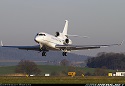
On the Falcon 900EX that I now drive (better yet, I watch it drive itself......boring as hell) we flip-flop the pilots from the left seat for each leg. The guy on the right is always the parrot, so the COMs are set up on his side. Sheer lazyness.
On the MD-11, if you had a frequency on the #2 or #3 radios and then had a total generator failure, those frequencies were GONE unless you had written them down somewhere. (As VHF NAV frequencies were only selectable through typing them into the FMS, some operators went so far as to install a regular analog navcom as their #3 radio also wired to the emergency bus, just in case.)
The #2 radio was used for ATIS, air-air, company, 121.5...gossip. If we had a 3rd VHF, then #2 lived on 121.5 as there are a lot of places where it is mandatory to moniter that frequency, even in the terminal area or risk being shot down. (It does get your attention to see that written on the approach plate.)
On the Falcon 900EX that I now drive (better yet, I watch it drive itself......boring as hell) we flip-flop the pilots from the left seat for each leg. The guy on the right is always the parrot, so the COMs are set up on his side. Sheer lazyness.
-
Panama Jack

- Rank 11

- Posts: 3265
- Joined: Fri Feb 20, 2004 8:10 am
- Location: Back here
Having a system, whatever it may be, is a good idea.
As Pratt pointed out, the system of having centers and towers (this include ground, approach, departure control and MF) on com #1 and company, ATIS, weather or guard on com #2 is SOP at many companies because it has some logic to it and provides a road-map for organization and coordination in a two-crew environment.
I've worked at 6 different companies to date, and of those:
- 4 used the technique mentioned above
- 1 didn't have an electrical system or radio in the aircraft, so a non-issue
- and one left it up to the pilot to do what he wanted.
As Pratt pointed out, the system of having centers and towers (this include ground, approach, departure control and MF) on com #1 and company, ATIS, weather or guard on com #2 is SOP at many companies because it has some logic to it and provides a road-map for organization and coordination in a two-crew environment.
I've worked at 6 different companies to date, and of those:
- 4 used the technique mentioned above
- 1 didn't have an electrical system or radio in the aircraft, so a non-issue
- and one left it up to the pilot to do what he wanted.
“If it moves, tax it. If it keeps moving, regulate it. If it stops moving, subsidize it.”
-President Ronald Reagan
-President Ronald Reagan


