Two Stage Amber
Moderators: lilfssister, North Shore, sky's the limit, sepia, Sulako, I WAS Birddog

Two Stage Amber
I was having a conversation with someone yesterday who mentioned two stage amber as an alternative to the hood when doing IFR training. It seems like a fantastic system to me but I couldn't find any schools that have an aircraft outfitted for two stage amber. Does anyone know if there are any schools that still use this system for IFR training in the US or Canada? What are the drawbacks of it that made it fall out of use?

 what is two stage amber?
-
Cat Driver

- Top Poster

- Posts: 18921
- Joined: Sun Feb 15, 2004 8:31 pm
None that I can think of.What are the drawbacks of it that made it fall out of use?
Why it fell out of use is a good question, maybe it was to much like actually flying in cloud?
One thing for sure wearing a hood is unorthodox.
The hardest thing about flying is knowing when to say no
After over a half a century of flying no one ever died because of my decision not to fly.
After over a half a century of flying no one ever died because of my decision not to fly.
-
Cat Driver
- Top Poster
- Posts: 18921
- Joined: Sun Feb 15, 2004 8:31 pm
Hedley, two stage amber is quite simple.
You put orange colored plexiglass or film in the windows.
The pilot flying wears blue goggles with blue side lenses.
Everything inside the airplane is tinted blue but otherwise completely visiable.
Everything outside is black.....just like flying instruments at night in cloud.
The instructor sees the world outside the airplane tinted orange, much like ski goggles..actually improves outside vision.
Why it went out of favour in the training industry I have no idea, maybe you could ask Jim Dow.
You put orange colored plexiglass or film in the windows.
The pilot flying wears blue goggles with blue side lenses.
Everything inside the airplane is tinted blue but otherwise completely visiable.
Everything outside is black.....just like flying instruments at night in cloud.
The instructor sees the world outside the airplane tinted orange, much like ski goggles..actually improves outside vision.
Why it went out of favour in the training industry I have no idea, maybe you could ask Jim Dow.
The hardest thing about flying is knowing when to say no
After over a half a century of flying no one ever died because of my decision not to fly.
After over a half a century of flying no one ever died because of my decision not to fly.



-
Cat Driver
- Top Poster
- Posts: 18921
- Joined: Sun Feb 15, 2004 8:31 pm
STC?The STC probably cost more than foggles, a lot more. That's my guess.
Why would it require an STC?
Do you now require an STC to wear a hood?
When did Canada require an STC for something that is not installed in the airframe, because two stage amber is nothing more than orange colored film that is installed inside the windows and windshield and if you want it off you just reach up and remove it.....hell you have velcro today, all we had was tape.
The hardest thing about flying is knowing when to say no
After over a half a century of flying no one ever died because of my decision not to fly.
After over a half a century of flying no one ever died because of my decision not to fly.
-
Cat Driver
- Top Poster
- Posts: 18921
- Joined: Sun Feb 15, 2004 8:31 pm
-
StudentPilot
- Rank 3

- Posts: 164
- Joined: Sun Oct 29, 2006 5:02 pm

I'd say it has more to do with the fact that its a heck of a lot easier to put on a pair of foggles than it is to put plexiglass in all the windows, secure it with tape/velcro etc... then put on a pair of special goggles.StudentPilot wrote:This sounds like the most likely reason.istp wrote:Probably made too much sense.
-
Cat Driver
- Top Poster
- Posts: 18921
- Joined: Sun Feb 15, 2004 8:31 pm
Actually it does not take much effort to put the panels in the windows, especially if you use velcro.I'd say it has more to do with the fact that its a heck of a lot easier to put on a pair of foggles than it is to put plexiglass in all the windows, secure it with tape/velcro etc... then put on a pair of special goggles.
Puttting the goggles on is a hell of a lot easier than putting on a hood...and the only thing special about the goggles is the lenses are blue.
The greatest advantage two stage amber gives you for training new instrument pilots is it is exactly like being in cloud and the interior enviorement is normal as far as vision goes ...not like wearing a hood....and you can't cheat by looking under the hood.
After training with a hood the students first flight in cloud is a new experience...after using two stage amber it is a non event.
The hardest thing about flying is knowing when to say no
After over a half a century of flying no one ever died because of my decision not to fly.
After over a half a century of flying no one ever died because of my decision not to fly.
There are several FTUs that have aircraft that are used almost exclusively for IFR training, why these aircraft couldn't have the amber film semi-permanently installed is beyond me. If you want to do only multi training then you just leave the goggles off and you can see just fine.
That is kind of beside the point though as I doubt that's what killed a great system. The STC thing is the best explanation I've heard yet, but if it's true that TC regulated such a simple system into disuse that's appalling. I'm curious if there's any operators elsewhere in the world that use two stage amber if it really is only a regulatory hurdle holding it back.
Cat - who is Jim Dow?
That is kind of beside the point though as I doubt that's what killed a great system. The STC thing is the best explanation I've heard yet, but if it's true that TC regulated such a simple system into disuse that's appalling. I'm curious if there's any operators elsewhere in the world that use two stage amber if it really is only a regulatory hurdle holding it back.
Cat - who is Jim Dow?
-
Cat Driver
- Top Poster
- Posts: 18921
- Joined: Sun Feb 15, 2004 8:31 pm
Lommer, a STC is not required for any portable vision limiting device...a STC is only required if you are going to change the structure or add to the structure of an aircraft.That is kind of beside the point though as I doubt that's what killed a great system. The STC thing is the best explanation I've heard yet, but if it's true that TC regulated such a simple system into disuse that's appalling. I'm curious if there's any operators elsewhere in the world that use two stage amber if it really is only a regulatory hurdle holding it back.
Two stage amber was a method used by the airforce many dacades ago and we used their idea in airplanes that were being used for teaching flying by reference to the instruments only....
I was hoping Clunkdriver or some other pilot who used to use that method of vision limiting would chip in and give his opinion on why it is no longer used.
It is very unlikely that any of TC's flight training experts has even used it let alone decided not to use it.
Jim Dow is the top bureaucrat in TC's flight training department he can be found in the Ottawa office.
I would love to read his thoughts on this method of blocking the outside view for teaching instruments....
The hardest thing about flying is knowing when to say no
After over a half a century of flying no one ever died because of my decision not to fly.
After over a half a century of flying no one ever died because of my decision not to fly.
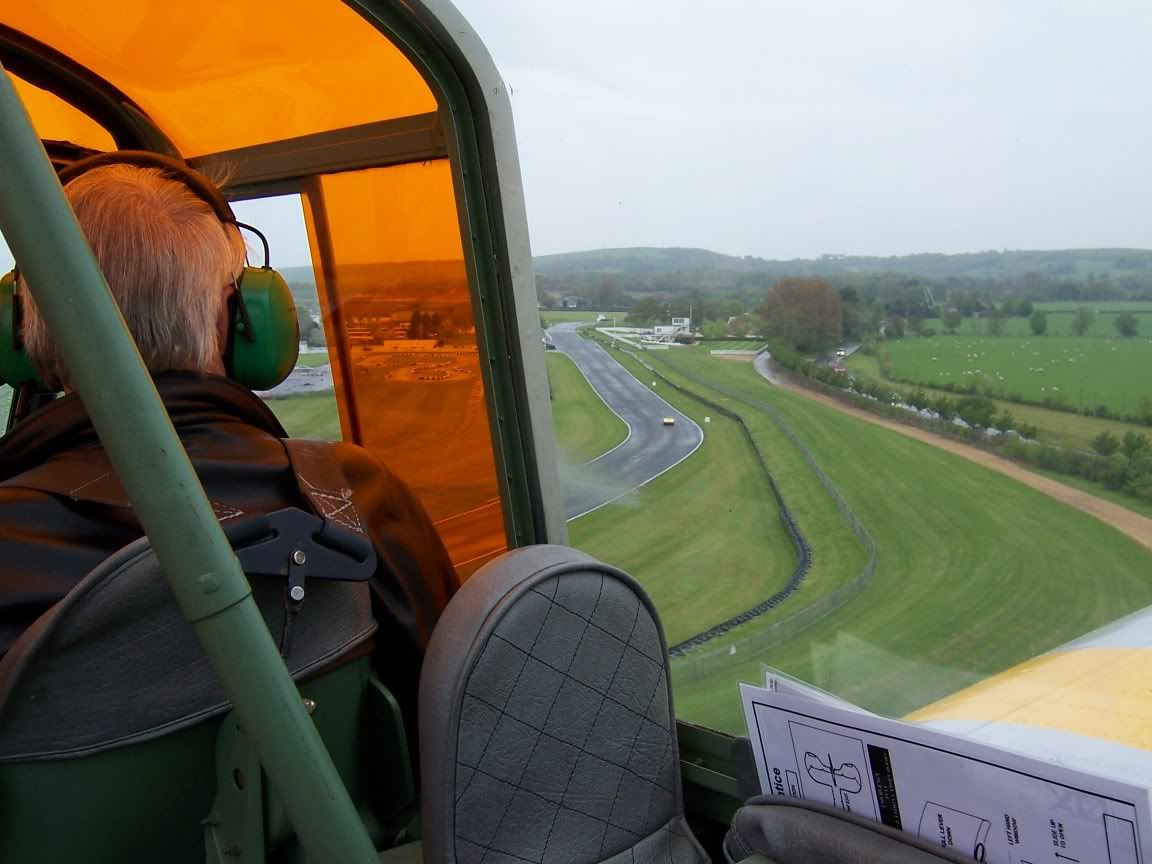
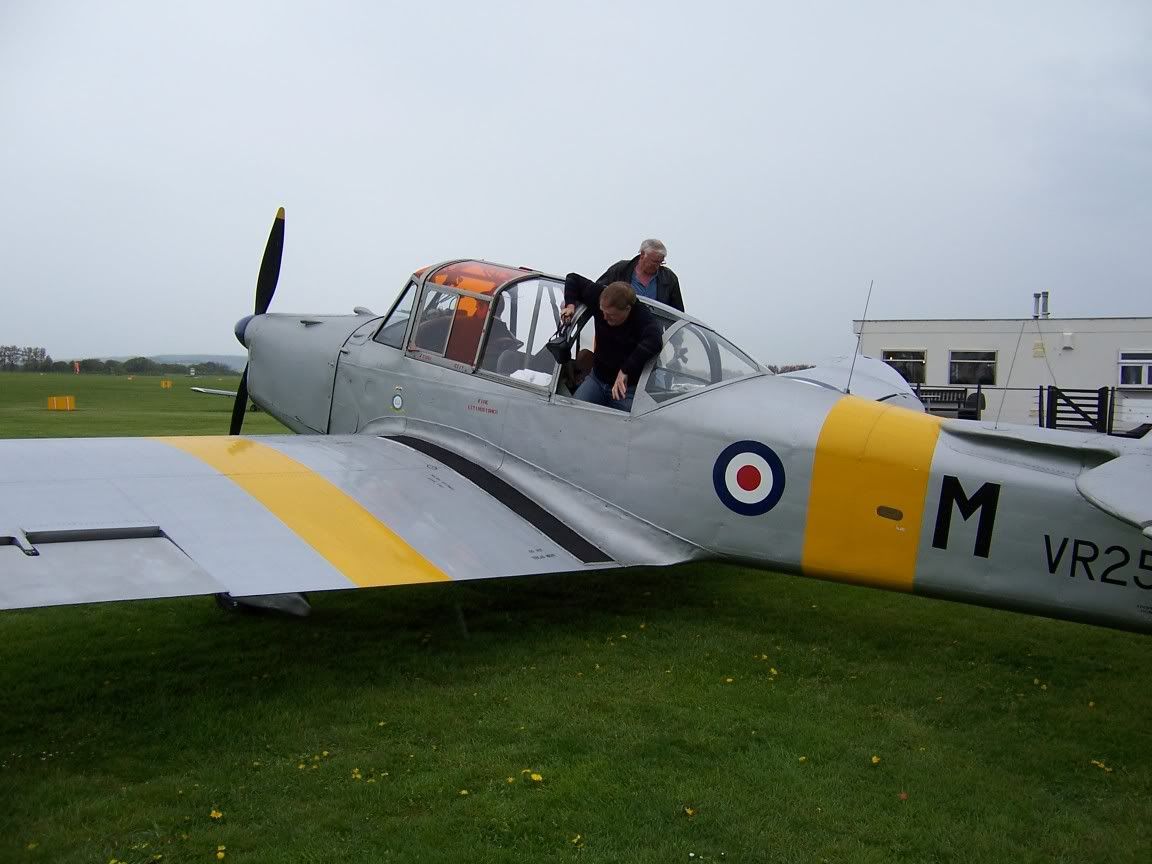
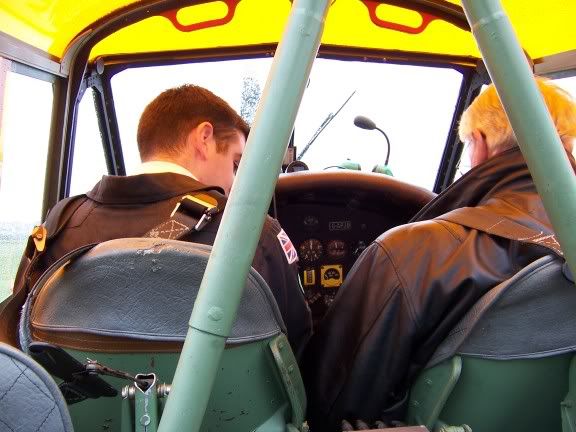
Sorry to reply to myself, but for those who are curious I found a couple pictures of two-stage amber. These are of an RAF trainer that had some permanent amber screens installed in the peripheral and roof windows, with removable amber screens for the front windshield.
http://img.photobucket.com/albums/v303/ ... 79d8ea.jpg
http://img.photobucket.com/albums/v303/ ... bd43bf.jpg
http://img.photobucket.com/albums/v303/ ... 604a72.jpg
It doesn't look like the visibility is too bad when you're in the plane, but I've just read an account of training using two stage amber that says once under the blue goggles the experience is very claustrophobic and unpleasant. Perhaps it was student demand that killed two stage amber? I'm personally the kind of person who prefers an extra challenge if it makes me a better pilot (its the same reason I took tailwheel training) so I don't really understand it disappearing completely though.
http://img.photobucket.com/albums/v303/ ... 79d8ea.jpg
http://img.photobucket.com/albums/v303/ ... bd43bf.jpg
http://img.photobucket.com/albums/v303/ ... 604a72.jpg
It doesn't look like the visibility is too bad when you're in the plane, but I've just read an account of training using two stage amber that says once under the blue goggles the experience is very claustrophobic and unpleasant. Perhaps it was student demand that killed two stage amber? I'm personally the kind of person who prefers an extra challenge if it makes me a better pilot (its the same reason I took tailwheel training) so I don't really understand it disappearing completely though.
It does seem strange that the concept appears to have disappeared completely after the 1950's. I think that I've been reading all of the same sites just now as you Lommer...
The practice really isn't mentioned very often (except on a number of forums by a certain . E. ) and there are only a few instances of civilian aircraft using the system - mostly ex-air force Chipmunks, by the sound of it.
Was there another name besides "two stage amber"?
The practice really isn't mentioned very often (except on a number of forums by a certain . E.
) and there are only a few instances of civilian aircraft using the system - mostly ex-air force Chipmunks, by the sound of it.Was there another name besides "two stage amber"?
-
Cat Driver
- Top Poster
- Posts: 18921
- Joined: Sun Feb 15, 2004 8:31 pm
Lommer, that is ridiculous, I have used two stage amber many, many times and the only difference in vision is everything you look at is tinted blue.....but I've just read an account of training using two stage amber that says once under the blue goggles the experience is very claustrophobic and unpleasant.
...claustrofobia ( sp.? ) is only caused by feeling closed in...which is exactly what occurs in cloud when you are flying in it and that is what makes two stage amber so suitable as a vision limiting device...it closes you in vision wise so you can't see outside.....
Anyhow we are sodomizing a dead horse with this issue because no one uses two stage amber anymore and it would appear no one wants to.
But I would really love for someone to write Jim Dow and ask him why it is no longer used...I would just love to read his response....would almost give my left nut to read it.
The hardest thing about flying is knowing when to say no
After over a half a century of flying no one ever died because of my decision not to fly.
After over a half a century of flying no one ever died because of my decision not to fly.
-
Cat Driver
- Top Poster
- Posts: 18921
- Joined: Sun Feb 15, 2004 8:31 pm
Was
For those of us who learned to fly by reference to instruments only with two stage amber there was absoutely no problem flying in clouds period because we were programmed to not give a fu.k what it looked like outside the airplane until we looked up at minimums to land...and then we gave a f.ck because we wanted to see a runway so we did not have to do a miss and end up in some God forsaken place with no bar or whorehouse.
Not that I know of CD....and you are correct two stage amber sort of dissapeared around the end of the 50's and I have always wondered why because it was a sure fire method to block out all outside reference for the guy wearing the goggles...by the way we made our own goggles at Central Airways by changing the glass in skiing goggles to blue lenses...it was so easy to do that even pilots could understand the process.....there another name besides "two stage amber"?
For those of us who learned to fly by reference to instruments only with two stage amber there was absoutely no problem flying in clouds period because we were programmed to not give a fu.k what it looked like outside the airplane until we looked up at minimums to land...and then we gave a f.ck because we wanted to see a runway so we did not have to do a miss and end up in some God forsaken place with no bar or whorehouse.
The hardest thing about flying is knowing when to say no
After over a half a century of flying no one ever died because of my decision not to fly.
After over a half a century of flying no one ever died because of my decision not to fly.
Ever notice the yellow tint on the windows at TC offices?..How about the blue tint glasses they sport.Cat Driver wrote:But I would really love for someone to write Jim Dow and ask him why it is no longer used...I would just love to read his response....would almost give my left nut to read it.
They know we are out here in the real world, they just prefer not to see us.
Cat I would love to use it, I hate the hoods and fogoggles. If somebody can point me in the right direction I would start using it today.Cat Driver wrote:Anyhow we are sodomizing a dead horse with this issue because no one uses two stage amber anymore and it would appear no one wants to.
Lurch
Take my love
Take my land
Take me where I cannot stand
I don't care
I'm still free
You cannot take the sky from me
Take my land
Take me where I cannot stand
I don't care
I'm still free
You cannot take the sky from me
I am not the sharpest tool in the shed, but ...
From what I can understand, you want to use two filters - one on the windscreen, and one on the person who's vision you want to obstruct.
The idea is that you can see through any one of the filters, but not both.
The 2-stage amber is kinda old technology - I understand that one filter removes the "upper half" high freq visible spectrum (green/blue/violet) and the other filter removes the "lower half" low freq visible spectrum (red/orange/yellow).
Now, how to most easily accomplish this in the 21st century?
Rather than filtering based on freq, why not use existing polarization technology?
For the person "under the hood" you need wraparound polarized sunglasses. IIRC they are vertically polarized to filter out horizontally polarized reflections.
So, what you need is some polarized film, and rotate it 90 degrees so that it is horizontally polarized. This should not obstruct your vision much.
But when you try to look through the sunglasses and the film, it will be dark outside.
Do I win a prize? Should I submit yet another frigging patent application?
From what I can understand, you want to use two filters - one on the windscreen, and one on the person who's vision you want to obstruct.
The idea is that you can see through any one of the filters, but not both.
The 2-stage amber is kinda old technology - I understand that one filter removes the "upper half" high freq visible spectrum (green/blue/violet) and the other filter removes the "lower half" low freq visible spectrum (red/orange/yellow).
Now, how to most easily accomplish this in the 21st century?
Rather than filtering based on freq, why not use existing polarization technology?
For the person "under the hood" you need wraparound polarized sunglasses. IIRC they are vertically polarized to filter out horizontally polarized reflections.
So, what you need is some polarized film, and rotate it 90 degrees so that it is horizontally polarized. This should not obstruct your vision much.
But when you try to look through the sunglasses and the film, it will be dark outside.
Do I win a prize? Should I submit yet another frigging patent application?
-
Cat Driver
- Top Poster
- Posts: 18921
- Joined: Sun Feb 15, 2004 8:31 pm
Hedley, your iddea sounds much more functional.
The object of the exercise is to have normal visual access to the inside of the airplane and no visual reference to outside.
Flying in cloud is the easiest way except for the fact you need a clearance...and of course cloud cover.
The object of the exercise is to have normal visual access to the inside of the airplane and no visual reference to outside.
Flying in cloud is the easiest way except for the fact you need a clearance...and of course cloud cover.
Last edited by Cat Driver on Wed Jun 06, 2007 7:55 am, edited 1 time in total.
The hardest thing about flying is knowing when to say no
After over a half a century of flying no one ever died because of my decision not to fly.
After over a half a century of flying no one ever died because of my decision not to fly.
Hedley, it sounds like a great system - not only would there be no discoloration from the lenses, the window film would cut out glare too. The only thing I wonder is if the student slightly tilting his head from side to side might give enough visibility out the windows to cause problems.
Cat - I've never used two stage amber, but when I do my instrument training I'd like to. I was just posting what I'd found elsewhere to explore the possibility that student discomfort was the reason we don't see this any more.
Cat - I've never used two stage amber, but when I do my instrument training I'd like to. I was just posting what I'd found elsewhere to explore the possibility that student discomfort was the reason we don't see this any more.
-
Cat Driver
- Top Poster
- Posts: 18921
- Joined: Sun Feb 15, 2004 8:31 pm
No problem Lommer, I have no idea why such a simple functional means of restricting outside vision is not used anymore.
However all you need do is read the flight training forum and you will notice that I am so far out of touch with how flight training should be done you would think I've never been in an airplane.
Oh well now that I'm finally out of aviation I do not really need to get retrained to bring me up to todays standards.
However all you need do is read the flight training forum and you will notice that I am so far out of touch with how flight training should be done you would think I've never been in an airplane.
Oh well now that I'm finally out of aviation I do not really need to get retrained to bring me up to todays standards.
The hardest thing about flying is knowing when to say no
After over a half a century of flying no one ever died because of my decision not to fly.
After over a half a century of flying no one ever died because of my decision not to fly.