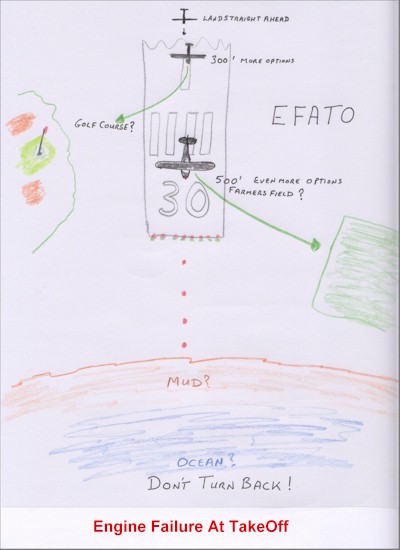
Once again, that is why I like the briefing before starting the engine.gustind wrote:How about a full breifing before engine start and a shorter take-off review holding at the line. You don't lose any time with the engines on sitting in the plane, and the review would be there if case anything changed and serves as a small reminder.
My breifings:
It will be a normal take-off off of runway 32 with a crosswind from the right, rotate at 55 climb out at 74. Right hand circuit is in effect at 1500ft (or depart the circuit to the south-west with enroute climb at 85 to 2400ft (or w/e)). In the event of a problem affecting flight safety while on the runway, I will retard the throttle, apply max brake and reject. In the case of an engine failure on t/o I will establish best glide and choose a suitable landing site ahead.
Think that covers everything. The review would be the first part all over again except this time you re-evaluate the situation and state any changes to your original plan.
My $0.02
I like your briefing for the normal procedures. However, my opinion is a little different with regards to emergency procedures. If the pilot is experienced, the breifing for emergency procedures should be as short as " standard calls, standard procedures". However, if its a student pilot, then I think that the student should be prepared to deal with any kind of emergency ever imagined. In order to be prepared, they should review most of the emergencies as stated in my takeoff breifing in the previous post.








 'isn't that reserved for PPL training?'.