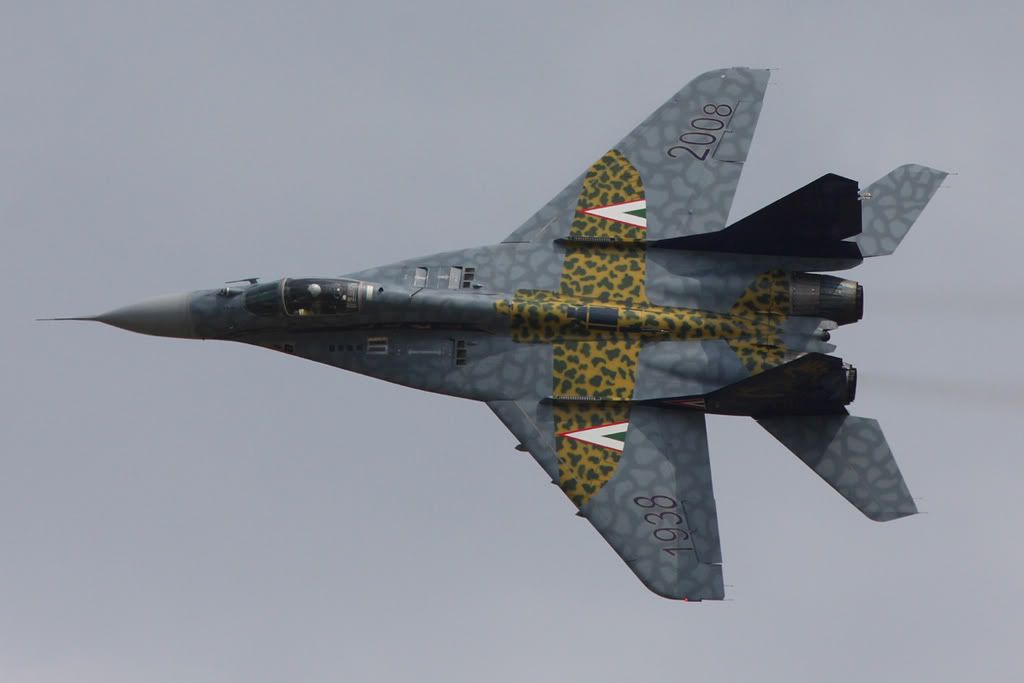

You may have heard of the F-15, the F-16, the F-18 and the A-10. For all of these, you can thank John Boyd - even though you've never heard of him.
I dearly wish he could have worked his uncomprimising magic on the F-35 Edsel. He is probably the only Colonel to have fired a two-star Major General. Hated by the USAF Generals, worshiped by the USMC, he was also the developer of OODA. You've almost certainly never heard of that, either.
If you have even a passing interest in the development of jet fighters, you will find the following fascinating:
http://www.aviation-history.com/airmen/boyd.htm
http://en.wikipedia.org/wiki/John_Boyd_ ... trategist)
It is simply incredible, how few people know of this staggeringly influential person.During the early 1960s, Boyd, together with Thomas Christie, a civilian mathematician, created the Energy-Maneuverability, or E-M, theory of aerial combat. A legendary maverick by reputation, Boyd was said to have "stolen" the computer time to do the millions of calculations necessary to prove the theory, but it became the world standard for the design of fighter planes. At a time when the Air Force's FX project (subsequently the F-15) was foundering, Boyd's deployment orders to Vietnam were canceled and he was brought to the Pentagon to re-do the trade-off studies according to E-M. His work helped save the project from being a costly dud, even though its final product was larger and heavier than he desired. However, cancellation of that tour in Vietnam meant that Boyd would be one of the most important air-to-air combat strategists with no combat kills. He had only flown a few missions in the last months of the Korean War, and all of them as a wingman.
With Colonel Everest Riccioni and Pierre Sprey, Boyd formed a small advocacy group within Headquarters USAF which dubbed itself the "Fighter Mafia". Riccioni was an Air Force fighter pilot assigned to a staff position in Research and Development, while Sprey was a civilian statistician working in Systems Analysis. Together, they were the visionaries who conceived the LFX Lightweight Fighter program, which ultimately produced both the F-16 and F/A-18 Hornet, the latter a development of the YF-17 Light Weight Fighter. Boyd's acolytes were also largely responsible for developing the Republic A-10 Thunderbolt II or "Warthog" ground-support aircraft, though Boyd himself had little sympathy of the "air-to-mud" assignment.[4]
After his retirement from the Air Force in 1975, Boyd continued to work at the Pentagon as a consultant in the Tactical Air office of the Office of the Assistant Secretary of Defense for Program Analysis and Evaluation.
Boyd is credited for largely developing the strategy for the invasion of Iraq in the first Gulf War. In 1981 Boyd had presented his briefing, Patterns of Conflict, to Richard Cheney, then a member of the United States House of Representatives.[1] By 1990 Boyd had moved to Florida because of declining health, but Cheney (then the Secretary of Defense in the George H. W. Bush administration) called him back to work on the plans for Operation Desert Storm.[1][5][6] Boyd had substantial influence on the ultimate "left hook" design of the plan.[7]
In a letter to the editor of Inside the Pentagon, former Commandant of the Marine Corps General Charles C. Krulak is quoted as saying "The Iraqi army collapsed morally and intellectually under the onslaught of American and Coalition forces. John Boyd was an architect of that victory as surely as if he'd commanded a fighter wing or a maneuver division in the desert."