My friend was the same but with a 172 and heavy friends and too aft c of g. The big question is what is better to do? turn around and land or fly and burn off fuel before attempting to land? The mistake has been made now what? this is where it is nice to have a little inside as to the best course of action.RenegadeAV8R wrote:A Weight & Balance story:
A friend of mine own a Cessna 150.
He used to fly, with his girlfriend, to a private grass landing strip near their cottage.
One day, before a long weekend, they went to the grocery store to buy the food that they would bring to the cottage.
While doing the shopping, my friend though that his girlfriend was buying a lot of stuff... maybe too much.
When they loaded the food in the back of his 150, he realized that he was loading his 150 more than usual... and told himself that he would probably not be the first one to take off with an overloaded Cessna 150...
During the take off run, he noticed that the acceleration was slower than usual.
Once in the air, the rate of climb was not very impressive... And once level, even with the trim fully aircraft Nose Down; he had to push on the yoke to maintain the cruise attitude - He then realized that he was not only overweight, but the C of G was too far aft. He flew 100 nm in this condition.
He landed uneventfully on an alternate paved runway, and he vowed to never again take off in an overloaded & out of balance aircraft.
Scary/Embarassing Mistakes
Moderators: sky's the limit, sepia, Sulako, Right Seat Captain, lilfssister, North Shore
Re: Scary/Embarassing Mistakes
-
RenegadeAV8R
- Rank 4

- Posts: 281
- Joined: Sat May 31, 2008 2:51 pm
Re: Scary/Embarassing Mistakes
My friend also thought that burning fuel would help his situation, but it didn't; this is why he decided to land on a longer runway. I like to think that he increased his approach speed. But how much increase was required is unknown.burhead1 wrote:
My friend was the same but with a 172 and heavy friends and too aft c of g. The big question is what is better to do? turn around and land or fly and burn off fuel before attempting to land? The mistake has been made now what? this is where it is nice to have a little inside as to the best course of action.
In a 150 or 172 with an out of limit aft C of G, burning fuel will lower the weight; but shift the C of G even more aft.
The solution is to calculate the Weight & Balance *before* the flight.
Totally irresponsible, unnecessary, dangerous, immature and reprehensible. In other words brillant!

Re: Scary/Embarassing Mistakes
I asked a question regarding this type of thing in the general forum earlier but the response did not really address it...Should I calculate a zero fuel W&B in addition to my preflight W&B to account for CG perhaps moving out of limit as fuel is burned? Obviously it couldn't hurt, but is there any point to it? Will CG remain within limits throughout the flight (assuming no passengers or cargo move around) if it was within limits before the flight?RenegadeAV8R wrote:My friend also thought that burning fuel would help his situation, but it didn't; this is why he decided to land on a longer runway. I like to think that he increased his approach speed. But how much increase was required is unknown.burhead1 wrote:
My friend was the same but with a 172 and heavy friends and too aft c of g. The big question is what is better to do? turn around and land or fly and burn off fuel before attempting to land? The mistake has been made now what? this is where it is nice to have a little inside as to the best course of action.
In a 150 or 172 with an out of limit aft C of G, burning fuel will lower the weight; but shift the C of G even more aft.
The solution is to calculate the Weight & Balance *before* the flight.
-
Beefitarian

- Top Poster

- Posts: 6618
- Joined: Wed Dec 01, 2010 10:53 am
- Location: A couple of meters away from others.
Re: Scary/Embarassing Mistakes
Depends where the fuel is located. Most light aircraft, this is not an issue, but IIRC there are some (eg Rockwell Commander 112) where it is possible to have a problem with the C of G on landing.Will CG remain within limits throughout the flight (assuming no passengers or cargo move around) if it was within limits before the flight?
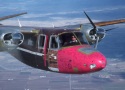
I flew a Piaggio Royal Gull, a while back. With fuel fuel and one pilot, it was out of C of G at takeoff!

Re: Scary/Embarassing Mistakes
You seriously need to teach me how to get people to let me fly their really cool planes.Hedley wrote: I flew a Piaggio Royal Gull, a while back. With fuel fuel and one pilot, it was out of C of G at takeoff!

Re: Scary/Embarassing Mistakes
The Piaggio Royal Gull was a strange one. Through some sailing friends, I was contacted by a retired AC pilot who suddenly moved to Belize with the maid, and needed his airplane quickly moved out of the country for some reason. Never understood the details.
Anyways, my first flight in it was PIC. Flying boat, geared multi-engine pusher tailwheel amphib. Felt like a Seabee. No checkout, because there was no one to check me out. Apparently only 4 left flying in the world. Flew sideways the first flight. Landing was a hoot.
If you pay me enough, and the extension cord is long enough, I will attempt to fly a kitchen table and an electric fan
PS Westjet rocks, Bede. Coming back as a pax from Montego Bay on Monday, 631 statute mph on the GPS.
Anyways, my first flight in it was PIC. Flying boat, geared multi-engine pusher tailwheel amphib. Felt like a Seabee. No checkout, because there was no one to check me out. Apparently only 4 left flying in the world. Flew sideways the first flight. Landing was a hoot.
If you pay me enough, and the extension cord is long enough, I will attempt to fly a kitchen table and an electric fan
PS Westjet rocks, Bede. Coming back as a pax from Montego Bay on Monday, 631 statute mph on the GPS.
Re: Scary/Embarassing Mistakes
My friend, while working on an IFR rating in an airplane that ought never to have been in cloud in winter, developed a healthy respect for ice after one flight in particular. Ice and tailplane stalls.
The W&B comments above got me to thinking; I have a rather fancy Excel based W&B tool that I put a fair bit of time into developing about 2 years ago. Was intended for a flight school but never used by them. Does all sorts of neat stuff;
-maintain list of AC types, including max weights, station weight limits, CG envelopes for various categories, max fuel, standard / minimum planning fuel for various flight phases, etc
-maintain list of individual AC with specifics such as CG and weight
-to use, enter pilot, pax, pick a/c type, individual a/c, the enter weights and fuel
-flags if any conditions out of limits, provides detailed errors
-***PLOTS takeoff and planned landing CG/weight on CG/moment graphs***
-provides summary prior to printing
-if notes in summary (ie, "13.9 USG fuel must be burned after startup, taxi, takeoff & climb to be in the Utility Categoy CG envelope", and "8.6 USG fuel will be available for use in the Utility Category CG envelope. Approach, reserve & contingency fuel is not included in this figure"), these notes will be included on printout
Anyway, if anyone wants a copy for personal use, send me a PM, I'll be happy to share it. There will be a fee (or barter for flight time) for commercial use.
Cheers,
Colin
The W&B comments above got me to thinking; I have a rather fancy Excel based W&B tool that I put a fair bit of time into developing about 2 years ago. Was intended for a flight school but never used by them. Does all sorts of neat stuff;
-maintain list of AC types, including max weights, station weight limits, CG envelopes for various categories, max fuel, standard / minimum planning fuel for various flight phases, etc
-maintain list of individual AC with specifics such as CG and weight
-to use, enter pilot, pax, pick a/c type, individual a/c, the enter weights and fuel
-flags if any conditions out of limits, provides detailed errors
-***PLOTS takeoff and planned landing CG/weight on CG/moment graphs***
-provides summary prior to printing
-if notes in summary (ie, "13.9 USG fuel must be burned after startup, taxi, takeoff & climb to be in the Utility Categoy CG envelope", and "8.6 USG fuel will be available for use in the Utility Category CG envelope. Approach, reserve & contingency fuel is not included in this figure"), these notes will be included on printout
- Weight & Balance Tool screenshot 1
- wb1.png (161.59 KiB) Viewed 2252 times
- Weight & Balance Tool screenshot 2
- wb2.png (189.32 KiB) Viewed 2252 times
Cheers,
Colin
Re: Scary/Embarassing Mistakes
Ok, finally found it in the mounds of paperwork that orbit me. See January 2011 edition of Sport Aviation, which is the monthly publication of the EAA. Flip to page 36.Anyways, one of the airplane magazines - I forget which one - recently reviewed light aircraft accidents over a 2 week period
The author picked 2 weeks in October and found 97 serious reported accidents of light aircraft.
Of those 97 accidents, an incredible 43 occurred when the pilot was simply trying to land. Another 10 of those accidents occurred when the pilot was simply trying to take off. So, a total of 53 of the 97 accidents (55%) occurred during takeoffs and landings. Another 6 accidents were reported during taxi ops. Therefore a total of 59 accidents occurred during takeoff, landing and taxi - that's 60%!
If you want to cut your probability of having a serious accident in an aircraft by 60%, simply get better at takeoffs and landings and taxiing. Basic stick & rudder skill. Airspeed control. Ball in the center. The sort of thing you learn in a NORDO Piper Cub. Not with your head down in a plastic nosewheel trainer looking at acres of coloured displays.
Another 15 of the 97 accidents were attributed to loss of power, and a resulting off-airport landing. As you might suspect, many of these accidents were caused by running out of gas, carburetor icing, and mechanical failure. Not much new there.
In addition, there were 14 accidents - 11 fatal - of which the cause is unknown, often because the pilot didn't survive to tell the story. One has to wonder if there are any common causes here: wx, night, CFIT, disorientation?
Anyways, if you really care about being a better, safer pilot:
1) work on your stick & rudder skills. Get better at controlling the aircraft precisely at slower speeds. Practice your takeoffs and landings and taxiing.
2) don't run out of gas, learn about carb heat, and don't fly junk.
If you do the above, you will eliminate at least 76% ((53 + 6 + 15) / 97) of the accident causes of light aircraft. That's a huge improvement in safety!
-
SuperchargedRS
- Rank (9)

- Posts: 1485
- Joined: Fri Mar 03, 2006 1:30 am
- Location: the stars playground
Re: Scary/Embarassing Mistakes
How about having the fuel sticks switched in a plane with the standard issue crappy onboard cessna fuel gauges. The stick reads 18 per side you take off, come land at a little lake, check the tanks and your on fumes.
I think allot of the accidents are the result of a stupid little oversight snowballing, no matter how many SOPs you have chit happens, just try to be try to understand what is going on as it happens and have a alternate.
I think allot of the accidents are the result of a stupid little oversight snowballing, no matter how many SOPs you have chit happens, just try to be try to understand what is going on as it happens and have a alternate.
Re: Scary/Embarassing Mistakes
http://www.flyingmag.com/find/i%20learn ... rom%20that
entertainment, stupidity and even a lesson or two
plus some cool art by barry ross
Eat you heart out!
entertainment, stupidity and even a lesson or two
plus some cool art by barry ross
Eat you heart out!
-
SuperchargedRS
- Rank (9)
- Posts: 1485
- Joined: Fri Mar 03, 2006 1:30 am
- Location: the stars playground
-
Prairie Chicken

- Rank 7

- Posts: 727
- Joined: Sat Nov 08, 2008 12:12 pm
- Location: Gone sailing...
Re: Scary/Embarassing Mistakes
Let's straighten out a couple of things.
Enforcement do not troll sites like this looking for work. However, they may keep track of some of their active 'customers' by following their activities on such sites. Information found on the internet may be used to substantiate other evidence but cannot be the soul source of evidence.
The freedom of double jeopardy is a constitutional right in Canada--you cannot be charged twice for the same offence.
There is a statute of limitations of 1 year for prosecutions and administrative monetary penalties. There is no statute for suspensions.
Enforcement do not troll sites like this looking for work. However, they may keep track of some of their active 'customers' by following their activities on such sites. Information found on the internet may be used to substantiate other evidence but cannot be the soul source of evidence.
The freedom of double jeopardy is a constitutional right in Canada--you cannot be charged twice for the same offence.
There is a statute of limitations of 1 year for prosecutions and administrative monetary penalties. There is no statute for suspensions.
Prairie Chicken
-
Beefitarian
- Top Poster
- Posts: 6618
- Joined: Wed Dec 01, 2010 10:53 am
- Location: A couple of meters away from others.
Re: Scary/Embarassing Mistakes
Enforcement do not troll sites like this looking for work
I can confirm the truth of that. I walked through their offices the other day and most of them were all sitting around drinking coffee or playing spider solataire on their computers.
Only two of them were on the internet and one was surfing for gay porn while the other was on facebook.....
At least I think it was TC's enforcement department. Actually, it might have been the head office for a satanic cult instead.. I get the two mixed up all the time.
Accident speculation:
Those that post don’t know. Those that know don’t post
Those that post don’t know. Those that know don’t post
-
Beefitarian
- Top Poster
- Posts: 6618
- Joined: Wed Dec 01, 2010 10:53 am
- Location: A couple of meters away from others.
Re: Scary/Embarassing Mistakes
Took off on 3 of 4 cylinders one day. Didn't show up during the mag check as both plugs were dead in one jug.
The day was warm and I'd recently been flying at pretty high altitude so I didn't notice that much difference in power from "normal". At the time that aircraft was sporting a pretty steep pitch prop so it normally to a while to wind-up during the take-off run, except this time it didn't and I didn't notice that in time to abort.
An aircraft struggling to do 100fpm doesn't take to climbing turns well. Fortunately it's a docile plane and we were pretty lightly loaded.
Lesson learned:
Know your usual take-off RPM for fixed pitch props.
Mag checks are great but not an ultimate test of your ignition system.
The day was warm and I'd recently been flying at pretty high altitude so I didn't notice that much difference in power from "normal". At the time that aircraft was sporting a pretty steep pitch prop so it normally to a while to wind-up during the take-off run, except this time it didn't and I didn't notice that in time to abort.
An aircraft struggling to do 100fpm doesn't take to climbing turns well. Fortunately it's a docile plane and we were pretty lightly loaded.
Lesson learned:
Know your usual take-off RPM for fixed pitch props.
Mag checks are great but not an ultimate test of your ignition system.
Re: Scary/Embarassing Mistakes
Whenever I see pretty charts that belong in a heavy, or hear people talk about doing takeoff and landing w&B in 150/172, I really have to shake my head.
1. You know the empty weight of your plane
2. You know the weight of fuel you are putting in it
3. Whats left over is the weight you can put in the plane
That simple. You should be able to do it in your head for these types of airplanes
Now instead of all the fancy charts, computer programs etc, take an hour and give yourself some groundschool. Put in a typical load, including back seats (if applicable) and baggage.
Check the c of g.. Now reduce the fuel load and see how much it has moved...Good grief in most of these planes (not all of them) reducing weight through fuel burn will move the c of g forward
Now you should be able to load the plane within weight and balance limits by thinking it through in your head...Yeah yeah, I know. That is not the way you were taught in flight school.
But from some of the stories here, maybe , just maybe, there is a better way.
The truth is, which no one ever seems to want to speak aloud about, is that small planes are safely loaded every day without reference to charts, books, written calculations.
Know your plane, its limits, and use bloody common sense. One of the main problems is everyone is trying to comply with TC directives. learn properly, and , of course...be safe.
so no one ever admits that few are done
The W&B exercise is an excellent training exercise because it involves things like standard weight of fuel and persons as well as w&B...but in these types of airplanes common sense is the key.
If you want to hear scary W&B stories I have seen 1000 hr commercial pilots who knew nothing about things like zero fuel weight, or landing weight limitations, but they could pull out their little pathfinder and spend 30 mins doing a W&B calulation for a 40 min flight with just them and 1 1/2 hours of fuel on board...ZERO common sense.
Incidently, if you really feel it is necessary to do a W&B on every flight in your 172, buy yourself a SeeGee calcualtor. Best thing in the world for doing this. Takes a minute and allows you to shift loads around. They have a website I think.
1. You know the empty weight of your plane
2. You know the weight of fuel you are putting in it
3. Whats left over is the weight you can put in the plane
That simple. You should be able to do it in your head for these types of airplanes
Now instead of all the fancy charts, computer programs etc, take an hour and give yourself some groundschool. Put in a typical load, including back seats (if applicable) and baggage.
Check the c of g.. Now reduce the fuel load and see how much it has moved...Good grief in most of these planes (not all of them) reducing weight through fuel burn will move the c of g forward
Now you should be able to load the plane within weight and balance limits by thinking it through in your head...Yeah yeah, I know. That is not the way you were taught in flight school.
But from some of the stories here, maybe , just maybe, there is a better way.
The truth is, which no one ever seems to want to speak aloud about, is that small planes are safely loaded every day without reference to charts, books, written calculations.
Know your plane, its limits, and use bloody common sense. One of the main problems is everyone is trying to comply with TC directives. learn properly, and , of course...be safe.
so no one ever admits that few are done
The W&B exercise is an excellent training exercise because it involves things like standard weight of fuel and persons as well as w&B...but in these types of airplanes common sense is the key.
If you want to hear scary W&B stories I have seen 1000 hr commercial pilots who knew nothing about things like zero fuel weight, or landing weight limitations, but they could pull out their little pathfinder and spend 30 mins doing a W&B calulation for a 40 min flight with just them and 1 1/2 hours of fuel on board...ZERO common sense.
Incidently, if you really feel it is necessary to do a W&B on every flight in your 172, buy yourself a SeeGee calcualtor. Best thing in the world for doing this. Takes a minute and allows you to shift loads around. They have a website I think.
Last edited by trey kule on Fri May 06, 2011 10:02 am, edited 1 time in total.
Accident speculation:
Those that post don’t know. Those that know don’t post
Those that post don’t know. Those that know don’t post
-
Beefitarian
- Top Poster
- Posts: 6618
- Joined: Wed Dec 01, 2010 10:53 am
- Location: A couple of meters away from others.
I used to do it every time partially because as soon as I had my Dad and a second passanger on board we had to take on less than full tanks. I needed to know how much. It only takes a couple minutes on a piece of paper with a regular calculator. Early on in my training an instructor told me about going an a trip and ending up with CofG problems after they burned off fuel, claimed it was pretty scarey.
Like I said, one time I ended up deciding to swap passengers back to front because if I recall corectly once the fuel burned I could have had a forward CofG ahead of the limits. Maybe it wouldn't be a big deal but I figure "Do it right" and I don't have to find out it is a big deal by causing myself problems.
Like I said, one time I ended up deciding to swap passengers back to front because if I recall corectly once the fuel burned I could have had a forward CofG ahead of the limits. Maybe it wouldn't be a big deal but I figure "Do it right" and I don't have to find out it is a big deal by causing myself problems.
Re: Scary/Embarassing Mistakes
My stupidest mistake was posted on this thread: viewtopic.php?f=3&t=60211&start=100
trampbike wrote:A few days ago, I had to deal with my very first stall close to the ground. Hopefully it was the first and the last one. I felt it would be a good idea to bring that old thread up.
I was practicing, as usual, short field landings, in a Grumman AA1, flying at high angle of attack, power-on, a couple knots above stall. Actually the stall warning is singing pretty often when I practice these approach. That time though, when coming close to the runway threshold, there was a sudden wind reduction and the airplane dropped very fast, with the stall warning screaming. I pushed the nose down even though the ground was rushing at me and opened the throttle fully. The recovery took place about 20 feet AGL.
I obviously was getting myself out of my comfort zone doing such approaches, and being a low timer with basically no experience, it was not a good idea, even though I felt confident in my control of the airplane (having practiced of course at higher altitude before).
I just wanted to say that by reading a lot and being told again and again to reduce the angle of attack FIRST when stalled, I did not break the airplane and was unharmed. Would I have opened the throttle first, that little Grumman would probably have flipped on his side.
Think ahead or fall behind!
Re: Scary/Embarassing Mistakes
Hah, I'm inclined to agree with most of what you've said. The honest reason I put that together, is that I was going back to finish a CPL after about an 8 yr hiatus from flying, and the FTU I was at required a written W&B every time.... And the brand new instructor required me to write on paper all the WB calculations - for the same 172, with the same fuel, and same load. Whenever we went flying. I was grounded once for not having this on paper. I was not impressed - all past flying had been with Cadets, or with fairly experienced older instructors, and this sort of nonsense was unheard of. So I made a pretty tool to keep them happy and make it easier and faster to do.....unfortunately, they never approved it, and I still had to rewrite the WB on paper every time, which made me rather annoyed.
But.... I have the tool, and it's been sitting unused for years... Probably about 200 hrs of work in it, and I hate to think of it going to waste - especially when I see the godawful Excel based tools in use at most FTUs
Cheers,
Colin
But.... I have the tool, and it's been sitting unused for years... Probably about 200 hrs of work in it, and I hate to think of it going to waste - especially when I see the godawful Excel based tools in use at most FTUs
Cheers,
Colin
trey kule wrote:Whenever I see pretty charts that belong in a heavy, or hear people talk about doing takeoff and landing w&B in 150/172, I really have to shake my head.
1. You know the empty weight of your plane
2. You know the weight of fuel you are putting in it
3. Whats left over is the weight you can put in the plane
That simple. You should be able to do it in your head for these types of airplanes
Now instead of all the fancy charts, computer programs etc, take an hour and give yourself some groundschool. Put in a typical load, including back seats (if applicable) and baggage.
Check the c of g.. Now reduce the fuel load and see how much it has moved...Good grief in most of these planes (not all of them) reducing weight through fuel burn will move the c of g forward
Now you should be able to load the plane within weight and balance limits by thinking it through in your head...Yeah yeah, I know. That is not the way you were taught in flight school.
But from some of the stories here, maybe , just maybe, there is a better way.
The truth is, which no one ever seems to want to speak aloud about, is that small planes are safely loaded every day without reference to charts, books, written calculations.
Know your plane, its limits, and use bloody common sense. One of the main problems is everyone is trying to comply with TC directives. learn properly, and , of course...be safe.
so no one ever admits that few are done
The W&B exercise is an excellent training exercise because it involves things like standard weight of fuel and persons as well as w&B...but in these types of airplanes common sense is the key.
If you want to hear scary W&B stories I have seen 1000 hr commercial pilots who knew nothing about things like zero fuel weight, or landing weight limitations, but they could pull out their little pathfinder and spend 30 mins doing a W&B calulation for a 40 min flight with just them and 1 1/2 hours of fuel on board...ZERO common sense.
Incidently, if you really feel it is necessary to do a W&B on every flight in your 172, buy yourself a SeeGee calcualtor. Best thing in the world for doing this. Takes a minute and allows you to shift loads around. They have a website I think.
Re: Scary/Embarassing Mistakes
http://seegeesolutions.com/
Lots of these around in commercial ops in Canada. Devices and it takes about 1 minute to do a W&B.
The weight and balance thing at an FTU is a great training exercise...at least it is supposed to be. But it can be done with different scenarios on every flight. to do one you need to know weight of fuel, regs on fuel reseves, buel burn....lots os stuff
But it seems from the scary stories here, the understanding is not there..particularily when people who should of learned keep talking about the co g movement as fuel burns off in a 172...
Anyway, I hijacked the thread a bit, so back to the scary stories.
Lots of these around in commercial ops in Canada. Devices and it takes about 1 minute to do a W&B.
The weight and balance thing at an FTU is a great training exercise...at least it is supposed to be. But it can be done with different scenarios on every flight. to do one you need to know weight of fuel, regs on fuel reseves, buel burn....lots os stuff
But it seems from the scary stories here, the understanding is not there..particularily when people who should of learned keep talking about the co g movement as fuel burns off in a 172...
Anyway, I hijacked the thread a bit, so back to the scary stories.
Accident speculation:
Those that post don’t know. Those that know don’t post
Those that post don’t know. Those that know don’t post
-
Bank Angle
- Rank 2

- Posts: 71
- Joined: Thu May 31, 2007 12:45 am
Re: Scary/Embarassing Mistakes
Back on topic:
Just after getting my private pilot license, I climbed to 10,000 feet, just outside of Toronto terminal class C airspace. Why? Because I could, and was curious. Legal? Yes. Stupid? Definately!
Now I regularly fly through the same airspace at less than half that altitude and doing 250 KIAS, straining and just hoping to see the idiots like myself in their Cessna or Piper, especially if they forgot to turn their transponder on (also a common mistake as a newby).
Just after getting my private pilot license, I climbed to 10,000 feet, just outside of Toronto terminal class C airspace. Why? Because I could, and was curious. Legal? Yes. Stupid? Definately!
Now I regularly fly through the same airspace at less than half that altitude and doing 250 KIAS, straining and just hoping to see the idiots like myself in their Cessna or Piper, especially if they forgot to turn their transponder on (also a common mistake as a newby).
Re: Scary/Embarassing Mistakes
I must be new, what is so wrong with that? I wouldn't recommend flying in any published airways. I guess i am just wondering as i did the same thing LOL. I think i only hit 8000 as it took almost 1 hr to get there.Bank Angle wrote:Back on topic:
Just after getting my private pilot license, I climbed to 10,000 feet, just outside of Toronto terminal class C airspace. Why? Because I could, and was curious. Legal? Yes. Stupid? Definately!
Now I regularly fly through the same airspace at less than half that altitude and doing 250 KIAS, straining and just hoping to see the idiots like myself in their Cessna or Piper, especially if they forgot to turn their transponder on (also a common mistake as a newby).


-
flyinggreasemonkey

- Rank 6

- Posts: 454
- Joined: Mon Nov 26, 2007 12:26 pm
Re: Scary/Embarassing Mistakes
In that case, theres a refinishing shop in Goderich that frequently uses non aircraft parts and forces their employees to cut corners andput broken parts back on the aircraft.Hedley wrote:FYI Enforcement reads this website, and has laid charges based upon what was posted here.
Be careful.
That ISN'T heresay or slander.

