Angle of attack in a climbing turn

This forum has been developed to discuss flight instruction/University and College programs.

Moderators: sky's the limit, sepia, Sulako, Right Seat Captain, lilfssister, North Shore

Locked
photofly
Top Poster
Top Poster
Posts: 11306
Joined: Tue Jan 18, 2011 4:47 pm
Location: Hangry and crankypated

Re: Angle of attack in a climbing turn

Post by photofly »

except that Denker's definition of absolute AoA DOES NOT say what I bolded in your quote.
Well, actually, it is his definition. Read his section on spins:http://www.av8n.com/how/htm/spins.html#sec-spin-entry
Denker wrote: Suppose you deflect the ailerons to the left. This raises the angle of attack at the right wingtip and lowers it at the left wingtip.
Maybe we could agree on the following statement:
Lowering the aileron produces an airflow around that section of the wing that's indistinguishable from the airflow around a section of wing with an increased angle of attack, and with all the same aerodynamic effects, such as increased lift.
If we don't agree on that, can we discuss instead what the difference in the airflow is?

Back tomorrow. Goodnight all!
---------- ADS -----------
 
dr.aero
Rank 4
Rank 4
Posts: 272
Joined: Sat Apr 30, 2011 3:08 pm

Re: Angle of attack in a climbing turn

Post by dr.aero »

If we don't agree on that, can we discuss instead what the difference in the airflow is?
I'm finished discussing this topic.
---------- ADS -----------
 
boogs82
Rank 5
Rank 5
Posts: 338
Joined: Mon Jun 07, 2010 10:55 am
Contact:

Re: Angle of attack in a climbing turn

Post by boogs82 »

So why is it that after a year and a half away from posting you've decided to come back and post about how much you know and how little you care about anybody else's point of view? I'm just a lowly PPL student and have a career well away from aviation but your arrogance shines through each and every one of your posts. I wish I knew where you instructed because I wouldn't step anywhere near you for a CPL or any ratings that I might decide to pursue if I ever choose to. If you present your instruction the way you present your posts on this forum you're not a teach, or as we know in flight an instructor. You're far from it if that's the case. The way I read into your posts is that you're more of a lecturer.

Yes, it's important to know why an aircraft flies. Nobody will dispute that. But as has been pointed out several times in this thread and others, it's more important to understand HOW to fly.

Knowing WHY things happen will get me through an exam. Knowing HOW things happen and HOW to make things happen will keep me and any passengers ALIVE. I can quite easily learn the how while grasping a little bit of the why.
---------- ADS -----------
 
User avatar
Cat Driver
Top Poster
Top Poster
Posts: 18921
Joined: Sun Feb 15, 2004 8:31 pm

Re: Angle of attack in a climbing turn

Post by Cat Driver »

Knowing WHY things happen will get me through an exam. Knowing HOW things happen and HOW to make things happen will keep me and any passengers ALIVE. I can quite easily learn the how while grasping a little bit of the why.
Exactly .

I could take a student who had never been in an airplane and teach them how to fly an airplane under any conditions the airplane is certified for and never mention the rules of aerodynamics.
---------- ADS -----------
 
User avatar
Colonel Sanders
Top Poster
Top Poster
Posts: 7512
Joined: Sun Jun 14, 2009 5:17 pm
Location: Over Macho Grande

Re: Angle of attack in a climbing turn

Post by Colonel Sanders »

All a pilot really needs to know about a wing, is
that it pushes air downwards. And, even though
air is invisible, it certainly has mass - stick your
hand out the window of your car at 60 mph and
feel it pull it back.

A very unpleasant fellow called Sir Isaac Newton
figured out 3 laws of motion. The second law of
motion give us this wonderful formula:

Force = mass x acceleration

and that's how a wing works. It accelerates a mass
of air downwards, producing the lift force, which pushes
the aircraft up.

All sorts of people here will dispute that a wing pushes
air down, but you will never, ever find a picture of wingtip
vortices going up. Hm.

Image

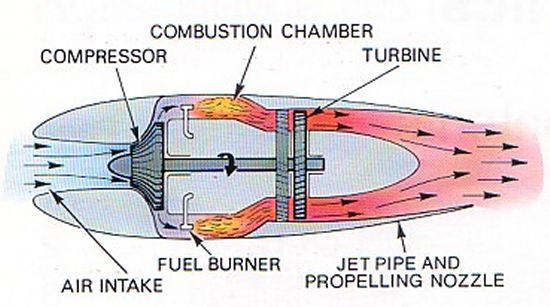
Similarly, the aircraft's engine (either piston/prop,
or turboprop, or jet (turbofan, really)) accelerates a
mass of air backwards, resulting in the thrust force
which pushes the aircraft forwards.

Image

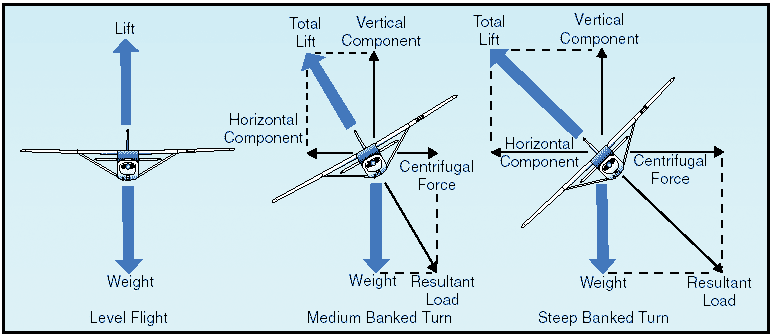
There are four forces acting on any aircraft in flight,
as pointed out by Sir George Cayley, a cousin of mine:

Image

Every airplane has a wing that pushes air down.
Every airplane has an engine that pushes air back.

That's what you need to know, as a pilot, to fly any airplane.

I suspect that I fly more wildly different types of aircraft than
anyone else here. I remember one day at Gatineau I flew
aerobatics in the Pitts, R-985 Stearman and L39 in a very
short period of time.

I don't use checklists in any airplane that I fly. I use a cockpit
flow, and the fundamental knowledge that a wing pushes air
down, and an engine pushes air back.
---------- ADS -----------
 
User avatar
Colonel Sanders
Top Poster
Top Poster
Posts: 7512
Joined: Sun Jun 14, 2009 5:17 pm
Location: Over Macho Grande

Re: Angle of attack in a climbing turn

Post by Colonel Sanders »

you will never, ever find a picture of wingtip vortices going up
Actually, I can do that, but I'm weird. Bonus points as to
how one could arrange that to happen :wink:
---------- ADS -----------
 
dr.aero
Rank 4
Rank 4
Posts: 272
Joined: Sat Apr 30, 2011 3:08 pm

Re: Angle of attack in a climbing turn

Post by dr.aero »

Colonel Sanders wrote:All a pilot really needs to know about a wing, is
that it pushes air downwards. And, even though
air is invisible, it certainly has mass - stick your
hand out the window of your car at 60 mph and
feel it pull it back.

A very unpleasant fellow called Sir Isaac Newton
figured out 3 laws of motion. The second law of
motion give us this wonderful formula:

Force = mass x acceleration

and that's how a wing works. It accelerates a mass
of air downwards, producing the lift force, which pushes
the aircraft up.

All sorts of people here will dispute that a wing pushes
air down, but you will never, ever find a picture of wingtip
vortices going up. Hm.

Image

Similarly, the aircraft's engine (either piston/prop,
or turboprop, or jet (turbofan, really)) accelerates a
mass of air backwards, resulting in the thrust force
which pushes the aircraft forwards.

Image

There are four forces acting on any aircraft in flight,
as pointed out by Sir George Cayley, a cousin of mine:

Image

Every airplane has a wing that pushes air down.
Every airplane has an engine that pushes air back.

That's what you need to know, as a pilot, to fly any airplane.

I suspect that I fly more wildly different types of aircraft than
anyone else here. I remember one day at Gatineau I flew
aerobatics in the Pitts, R-985 Stearman and L39 in a very
short period of time.

I don't use checklists in any airplane that I fly. I use a cockpit
flow, and the fundamental knowledge that a wing pushes air
down, and an engine pushes air back.
Nothing wrong with saying that. I'd say that a pilot should know more details about the forces in flight but not necessarily more complex than what you've described.

As for the picture of wingtip vortices going up (relative to earth) - I know of at least one way to do that, but only if it's a snapshot in time of an airplane in flight...
---------- ADS -----------
 
User avatar
Cat Driver
Top Poster
Top Poster
Posts: 18921
Joined: Sun Feb 15, 2004 8:31 pm

Re: Angle of attack in a climbing turn

Post by Cat Driver »

For me the best picture of wingtip vortices is closing my eyes and going back in time and remembering what the vortices behind a Stearman look like looking back at the spray pattern just after the pull up from a tobacco field.
---------- ADS -----------
 
photofly
Top Poster
Top Poster
Posts: 11306
Joined: Tue Jan 18, 2011 4:47 pm
Location: Hangry and crankypated

Re: Angle of attack in a climbing turn

Post by photofly »

Colonel Sanders wrote:
you will never, ever find a picture of wingtip vortices going up
Actually, I can do that, but I'm weird. Bonus points as to
how one could arrange that to happen :wink:
Pull negative g. ("Push" negative g, I guess, is more accurate.)
---------- ADS -----------
 
Last edited by photofly on Sat Dec 29, 2012 11:53 am, edited 2 times in total.
User avatar
gaamin
Rank 4
Rank 4
Posts: 231
Joined: Wed Sep 10, 2008 11:56 am

Re: Angle of attack in a climbing turn

Post by gaamin »

Colonel Sanders wrote:
you will never, ever find a picture of wingtip vortices going up
Actually, I can do that, but I'm weird. Bonus points as to how one could arrange that to happen :wink:
For instance, at the top of a loop... make that an outside loop so that the plane looks "normal" on the picture :)

As far as the OP is concerned :
- most pilots are ok just keeping the aircraft coordinated and [edited]using rudder as part of the recovery after a wing drop[/edited]... "falling leaf" exercise helps getting that good habit
- they might notice that for instance one wing drops first, or that they need a fair amount of outside aileron to remain coordinated
- pilots who want to know the "why" get guidance to draw the following... also works for descending turn
Samsung CLX-216x Series_20121229095742_1.jpg
Samsung CLX-216x Series_20121229095742_1.jpg (33.67 KiB) Viewed 1609 times
... seems to satisfy their curiosity
- such curious pilots get asked about the effect of flaps and ailerons on the effective AoA... based on the aircraft's configuration, attitude and coordination, the outside wing might or might not stall first in a climbing turning stall... so back to square one : react to the stall you feel by pitching down, pick up the dropped wing with rudder

I like to understand "why". I also like pilots not to overanalyze things in flight but focus instead on reacting to what they feel/see. Seems especially true with older student pilots with curious mind... the more knowledge they have, the more they'll be thinking about what is happening rather than fly the plane, for instance on short final in a crosswind.
Being curious myself, it takes an effort not to satisfy all of their curiosity until they have been able to consistently fly the maneuver right, hereby saving them time and money.

My two cents...
---------- ADS -----------
 
Last edited by gaamin on Sat Dec 29, 2012 3:45 pm, edited 1 time in total.
photofly
Top Poster
Top Poster
Posts: 11306
Joined: Tue Jan 18, 2011 4:47 pm
Location: Hangry and crankypated

Re: Angle of attack in a climbing turn

Post by photofly »

@dr.aero:

Thinking about things overnight, I recall you saying that I don't understand the zero-lift angle, that I'm using it wrong, and that I need to drop it. Then a bit later in this thread I wrote up a basic explanation of how an aileron 'works', with diagrams, based on examining how Cl varies with the angle the airflow makes to the zero-lift angle. You objected, and as far as I understood what you were objecting to it appeared to be the very same feature that makes it a good and powerful explanation: that it considers how Cl varies as the airflow varies with respect to the zero-lift angle.

So I think that's the root of your objection: the zero-lift angle itself. Can you tell me in a bit of detail how I'm misunderstanding the concept, and what it is about the way I'm using it that's incorrect?
---------- ADS -----------
 
photofly
Top Poster
Top Poster
Posts: 11306
Joined: Tue Jan 18, 2011 4:47 pm
Location: Hangry and crankypated

Re: Angle of attack in a climbing turn

Post by photofly »

Colonel Sanders wrote:
you will never, ever find a picture of wingtip vortices going up
Actually, I can do that, but I'm weird. Bonus points as to
how one could arrange that to happen :wink:
As a matter of fact I generate some up-going vortices, most of the time I fly. Or at least they try to be up-going. Double bonus points if you can tell me how, and what their strength depends on. Remember I'm a straight-and-level pilot, for the most part.
---------- ADS -----------
 
dr.aero
Rank 4
Rank 4
Posts: 272
Joined: Sat Apr 30, 2011 3:08 pm

Re: Angle of attack in a climbing turn

Post by dr.aero »

- most pilots are ok just keeping the aircraft coordinated and picking up a stalled wing with rudder
I really hope pilots aren't getting taught to pick up a stalled wing with rudder :shock:

I think every pilot should read this: http://www2.macleans.ca/2011/08/24/cockpit-crisis/

This is one reason that I am a proponent of educating pilots about aerodynamics and correcting the many misconceptions that pilots have due to the lack of knowledge to realize when something is wrong. It "seems" correct to them, so they teach it like it's correct! Haven't we had enough people killed because people don't know how to recover from a stall? - Air France (pitch control), Colgan Air (dancing on the rudders - eventually leading to a huge, irrecoverable wing drop) - neither would have crashed if they maintained situational awareness and followed the stall recovery procedure below.

I still think that pilot education about aerodynamics should be relatively simple, however:

1) You can't prove something wrong in aerodynamics usually, unless you go into the complex stuff
2) Most pilots aren't educated to a level that would allow them to understand that complex stuff
3) Most pilots believe what they know about aerodynamics as strongly as someone might believe in religion
4) The result of that is generally you can't 'prove' them wrong to their satisfaction and in fact it usually backfires because it then increases their conviction about what they initially thought.

So, that leaves us back at square one! Yay! And pilots still needlessly kill themselves.

As for a proper stall recovery (applicable for a Piper Cub to the A380):

1) Reduce pitch
2) Apply maximum power
3) Coordinated roll to wings level
4) Pull out of descent

It's very important to use coordinated inputs of both aileron and rudder. I wrote a 4 page article on this exact thing - not using rudder alone in the stall recover - and I'm debating about uploading it. Pilots in a small training airplane get away with this smashing rudder to lift the wing due to the huge amount of stability that most Cessnas and Pipers have so it reinforces the technique of using rudder but you are going to kill yourself when you try that on a different plane someday. As a note - a C152 with 2 people up front and with 1.5 hours of gas will be at the forward limit of the CG, every time. That's exactly what you want for stall recovery! You actually have to release backpressure to get it to unstall. Every C172 that I've flown I can't get it to stay in a spin for more than about 1-2 turns and it starts coming out and you end up in a spiral dive - and that's with FULL control deflection held at the initiation of a spin. Even using power and aileron and different techniques to get it to spin better... it still comes out! It's ridiculously stable! Don't think because you are able to do something in a Cessna or small trainer and get away with it, that you'll have the same results in another airplane.

Photofly...
So I think that's the root of your objection: the zero-lift angle itself. Can you tell me in a bit of detail how I'm misunderstanding the concept, and what it is about the way I'm using it that's incorrect?
1) Geometric AoA: uses a chord line that is drawn between the leading edge and trailing edge of the clean wing.
2) Absolute AoA: uses a chord line that is the same as the zero lift line.

When you ask what the zero lift AoA is, you're asking for the geometric AoA (everything in aerodynamics is in geometric AoA unless otherwise noted) that will produce zero net lift. For a cambered wing that will be some negative number like -2 degrees AoA. At -2 degrees AoA, you've aligned the zero lift line with the relative airflow. If it's a symmetrical wing, the zero lift AoA is zero degrees as the chord line for the clean wing is in exactly the same position as the zero lift line for that airfoil.

Reference this image: http://www.petester.com/aeropics/col.gif

You'll notice that the red line intersects the x-axis at approx. -1.5 degrees. The intersection of the x-axis represents the AoA necessary for zero net lift. As I explained, for an asymmetrical airfoil you'll have zero lift at a negative AoA - that is shown here. The purple line is for a symmetrical airfoil and as I explained above, the zero lift AoA is zero degrees - that is shown here.

You should notice that there is no difference between geometric AoA and absolute AoA for a symmetrical airfoil. If you wanted to use absolute AoA for an asymmetrical wing you'd have to translate geometric into absolute - which is quite easy as you will add, to every value, the number of degrees left of the origin that the CL intersects the x-axis. In this case that's 1.5 units. By doing that, you're shifting the entire line to the right so that it now also intersects the origin.

Does that make sense?
---------- ADS -----------
 
User avatar
Shiny Side Up
Top Poster
Top Poster
Posts: 5335
Joined: Tue Feb 17, 2004 5:02 pm
Location: Group W bench

Re: Angle of attack in a climbing turn

Post by Shiny Side Up »

dr.aero wrote:
- most pilots are ok just keeping the aircraft coordinated and picking up a stalled wing with rudder
I really hope pilots aren't getting taught to pick up a stalled wing with rudder :shock:
I guess you've never done the "falling leaf". :rolleyes:
---------- ADS -----------
 
dr.aero
Rank 4
Rank 4
Posts: 272
Joined: Sat Apr 30, 2011 3:08 pm

Re: Angle of attack in a climbing turn

Post by dr.aero »

I have done the falling leaf - doesn't mean everyone has done it though.

I think you missed the point of my post.
---------- ADS -----------
 
photofly
Top Poster
Top Poster
Posts: 11306
Joined: Tue Jan 18, 2011 4:47 pm
Location: Hangry and crankypated

Re: Angle of attack in a climbing turn

Post by photofly »

dr.aero wrote: Does that make sense?
Oh, yes, absolutely. Thank-you.

I come back to your point that I don't understand the zero-lift angle, I'm using it wrongly, and I need to drop it.

Could you continue by pointing out in an equally considerable level of detail, how, since the start of this thread, I've used the concept of the zero-lift angle in any way, shape or form that contradicts what you just wrote? I'm not seeing it, and I'd like to, very much.
---------- ADS -----------
 
User avatar
Colonel Sanders
Top Poster
Top Poster
Posts: 7512
Joined: Sun Jun 14, 2009 5:17 pm
Location: Over Macho Grande

Re: Angle of attack in a climbing turn

Post by Colonel Sanders »

proper stall recovery
No. Hilariously, not proper.
---------- ADS -----------
 
User avatar
Shiny Side Up
Top Poster
Top Poster
Posts: 5335
Joined: Tue Feb 17, 2004 5:02 pm
Location: Group W bench

Re: Angle of attack in a climbing turn

Post by Shiny Side Up »

Colonel Sanders wrote:
proper stall recovery
No. Hilariously, not proper.
This thread delivers! :mrgreen:
---------- ADS -----------
 
dr.aero
Rank 4
Rank 4
Posts: 272
Joined: Sat Apr 30, 2011 3:08 pm

Re: Angle of attack in a climbing turn

Post by dr.aero »

Could you continue by pointing out in an equally considerable level of detail, how, since the start of this thread, I've used the concept of the zero-lift angle in any way, shape or form that contradicts what you just wrote? I'm not seeing it, and I'd like to, very much.
I will try. But this immediately goes to the definition of a chord line and that it is for the clean wing profile. To explain why that is true, with the level of detail you'd like, would require about a 5000 word essay. The reason it'll take so long is because I'd have to go through a number of examples, in detail, explaining how the aerodynamic engineers would describe something using the definitions that I use.. and then I'd have to explain why it's more complicated to say that the chord line will change based on changes in the shape of the airfoil.

This is strictly a definition thing! You're not necessarily wrong, as people think of that word, but it goes against what the people who study this for a living use as the definition - so for that reason I say it's wrong.

If I may introduce the forces in a turn, I'll show you an example of what I mean.

This is a correct depiction of the forces in a turn: http://selair.selkirk.ca/Training/Aerod ... f-turn.gif

This is incorrect: http://www.free-online-private-pilot-gr ... g_turn.gif

I'm not sure of your background in physics, but in high school you're taught that if the forces on an object are balanced, there will be no acceleration. You'd also learn in high school that if you're in a turn, you're constantly accelerating. If you don't understand either of those, let me know or you won't follow me.

So, knowing that you should immediately be able to say that the forces in the second picture are all balanced and therefore there is no acceleration. Since a turn requires the airplane to be accelerating (a simple way to prove that is the person inside the airplane is feeling more than 1G of acceleration while in a turn - 45 degree bank is 1.41G and 60 degree bank is 2G, which I think most every pilot knows) and the airplane in the second picture is not accelerating, the picture is wrong.

Now, all the forces that are shown in the second picture are not "incorrect" at all - the problem is that the person who drew the picture included the forces that are present in a turn from TWO reference frames! The inertial reference frame and the non-inertial reference frame. If you wikipedia those two terms it should explain it in quite a bit of detail for you. At this point you need to decide which reference frame is best to be used. In the end, it's the inertial reference frame because the non-inertial reference frame gets very complicated and isn't that intuitive for learning. When you're in the airplane while in a turn, you're in a non-inertial reference frame as you are accelerating. You feel like you're being pushed down into your seat (because you are) and you'd have to conclude that since you're being pushing into your seat, something is applying a force on you and accelerating you in that direction. Obviously not true as you're accelerating in a different direction (not directly opposite as you might think, but directly towards the center of the turn).

Back to angle of attack: so essentially what you're doing is coming up with a different definition for angle of attack, one that makes sense to you under the conditions of a specific subject, but will fall apart when you start going into different subjects. I tried pointing that out with your diagrams but I don't think I explained it in enough detail. You had, by keeping the chord line relative to the shape of the airfoil, kept the CL line in the same position (roughly). Look at the lift equation --> L = 0.5 rho V^2 S Cl -- you claim that the angle of attack had increased, resulting in more lift, and the Cl had stayed essentially the same. But in the lift equation you have no place to account for AoA separately. AoA and the coefficient line determines what coefficient of lift you're at and the Cl is what determines the lift! So if you make the Cl stay the same, by saying the angle of attack changes, you really haven't changed the lift at all. Does that make sense?

Everyone knows you have changed the lift when you deflect an aileron or flap, but explaining it using your definition takes you to a paradox!

Back to your quote I have at the top - you say "zero lift angle". That essentially means zero lift angle of attack (geometric). I explained that in detail in my last post (stating that it was the chord line of the clean wing) and you said you understood it. Knowing that, does that clear it up?
---------- ADS -----------
 
dr.aero
Rank 4
Rank 4
Posts: 272
Joined: Sat Apr 30, 2011 3:08 pm

Re: Angle of attack in a climbing turn

Post by dr.aero »

Colonel Sanders wrote:
proper stall recovery
No. Hilariously, not proper.
Entertain me, Colonel! Show me the error in my ways!

Edit: Maybe we should actually start a new thread, if you'd like to discuss it, as it's a completely different subject and this thread is already complicated enough!
---------- ADS -----------
 
dr.aero
Rank 4
Rank 4
Posts: 272
Joined: Sat Apr 30, 2011 3:08 pm

Re: Angle of attack in a climbing turn

Post by dr.aero »

Surprisingly, a quick search reveals quite a bit of stall/spin crashes in small Cessnas - despite being one of the most stable aircraft out there. Hmmm...

Here is one such accident that was caught on film - http://www.youtube.com/watch?v=8jwrUriuqPg

Maybe if the pilot understood aerodynamics a bit better he wouldn't have been so careless and reckless.
---------- ADS -----------
 
User avatar
Colonel Sanders
Top Poster
Top Poster
Posts: 7512
Joined: Sun Jun 14, 2009 5:17 pm
Location: Over Macho Grande

Re: Angle of attack in a climbing turn

Post by Colonel Sanders »

Show me the error in my ways!
Sure. I perform tumbles at low altitude as part of
my airshow routine. I presume that from your
attitude that you must hold a Statement of Aerobatic
Competency in a wide range of aircraft.

When I recover from my tumble, I am below 1000
AGL. 90% of the time I am in an inverted spin. 10%
of the time I am in a tailslide.

If I took your advice, I would have died years ago.

Giving people advice that will kill them is not funny.

Image
---------- ADS -----------
 
Trematode
Rank 4
Rank 4
Posts: 235
Joined: Thu Apr 28, 2011 2:46 pm

Re: Angle of attack in a climbing turn

Post by Trematode »

So if you make the Cl stay the same, by saying the angle of attack changes, you really haven't changed the lift at all. Does that make sense?

Everyone knows you have changed the lift when you deflect an aileron or flap, but explaining it using your definition takes you to a paradox!
Ugh -- nobody was saying the lift coefficient was staying the same.

At the risk of beleaguering an already beleaguered thread. You know nothing we've said is incorrect -- you've said as much:
This is strictly a definition thing! You're not necessarily wrong, as people think of that word, but it goes against what the people who study this for a living use as the definition - so for that reason I say it's wrong.
Thread would have been a lot shorter and sweeter if you'd have said that in the begining.

The definition you are using is one of convention, to make it easier to examine the effects of control surfaces in an academic setting. There is nothing wrong with throwing the clean wing chord definition by the wayside to better convey what is actually happening to a student pilot. It is not technically wrong, it just doesn't adhere to standard convention.

I am still waiting for you explaination as to why you would experience MORE flow separation AT THE AILERON, with an aileron down, and not with it neutral when the rest of the wing is already flying close to or at its critical angle... Oh wait... We already did:

Dr. Aero wrote:
because a downward deflection of aileron will increase the AoA on that section of wing and possibly get it to stall which will drop you out of the sky pretty fast into a very unusual attitude or into a spin.
---------- ADS -----------
 
dr.aero
Rank 4
Rank 4
Posts: 272
Joined: Sat Apr 30, 2011 3:08 pm

Re: Angle of attack in a climbing turn

Post by dr.aero »

When I recover from my tumble, I am below 1000
AGL. 90% of the time I am in an inverted spin. 10%
of the time I am in a tailslide.
Did I say it was an inverted spin recover? Or a tailslide recover? Ironically, it seems you are the troll. :roll:
Thread would have been a lot shorter and sweeter if you'd have said that in the begining.
You clearly did not understand a word of what I said if you came to that conclusion.
I am still waiting for you explaination as to why you would experience MORE flow separation AT THE AILERON, with an aileron down, and not with it neutral when the rest of the wing is already flying close to or at its critical angle... Oh wait... We already did:
That quote was in error. I made a correction to what I initially said... if you go back you'll see the correction. It seems obvious you just don't want to debate fairly.

By the way, saying that AoA increases does not explain flow separation, as you would like to believe. In this context, it works, but when talking about tailplane lift, you'll see that it doesn't work anymore.

The intelligence you display is astoundingly low! :D

I have no problem explaining something, however, when the person is outright saying that I'm wrong and that they're right, I have no patience for that. It's like me going up to a medical doctor and arguing that he's wrong and that I know what I'm talking about. I'm no medical doctor so clearly I don't know a lot about the human body. In that case, I'd have the intelligence to realize that I was talking with someone who did know what they were talking about and wouldn't outright call them wrong without a shred of evidence, as you have done. I mostly assuredly wouldn't understand everything that the medical doctor would tell me and you can be sure I wouldn't say that HE is wrong because I don't understand it. That kind of attitude really pisses me off - I hope I've made that clear!
---------- ADS -----------
 
Trematode
Rank 4
Rank 4
Posts: 235
Joined: Thu Apr 28, 2011 2:46 pm

Re: Angle of attack in a climbing turn

Post by Trematode »

Never once did I call you wrong, buddy. I've only ever said there was nothing wrong with explaining things a little differently -- you were the one that fervently rebuked me and others for saying that.

The funny part is that you begrundgingly admit that you are just being pedantic (and I quote):
This is strictly a definition thing! You're not necessarily wrong, as people think of that word [...]
What people? Idiots? You insult your fellow posters intelligence, when all anyone here is trying to do is learn.
---------- ADS -----------
 
Last edited by Trematode on Sat Dec 29, 2012 5:34 pm, edited 1 time in total.
Locked

Return to “Flight Training”