For my fist post, I have a couple of questions. I know the answer to these questions might not be straightforward and/or opinion-based, but that should still be helpful.
1) In discussing nighttime engine failure scenarios with several different instructors, I am getting the feeling that the majority of pilots would choose a road for a forced landing rather than a dark unknown field. Am I getting the wrong impression ?
2) Also in discussing an engine failure scenario, I was told that if my engine cut out during my crosswind ( so lets say I am 500 - 700 feet AAE ) that it would definitely not be wise to attempt to turn back to the runway due to tailwinds. I am aware that attempting to return to the airport with a total engine failure is fraught with pitfalls, but I don't fully grasp why a tailwind would be a negative factor. Wouldn;t it put you over the runway faster than a headwond ? Offhand, the only thing I can think of is that it would reduce lift, but isn't that only true if it is gusting ?
A couple of questions
Moderators: lilfssister, North Shore, sky's the limit, sepia, Sulako, Right Seat Captain
-
white_knuckle_flyer
- Rank 3

- Posts: 175
- Joined: Wed Jan 16, 2013 8:43 am

Re: A couple of questions
Depends on the person. My thoughts are if you have an engine failure on departure at night with said crosswind, turning back towards the runway could run someone into a stall during the turn (low airspeed as is on dep coupled with the turn downwind).
That being said I'll take tarmac vs trees any day!
That being said I'll take tarmac vs trees any day!
Re: A couple of questions
Engine failure scenarios are all individual; the best course of action depends on terrain, wind, height and pilot skill. A road could be a dark narrow track, or a four lane divided highway with lights!
One often-quoted piece of advice for a forced landing at night is to glide towards the blackest hole you can find. At five hundred feet, switch on the landing lights. If you like what you see, leave them on. If you don't like what you see, turn them off. Luckily I've not yet been in a position to try it so I can't tell you if it's any use.
I think that the most important piece of advice I have ever been given regarding forced landings is to fly the plane - all the way until it stops moving. A controlled glide slowing up before "touchdown" gives you a much better chance of survival, even in the dark, than stalling at height followed by an out-of-control descent and impact. The advice against trying to turn back to the field is based on the high level of risk of doing just that, by trying to stretch a glide to try to get to the safety of an airfield that is outside the physical reach of the aircraft at the time.
Having said that, if I could make the airfield in a glide descent I wouldn't hesitate to land downwind, if the other option was a riskier off-airport landing. Even if the runway is short and you don't have enough room to brake to a standstill, running off the end of a runway after an otherwise smooth downwind touchdown is not of itself a life-threatening event.
Another valuable (I think) thing to remember is that any time your aircraft has a serious mechanical failure that puts the safety of the flight in jeopardy your first priority is to get yourself and your passengers on the ground, a) alive and b) preferably uninjured. You can and should treat the plane essentially as a disposable life-raft to make that happen.
One often-quoted piece of advice for a forced landing at night is to glide towards the blackest hole you can find. At five hundred feet, switch on the landing lights. If you like what you see, leave them on. If you don't like what you see, turn them off. Luckily I've not yet been in a position to try it so I can't tell you if it's any use.
I think that the most important piece of advice I have ever been given regarding forced landings is to fly the plane - all the way until it stops moving. A controlled glide slowing up before "touchdown" gives you a much better chance of survival, even in the dark, than stalling at height followed by an out-of-control descent and impact. The advice against trying to turn back to the field is based on the high level of risk of doing just that, by trying to stretch a glide to try to get to the safety of an airfield that is outside the physical reach of the aircraft at the time.
Having said that, if I could make the airfield in a glide descent I wouldn't hesitate to land downwind, if the other option was a riskier off-airport landing. Even if the runway is short and you don't have enough room to brake to a standstill, running off the end of a runway after an otherwise smooth downwind touchdown is not of itself a life-threatening event.
Another valuable (I think) thing to remember is that any time your aircraft has a serious mechanical failure that puts the safety of the flight in jeopardy your first priority is to get yourself and your passengers on the ground, a) alive and b) preferably uninjured. You can and should treat the plane essentially as a disposable life-raft to make that happen.
-
FenderManDan

- Rank 6

- Posts: 490
- Joined: Wed Aug 03, 2011 10:40 am
- Location: Toilet, Onterible
Re: A couple of questions
1. Choosing a road or really seeing where you are landing beats darkness, i guess (I don't have a night rating so I am not sure)
2. The impossible turn discussion will start from this.
The gist is that is the "impossible turn" possible, well it depends on wind, airplane, skills and cojones.
I was trained to turn back at 1000 AGL, everything below is land straight ahead with minimum turns and corrections just glide.
Once during the runway change, while in the cross wind, I did turn back at 500-600 AGL as an exercise to see what happens. I "ate" plenty of runway, luckily the runway is long and this was an exercise so I did not land.
2. The impossible turn discussion will start from this.
The gist is that is the "impossible turn" possible, well it depends on wind, airplane, skills and cojones.
I was trained to turn back at 1000 AGL, everything below is land straight ahead with minimum turns and corrections just glide.
Once during the runway change, while in the cross wind, I did turn back at 500-600 AGL as an exercise to see what happens. I "ate" plenty of runway, luckily the runway is long and this was an exercise so I did not land.
Last edited by FenderManDan on Thu Jan 17, 2013 7:41 am, edited 2 times in total.

Re: A couple of questions
WNF
Nothing in pilot decision making is absolute.
However, in general, choosing a road for a landing site is a poor choice. They can look attractive when everything else around you is a black hole at night, but that does not make them better. Generally roads have things on and near them which are very undesirable to hit. Your chances of getting tangled up in wires near a road are very high. I would rather make a very well controlled forced landing into a black hole in an area I know, than to attempt a forced landing onto a road, where the situation and conditions is very likely to change rapidly at the last moment, and make a "good" idea suddenly look bad.
My personal preference for night flying is to either fly over a surface area I know very very well, go I can guess where to aim, or preferably to fly as high as possible, so as to resolve an engine problem before it puts me on the ground. Twice during night flying singles I have had an engine failure. Both times I got it running again on the way down, and continued to the next suitable landing place.
You were (or will be) trained to never attempt a return to the runway from which you took off. Do what your training tells you. Space is too short here to describe all the reasons that a turnback is a bad idea. A few pilots will tell you it can be done, or they have done it. It can be done in ideal conditions, if everything is going for you, and you are very well prepared. How often do all those conditions align for you?
As for night forced landings, you're much better to make a well controlled landing into a less than ideal area, than last second aerobatics, and a horrible landing into an area which might seem better. I have helped to lift two dead friends (both many multi thousand hour pilots) out of their crashed planes following very unstable final approaches - one an engine failure after takeoff, where he tried to get back to the runway, and did not.
When everything else is going wrong (you're suddenly gliding), keep things as simple as you are able to, and prevent situations where you might have to change what you're doing (your plan) close to the ground. Plan a stable approach, and execute it.
Nothing in pilot decision making is absolute.
However, in general, choosing a road for a landing site is a poor choice. They can look attractive when everything else around you is a black hole at night, but that does not make them better. Generally roads have things on and near them which are very undesirable to hit. Your chances of getting tangled up in wires near a road are very high. I would rather make a very well controlled forced landing into a black hole in an area I know, than to attempt a forced landing onto a road, where the situation and conditions is very likely to change rapidly at the last moment, and make a "good" idea suddenly look bad.
My personal preference for night flying is to either fly over a surface area I know very very well, go I can guess where to aim, or preferably to fly as high as possible, so as to resolve an engine problem before it puts me on the ground. Twice during night flying singles I have had an engine failure. Both times I got it running again on the way down, and continued to the next suitable landing place.
You were (or will be) trained to never attempt a return to the runway from which you took off. Do what your training tells you. Space is too short here to describe all the reasons that a turnback is a bad idea. A few pilots will tell you it can be done, or they have done it. It can be done in ideal conditions, if everything is going for you, and you are very well prepared. How often do all those conditions align for you?
As for night forced landings, you're much better to make a well controlled landing into a less than ideal area, than last second aerobatics, and a horrible landing into an area which might seem better. I have helped to lift two dead friends (both many multi thousand hour pilots) out of their crashed planes following very unstable final approaches - one an engine failure after takeoff, where he tried to get back to the runway, and did not.
When everything else is going wrong (you're suddenly gliding), keep things as simple as you are able to, and prevent situations where you might have to change what you're doing (your plan) close to the ground. Plan a stable approach, and execute it.


Re: A couple of questions
As already mentioned, pilot decision making is the hardest part of flying no matter what level you're at. What changes is the nature of the decisions you have to make. So it's hard to state definitely what the best of action is because it is always situation dependant and there are infinite variables in every situation so no one answer applies at all times. Yet an internet forum lends itself to quick, short "this is the answer" type of responses.
So, landing on a road at night - very much situation dependant so sometimes yes sometimes no. I think more importantly is that your night flights are planned to always follow or track near to a more major road. Sure, it gives you an option for an engine-out landing, but more importantly it keeps you nearer to assistance once you're on the ground. And with a more major road/highway there tends to be development along it which provides more open spaces with more options to land. Depending on your experience level it also helps very much in avoiding navigation errors.
Remember, for the most part flying night single engine VFR at has a much higher risk to it and one of the major ones is forced landings. That's why the majority of private pilots who regularly fly single engine VFR don't do much of it at night. One of the vagaries of Canada's licencing system is that to ultimately get an ATPL you are required to have 25 hours of night PIC cross-country. And the stage when most career oriented pilots get this time is during their CPL training when they are relatively the least capable.
So don't make the night time flights more risky than they need to be. There is no benefit whatsoever from flying over remote countryside "because it's more difficult to navigate so it develops better skills." What a crock, yet I've actually heard flight instructors tell that to their students. Keep in mind that flying is all about risk management which is keeping the risk level as low as possible, not increasing it unnecessarily. It doesn't matter where the night cross country is flown, just that you get 25 hours of it.
So, landing on a road at night - very much situation dependant so sometimes yes sometimes no. I think more importantly is that your night flights are planned to always follow or track near to a more major road. Sure, it gives you an option for an engine-out landing, but more importantly it keeps you nearer to assistance once you're on the ground. And with a more major road/highway there tends to be development along it which provides more open spaces with more options to land. Depending on your experience level it also helps very much in avoiding navigation errors.
Remember, for the most part flying night single engine VFR at has a much higher risk to it and one of the major ones is forced landings. That's why the majority of private pilots who regularly fly single engine VFR don't do much of it at night. One of the vagaries of Canada's licencing system is that to ultimately get an ATPL you are required to have 25 hours of night PIC cross-country. And the stage when most career oriented pilots get this time is during their CPL training when they are relatively the least capable.
So don't make the night time flights more risky than they need to be. There is no benefit whatsoever from flying over remote countryside "because it's more difficult to navigate so it develops better skills." What a crock, yet I've actually heard flight instructors tell that to their students. Keep in mind that flying is all about risk management which is keeping the risk level as low as possible, not increasing it unnecessarily. It doesn't matter where the night cross country is flown, just that you get 25 hours of it.
-
white_knuckle_flyer
- Rank 3
- Posts: 175
- Joined: Wed Jan 16, 2013 8:43 am
Re: A couple of questions
I'm starting to get the feeling that single-engine VFR is wholly dangerous and that it should be avoided at all costs. But here I am taking my night rating, surrounded by instructors who tell me "oh its great...throw your family in and do the city tour (Toronto) or go to niagara Falls or just go up and fly around looking at the lights." But once I am out of the airport, all I read/hear is how most pilots stay as far away from SE night flights as possible. Hell, an AC pilot friend thinks I'm crazy for daytime SE flights !
My main reason for getting my night rating is to allow me the luxury of not rushing back to the airport as soon as the sun starts to drop. I never really considered making intentional night flights for pleasure until I started talking to instructors. Now, I'm thinking that its probably the riskiest dumbest thing I do, and that the last thing I should do is include my family in the insanity.
Knee-jerk or justified ?
My main reason for getting my night rating is to allow me the luxury of not rushing back to the airport as soon as the sun starts to drop. I never really considered making intentional night flights for pleasure until I started talking to instructors. Now, I'm thinking that its probably the riskiest dumbest thing I do, and that the last thing I should do is include my family in the insanity.
Knee-jerk or justified ?
-
Colonel Sanders

- Top Poster

- Posts: 7512
- Joined: Sun Jun 14, 2009 5:17 pm
- Location: Over Macho Grande
Re: A couple of questions
Ok, but probably for the wrong reasons. The enginemost pilots stay as far away from SE night flights as possible
has no eyeballs - it does not know if it is daytime or
nighttime, and runs pretty much the same during
both.
Aircraft reliability is NOT the reason you should refrain
from night flight. If it's junk, don't fly it during the daytime,
either. PPL's have an abysmal record with forced approaches
even during the daytime.
Night flying is actually quite nice. Fewer bonehead pilots
around, and you can see aircraft for miles.
What makes night flying sporty is two things:
1) weather
2) pilots
At night, it's going to cool off, and it can go IFR. All
you have to do is watch the dewpoint spread. When
it gets down to 3C, land.
Pilots are really the weakest link when it comes to
night flying. Google JFK, jr. The transition to flying
on instruments - night VFR is often very much like IFR
flying - is what will kill you. It killed Jim Croce, for example,
and his pilot had 12,000 hrs and an ATP.
Today I flew across the Gulf of Mexico - again - in a
single-engine biplane. It really was no big deal, just
a few frequency changes and a couple of diversions
for TCu. I would happily do it again tomorrow, because
the airplane isn't junk.
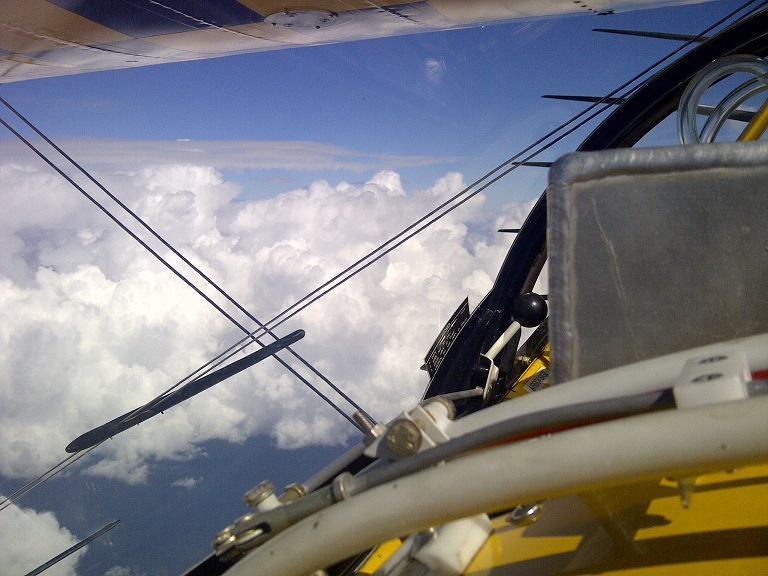
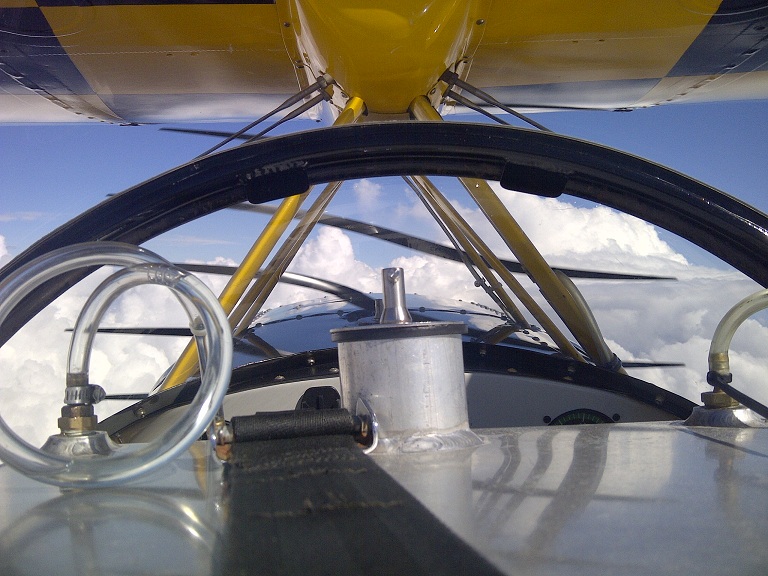
No gyros whatsoever, not even a VSI. Just altimeter,
airspeed and a portable GPS. Tremendously enjoyable.
The thing to remember - which pilots refuse to ever
admit, because every pilot thinks he is "above average"
which is a statistical uncertainty - is that YOU are
the weakest link. At least 95% of accidents can be
directly attributed to (usually multiple) mistakes made
by the pilot.
If you decide to stop making mistakes as a pilot, you
can fly pretty safely. I really lean on people here to stop
making mistakes, and it hurts their feelings. Not sure
what to do about that.
Last edited by Colonel Sanders on Thu Jan 17, 2013 5:57 pm, edited 1 time in total.
 ?
?-
Colonel Sanders
- Top Poster
- Posts: 7512
- Joined: Sun Jun 14, 2009 5:17 pm
- Location: Over Macho Grande
Re: A couple of questions
No raft. Inflatable life jacket and waterproof 406 PLB
under a parachute.
If the engine quits, I ain't landing in the water. Pop
the canopy, climb over the side. Pull the D-ring, then
after I'm in the water get away from the chute as fast
as possible - it's gonna sink - inflate the life vest, and
paddle about the Gulf of Mexico - the water's quite
warm - until someone homes in on my PLB.
But the engine isn't going to quit. I worked on that
engine myself, and it's not junk. It has two new magnetos
on it and new spark plugs and I just honed out the valve
guides. If you feed it gas, it's going to keep running,
regardless if I am over land or water.
Pilots are the weak link - not a well-maintained aircraft.
under a parachute.
If the engine quits, I ain't landing in the water. Pop
the canopy, climb over the side. Pull the D-ring, then
after I'm in the water get away from the chute as fast
as possible - it's gonna sink - inflate the life vest, and
paddle about the Gulf of Mexico - the water's quite
warm - until someone homes in on my PLB.
But the engine isn't going to quit. I worked on that
engine myself, and it's not junk. It has two new magnetos
on it and new spark plugs and I just honed out the valve
guides. If you feed it gas, it's going to keep running,
regardless if I am over land or water.
Pilots are the weak link - not a well-maintained aircraft.
Last edited by Colonel Sanders on Thu Jan 17, 2013 6:05 pm, edited 1 time in total.
Re: A couple of questions
Fair enough. But there's confidence, and then there's confidence!But the engine isn't going to quit. I worked on that
engine myself, and it's not junk.
-
Colonel Sanders
- Top Poster
- Posts: 7512
- Joined: Sun Jun 14, 2009 5:17 pm
- Location: Over Macho Grande
Re: A couple of questions
Not sure I understand what you're getting at. I
personally inspected and cleaned with MEK each
of the exhaust valves. The guides are clean - see
SB388C & SI 14525A. The rings are good - bottom
plugs are clean.
Exactly what failure mode are you worried about?
Statistically, pilots screw up 100 times for every times
that a crankshaft breaks. Make that 10,000 times.
Why do people worry about 1 in 10,000? I worry about
the other 9,999 (pilot error) because that's what's going
to kill you - not a broken crankshaft, or a wing falling off.
I know the Lycoming AEIO-540D4A5 really, really well.
I have flown many examples of it, and I know when it's
right and when it's not, even if all of the AvCan experts
think I know nothing about aviation.
personally inspected and cleaned with MEK each
of the exhaust valves. The guides are clean - see
SB388C & SI 14525A. The rings are good - bottom
plugs are clean.
Exactly what failure mode are you worried about?
Statistically, pilots screw up 100 times for every times
that a crankshaft breaks. Make that 10,000 times.
Why do people worry about 1 in 10,000? I worry about
the other 9,999 (pilot error) because that's what's going
to kill you - not a broken crankshaft, or a wing falling off.
I know the Lycoming AEIO-540D4A5 really, really well.
I have flown many examples of it, and I know when it's
right and when it's not, even if all of the AvCan experts
think I know nothing about aviation.
Re: A couple of questions
Only that, even with justifiably maximal confidence in the engine, you still have a parachute.Not sure I understand what you're getting at.
-
Colonel Sanders
- Top Poster
- Posts: 7512
- Joined: Sun Jun 14, 2009 5:17 pm
- Location: Over Macho Grande
Re: A couple of questions
Ok, but a parachute in a biplane is like wearing
socks with shoes. I have spent thousands of hours
wearing parachutes in biplanes, mostly over land
but sometimes over water. It really doesn't matter
what you're flying over.
socks with shoes. I have spent thousands of hours
wearing parachutes in biplanes, mostly over land
but sometimes over water. It really doesn't matter
what you're flying over.
Re: A couple of questions
And a lifejacket, and waterproof PLB :whistle:Colonel Sanders wrote:Ok, but a parachute in a biplane is like wearing
socks with shoes. I have spent thousands of hours
wearing parachutes in biplanes, mostly over land
but sometimes over water. It really doesn't matter
what you're flying over.
Re: A couple of questions
I presume you've done your research and accepted a calculated risk. Personally, I'd consider adding some sort of immersion suit for a Gulf of Mexico crossing, especially at this time of year.Colonel Sanders wrote:...and
paddle about the Gulf of Mexico - the water's quite
warm - until someone homes in on my PLB.
There are many spots in the gulf today where you would have hypothermia related exhaustion times of 1-3 hours and a survival time of 1-6 hours. Even the odd spot at 0.5-1 and 1-3.
http://www.astoverwater.com/page/page/4485232.htm
NOAA has current water temp data for the gulf.
SAR times and capabilities beyond 200nm offshore aren't terribly reassuring either. You'll be found and picked up eventually of course, but likely not before you're good and cold, even in the "warm" areas.
Re: A couple of questions
Well, yes, you can avoid SE VFR for the cost of a multi engine aircraft! Pay if you will - about twice the cost, for obvious reasons. But then you have the (albeit low) risks of a single engine failure, and the asymmetry.I'm starting to get the feeling that single-engine VFR is wholly dangerous and that it should be avoided at all costs.
Your night flying risks are not the engine quitting (unless you're a fool with fuel), they are loss of awareness and CFIT. As mentioned, JFK jr. is the unfortunate poster child for this. The 10 hours of instrument time for a night rating barely keeps you upright when you loose reference with the surface.
The key in night flying is to constantly recognize, and reassess risk, it changes all the time at night. You open the throttle on the nicely lit runway, and off you go. The instant you leave the ground, the landing light is not pointed at the ground any more, and the runways lights just left behind you. There are zero lights ahead of you, and it's a moonless night. You're climbing out in instruments, and you gotta get it right, or you're about to be in big trouble, and might not even know it.
Understand and assess the risks - engine failure, and a controlled forced landing, are way down the list....
-
Colonel Sanders
- Top Poster
- Posts: 7512
- Joined: Sun Jun 14, 2009 5:17 pm
- Location: Over Macho Grande
Re: A couple of questions
Sigh. You've missed the entire point of what I'm trying to communicate.I'd consider adding some sort of immersion suit for a Gulf of Mexico crossing
You're trying to optimize 1 in 10,000 and ignoring 9,999 which
is extremely poor engineering.
Yes!!! Yes!!! He "gets it". If you looked at 10,000 GA singleYour night flying risks are not the engine quitting (unless you're a fool with fuel), they are loss of awareness and CFIT
engine night accidents, only an extremely tiny percentage would
be attributed to the crankshaft breaking, or a wing falling off.
99.999% of the accidents would be attributed to the pilot.
I find it discouraging that pilots refuse to talk about the
biggest problem that they have - themselves. When the subject
of night flying comes up, every pilot is concerned only
about the 1 in 10,000 and ignores the other 9,999.
At the risk of hurting people's feelings, if you want to know
what the big problem is with night SEL, look in the mirror, not
under the cowling. I know I have to mention this oh-so-delicately
because people's feelings might get hurt - a catastrophic
event on AvCan - but sometimes, the truth hurts. Because
it's the truth. If what I said was complete nonsense, you'd
laugh it off, as rubbish.
I love flying SEL at night, and over water. It's very peaceful
and relaxing. When I head out over the water SEL, it's like
coming home - it's safety. Nothing to hit, no hills, no towers,
no wires, and the Cb's which are kicked into life over the heated
land generally subside. Instrument approaches over water are
ridiculously easy and safe, even if you don't have any gyros -
just descend below the cloud over the safety of the water,
and drive into the airport on the shore.
Just don't hit any cruise ships. You can buzz them if you
want - do a nice roll overhead them, looking up at them
as you are inverted on top of them - but I'm getting a little
old for that crap.
-
Colonel Sanders
- Top Poster
- Posts: 7512
- Joined: Sun Jun 14, 2009 5:17 pm
- Location: Over Macho Grande
Re: A couple of questions
At the risk of offending people, what I have learned
in the past 40 years of flying:
If the wx is good, and you have lots of gas, you're
going to have a nice trip. All you have to do is hold
your heading and look down at your ETA.
The above statement is true regardless of what you
are flying over, and whether or not it is day or night,
because the aircraft does not have eyeballs, and does
not get scared if it is night time, or over water.
Feel free to think that I don't know very much about
aviation, compared to you. I don't even own a watch,
for example, let alone one of those huge rolexes with
all those dohickeys and dials on it.
Gods of Aerobatics - merely mention his name, and choruses
of angels will start to sing - was flying either to or from an
aerobatic contest in poor wx, and hit near the top of a hill
in rising terrain. He had to wait until the resulting fire melted
the canopy and softened it enough, that he was able to kick
it out, and escape.
This is not a non sequitur. This guy is the "best of the best"
that everyone comes to, to learn from at aerobatic camps,
in order to win at contests. And he was flying over land during
the daytime, which everyone here tells me is safer than what
I do (water, night).
A few years back, I did another airshow in Central America,
and I just flew direct from Key West, across the Gulf. The
Russian hero that was also performing in his monoplane -
multiple world championships, queue choruses of angels -
was late arriving - he had a horrible, long flight over land,
battling hills and thunderstorms, because like you guys, he
thinks that flying over water is risky.
in the past 40 years of flying:
If the wx is good, and you have lots of gas, you're
going to have a nice trip. All you have to do is hold
your heading and look down at your ETA.
The above statement is true regardless of what you
are flying over, and whether or not it is day or night,
because the aircraft does not have eyeballs, and does
not get scared if it is night time, or over water.
Feel free to think that I don't know very much about
aviation, compared to you. I don't even own a watch,
for example, let alone one of those huge rolexes with
all those dohickeys and dials on it.
I am reminded of a recent accident. Once of the RussianWhen I head out over the water SEL, it's like
coming home - it's safety. Nothing to hit, no hills, no towers,
no wires, and the Cb's which are kicked into life over the heated
land generally subside
Gods of Aerobatics - merely mention his name, and choruses
of angels will start to sing - was flying either to or from an
aerobatic contest in poor wx, and hit near the top of a hill
in rising terrain. He had to wait until the resulting fire melted
the canopy and softened it enough, that he was able to kick
it out, and escape.
This is not a non sequitur. This guy is the "best of the best"
that everyone comes to, to learn from at aerobatic camps,
in order to win at contests. And he was flying over land during
the daytime, which everyone here tells me is safer than what
I do (water, night).
A few years back, I did another airshow in Central America,
and I just flew direct from Key West, across the Gulf. The
Russian hero that was also performing in his monoplane -
multiple world championships, queue choruses of angels -
was late arriving - he had a horrible, long flight over land,
battling hills and thunderstorms, because like you guys, he
thinks that flying over water is risky.

Re: A couple of questions
I'm a know-nothing, 150 hour weekend warrior with a night rating and I have no issues with flying "on purpose" at night. I don't even think doing a walk-around in the dark is all that bad with a good flash-light. One of my most enjoyable flights ever was sitting in the dark with the interior lights dimmed, just enjoying the stars. Since you're in the Toronto area, you aren't going to get lost, at least not without some serious effort.white_knuckle_flyer wrote:Now, I'm thinking that its probably the riskiest dumbest thing I do, and that the last thing I should do is include my family in the insanity.
Don't stress it. It's not rocket science; it's just flying! Enjoy the freedom! Share it with non-pilot friends! People LOVE city tours at night! Just listen carefully to City Center (they're very nice people!), be precise with your altitude, and try not to hit anything.
Re: A couple of questions
I didn't miss your point at all about where the real risk comes from. Ditching into water or being forced to choose between that black field or utility post lined road at night due to mechanical failure is statistically unlikely in a properly maintained and prepared aircraft.Colonel Sanders wrote:Sigh. You've missed the entire point of what I'm trying to communicate.I'd consider adding some sort of immersion suit for a Gulf of Mexico crossing
You're trying to optimize 1 in 10,000 and ignoring 9,999 which
is extremely poor engineering.
I merely wished to point out the false notion that many pilots and boaters have, that water temperatures south of the Carolinas are warm, just because they're not in the North Atlantic. It's one thing to paddle around in the water in front of your San Pedro Island beachside resort until it's not fun any more. Quite another when you're in the water up to your neck and there's no oversized beach towel and hot shower within 300 miles. It would be a sad thing for someone to make inadequate preparations for a trip based on what they read one day in one AvCanada expert's post.
-
Colonel Sanders
- Top Poster
- Posts: 7512
- Joined: Sun Jun 14, 2009 5:17 pm
- Location: Over Macho Grande
Re: A couple of questions
If you really want to make night flying safe, get anweekend warrior with a night rating
instrument rating. After that, looking out the windows
for aircraft orientation and navigation is kind of optional.
In summary, for safe night flying:
- get on the attitude indicator to avoid rolling upside down
- always know what a safe altitude is, for your location
- don't get lost. Your GPS in your phone is better than what airliners used to have
- don't run out of gas
- don't fly junk
- be careful of the wx esp cooling resulting in decreased dewpoint spread
The above is really not rocket science, and is pretty much
what I teach in a night rating, along with some other crap.
All of the above are so much more likely to cause you trouble
that catastrophic engine failure, which pilots always think is
their primary concern, which is complete nonsense.
Then why are you, like every other pilot out there, so worriedI didn't miss your point
about the 1 in 10,000, and ignoring the other 9,999? I don't
get it.
As a very simple example, not getting on the attitude indicator
after takeoff and establishing a positive rate of climb, is 10,000
times more likely to kill you at night, than a broken crankshaft.
Yet all anyone ever talks about at night is broken crankshafts.
What nonsense. People need to spend a lot more time talking
about getting on the attitude indicator.
Re: A couple of questions
If you have no concerns about the 1 in 10,000, why do you bother with this stuff?:Colonel Sanders wrote:Then why are you, like every other pilot out there, so worried
about the 1 in 10,000, and ignoring the other 9,999? I don't
get it.
Who's ignoring the other 9999? I haven't seen anyone here say that they are incapable of poor decision making or expressing a desire not to improve. Well.. almost nobody.Colonel Sanders wrote:No raft. Inflatable life jacket and waterproof 406 PLB
under a parachute.
-
white_knuckle_flyer
- Rank 3
- Posts: 175
- Joined: Wed Jan 16, 2013 8:43 am
Re: A couple of questions
Yes, that would be a great idea. I'll certainly investigate that if I find myself wanting to go up at night with any kind of regularity. Of course, the cost of the training is always a factor. If only it didn't cost thousands and thousands of dollars...Colonel Sanders wrote: If you really want to make night flying safe, get an
instrument rating. After that, looking out the windows
for aircraft orientation and navigation is kind of optional.
And there's the rub. I rent from a FTU. I assume that I am flying junk. Yes ? No ?Colonel Sanders wrote:
- don't fly junk
-
Colonel Sanders
- Top Poster
- Posts: 7512
- Joined: Sun Jun 14, 2009 5:17 pm
- Location: Over Macho Grande
Re: A couple of questions
Everyone here. For example, who here has broughtWho's ignoring the other 9999?
up how to determine safe VFR altitudes for departure,
enroute and approach phases of night flight?
Not a single person. And it's also something that 10,000
times more likely to kill you during night VFR than a
broken crankshaft.
That's 1 in 10,000 which you just can't stop obsessingwhy do you bother with this stuff?
about. In fact, it's less than 1 in 10,000. I would wager
that I could fly 10,000 times across the Gulf of Mexico
and not have a single broken crankshaft.

