Mishandling a forward slip

This forum has been developed to discuss flight instruction/University and College programs.

Moderators: sky's the limit, sepia, Sulako, Right Seat Captain, lilfssister, North Shore

User avatar
trampbike
Rank (9)
Rank (9)
Posts: 1013
Joined: Tue Jun 23, 2009 8:11 am

Re: Mishandling a forward slip

Post by trampbike »

photofly wrote:I still think we're being wishy-washy by using the word "lift" when we should be saying "vertical force" or other words with the same meaning.
Yep it sure can lead to confusion!
For me however, I find it more natural to call lift the sum of the forces that counteract the apparent weight of the aircraft, and drag the sum of the forces that oppose the forward movement of the aircraft.

In some extreme situation, like in a straight knife edge or a huge slipping descent, where the wings aren't producing lift, I find it weird to not call what the fuselage does "lift". Hell in a knife edge I would include part of the thrust in the total lift.


I know there isn't ONE TRUE good convention, but I'd love to hear other people opinion on this.
---------- ADS -----------
 
akoch
Rank 6
Rank 6
Posts: 471
Joined: Tue May 26, 2009 2:37 pm
Location: CYPK

Re: Mishandling a forward slip

Post by akoch »

The aircraft changed altitude: potential energy of the aircraft changed (Pe=mgh). So what is known as "work" in physics has taken place (W=Fh, where h is altitude change in our case). If the F=0 as when it is canceled out when weight = lift, the work is zero as well. In our case it is obviously not: the altitude changed, as well as the potential energy of the object. Hence W(ork) is not zero, h delta is not zero, F is not zero as well. F is our force being equal the difference between lift and downforce (gravitational force).

PS - Apparent weight is a whole different animal, and should not be confused with weight, or thought of it as a term substitute. Small change, makes a huge difference.
---------- ADS -----------
 
User avatar
trampbike
Rank (9)
Rank (9)
Posts: 1013
Joined: Tue Jun 23, 2009 8:11 am

Re: Mishandling a forward slip

Post by trampbike »

The sum of all forces = 0, it doesn't mean all forces are zero...

akoch wrote: F is our force being equal the difference between lift and downforce (gravitational force).
No, F in this case is the force it would take to lift straight up at a constant speed an object as heavy as your aircraft from a given height to another height.


:arrow: Here's a little problem for you:
You are going straight and level, you pull a bit on the stick and keep it in this position for a while, then you push back to where the stick was initially. Neglecting many small irrelevant variables (like air density), we can say that what happened is the following: you were flying at let's say 100 knots, you pulled on the stick and started climbing, gradually slowed down to 80 knots and continued to climb this way for a while (please note that in this phase all the forces are cancelling each others!). When you pushed the stick to his original position, you gradually stopped climbing and went back to a steady 100 knots.
You are now higher than you were initially, but speed, AoA, power output, etc are all the same as before. Something is different now thought, what is it? Besides altitude, what else changed?
---------- ADS -----------
 
User avatar
trampbike
Rank (9)
Rank (9)
Posts: 1013
Joined: Tue Jun 23, 2009 8:11 am

Re: Mishandling a forward slip

Post by trampbike »

akoch wrote: PS - Apparent weight is a whole different animal, and should not be confused with weight, or thought of it as a term substitute. Small change, makes a huge difference.
I don't get what you mean...
Do you think your wings care about how you call what is stressing them? You might have a 2000 pounds aircraft but can make your wings feel like they have to support many times that. In turning flight (let's say a 4G loop entry), your 2000 pounds aircraft feels like 8000 pounds to your wings. And guess what, your AoA is exactly the same as it would be if you were flying straight and level at this speed in the same aircraft so loaded it weights 8000 pounds. Apparent weight is what matters.

Anyway, please get back to my little problem above so I'll know if I can go to sleep now or not :wink:
---------- ADS -----------
 
photofly
Top Poster
Top Poster
Posts: 11306
Joined: Tue Jan 18, 2011 4:47 pm
Location: Hangry and crankypated

Re: Mishandling a forward slip

Post by photofly »

I know there isn't ONE TRUE good convention, but I'd love to hear other people opinion on this.
Well in fact there is ONE TRUE convention, only you're not using it.

"Lift" is defined as the aerodynamic force (from the wing, or the fuselage or whatever) that acts in the direction perpendicular to the relative airflow.

To call anything else "lift" is just obfuscatory.
I find it weird to not call what the fuselage does "lift".
You're welcome to call the aerodynamic force from the fuselage that's perpendicular to the direction of the relative airflow as the "lift". The point is about which direction the lift acts, not what causes it.
---------- ADS -----------
 
User avatar
trampbike
Rank (9)
Rank (9)
Posts: 1013
Joined: Tue Jun 23, 2009 8:11 am

Re: Mishandling a forward slip

Post by trampbike »

So let's call what I sometimes call lift to make things simpler (at least in my eyes :lol: ) the "total reaction". Do you like it (some rotary wings pilot may not like it thought!)?
---------- ADS -----------
 
digits_
Top Poster
Top Poster
Posts: 7041
Joined: Mon Feb 14, 2011 2:26 am

Re: Mishandling a forward slip

Post by digits_ »

Regarding the first posts, what is the difference between a slip and a skid when you are flying a straigt approach on final (so you're not in a turn) ?
---------- ADS -----------
 
User avatar
Colonel Sanders
Top Poster
Top Poster
Posts: 7512
Joined: Sun Jun 14, 2009 5:17 pm
Location: Over Macho Grande

Re: Mishandling a forward slip

Post by Colonel Sanders »

what is the difference between a slip and a skid when you are flying a straigt approach on final (so you're not in a turn) ?
You're an instructor, right?

In a straight flight path (eg on final) you can either bank left,
and depress the right rudder to track straight ... or you can
bank right, and depress the left rudder to track straight.

Both are a slip.


Now let's consider a left turn from base to final. You have
three choices:

1) ball in the center - co-ordinated flight
2) ball falls to the inside of the turn - slip
3) ball zips to the outside of the turn - skid

A slip is caused by top rudder. A skid is
caused by bottom rudder.

Slips are a safe way of creating drag that
you can quickly eliminate.

Skids are dangerous because the inside
wing is at a greater AOA and may stall
on you. Combined with the increased
lift of the outer wing, this can flip you
upside down, typically on the base-to-final
turn, which you probably won't enjoy
or survive.

Generally at least one fatality occurs every
year at Oshkosh, because of exactly this.

Sometimes more than one.

Hope this didn't hurt anyone's feelings. I
know Sully is aching to give me a strike.
---------- ADS -----------
 
digits_
Top Poster
Top Poster
Posts: 7041
Joined: Mon Feb 14, 2011 2:26 am

Re: Mishandling a forward slip

Post by digits_ »

Colonel Sanders wrote: You're an instructor, right?

In a straight flight path (eg on final) you can either bank left,
and depress the right rudder to track straight ... or you can
bank right, and depress the left rudder to track straight.

Both are a slip.


Now let's consider a left turn from base to final. You have
three choices:
Yes, indeed, but I got the impression that people were able to get into a skid on final. That seemed a bit weird hence the question.
With regards to the turn, I do know the difference there yes.

Thanks!
---------- ADS -----------
 
User avatar
Colonel Sanders
Top Poster
Top Poster
Posts: 7512
Joined: Sun Jun 14, 2009 5:17 pm
Location: Over Macho Grande

Re: Mishandling a forward slip

Post by Colonel Sanders »

I think we can correctly define a skid as
a track change in an aircraft with not
enough bank, and too much into-the-turn
rudder. I call it "bottom" rudder.

This fear of bank, and this excessive use
of bottom rudder, is something that we as
flight instructors really have to work on.

For many decades, in the interests of "safety"
flight instructors have been telling students to
keep the bank angle down in the circuit.

Unfortunately the cure is worse than the
disease, because students then start to do
flat turns with rudder and shallow bank. You
know, skidding turns.

This does not make me happy. I like to roll
the aircraft back and forth on downwind, between
59.9 degrees of bank left and right, to demonstrate
the bank is not evil. Bank is not immoral. Bank
is not carcinogenic. Bank is not fattening.

Bank angle is good, because that's how you
turn an aircraft - inclining the lift vector.

You do NOT turn an aircraft with a bootful of
inside rudder, at low altitude and low airspeed,
as the flight training establishment in Canada
has been teaching for decades.

In aerobatic aircraft, I frequently use 90 degrees
of bank in the circuit (and often 180 degrees).

Despite the theory, I do not stall or spin at 90
degrees of bank. I do not even implode, like a
black hole event horizon, because of infinite G.

Remember, stick and chalk.

Time for a little chalk. I am turning base with
80 degrees of bank, but I am allowing the aircraft
to descend. I am NOT trying to maintain altitude.
In fact, the ball has fallen to the inside, and when
I look at the G-meter, it is reading ZERO. I have
completely unloaded the wings.

So, with 80 degrees of bank on, turning base,
WHAT IS MY STALL SPEED?

You have all the information you need to calculate
the answer.

Edit -- this is EXACTLY the kind of question that
should be on the flight instructor written test.
---------- ADS -----------
 
User avatar
Beefitarian
Top Poster
Top Poster
Posts: 6610
Joined: Wed Dec 01, 2010 10:53 am
Location: A couple of meters away from others.

Post by Beefitarian »

Colonel Sanders wrote: Generally at least one fatality occurs every
year at Oshkosh, because of exactly this.

Sometimes more than one.
Really? I don't think there was even a crash last year. If there was they were pretty quiet about it and cleaned up pretty quick. There were a few planes flipped and carried into each other from a pressure system passing, in by far the most dramatic way I have ever seen in person. It was incredible.
---------- ADS -----------
 
User avatar
Shiny Side Up
Top Poster
Top Poster
Posts: 5335
Joined: Tue Feb 17, 2004 5:02 pm
Location: Group W bench

Re: Mishandling a forward slip

Post by Shiny Side Up »

Unfortunately the cure is worse than the
disease, because students then start to do
flat turns with rudder and shallow bank. You
know, skidding turns.
I'm not so sure I agree with your assessment of the cause of the skidding turns. Instructors I've found are generally not consistent on transmitting this supposed fear of bank you're talking about. What I find instructors are consistent on is racing ahead to get to the circuit before the student is proficient at doing the rest of the excersises. Regular turns, climbing and descending turns (a a special pet peeve of mine is that many skip doing these), steep turns and of course, illusions created by drift. Its a constant battle to get instructors to spend more time on these excersises. Consequently without practice, students tend to be terrible at basic turns part of which is judging where one is going to end up in a turn. One should be able to tell a student by the time they get into the circuit what angle of bank you want them to make the turn onto final with, and part of the skill is judging when to start it to end up where they want to be. Since they always have trouble lining up they are always either skidding the turn if they started too late, or doing the octagonal corner turn if they started early.

Now combinging the slip with the turn - another often glossed over excersise - just becomes a recipe for disaster. The student has been shuffled forward in their training to get doing those all important patterns and procedures they've had no time to be come proficient at doing basic flying. Slips being notorious for the single thing that instructors hate, and even CPL holders can't do, or don't truly understand.
---------- ADS -----------
 
User avatar
trampbike
Rank (9)
Rank (9)
Posts: 1013
Joined: Tue Jun 23, 2009 8:11 am

Re: Mishandling a forward slip

Post by trampbike »

Colonel Sanders wrote: Time for a little chalk. I am turning base with
80 degrees of bank, but I am allowing the aircraft
to descend. I am NOT trying to maintain altitude.
In fact, the ball has fallen to the inside, and when
I look at the G-meter, it is reading ZERO. I have
completely unloaded the wings.

So, with 80 degrees of bank on, turning base,
WHAT IS MY STALL SPEED?

You have all the information you need to calculate
the answer.
At 0G, no matter what your angle of bank is, I calculated your stall speed to be: 404... as in "Error 404, not found"

Colonel Sanders wrote:I like to roll
the aircraft back and forth on downwind, between
59.9 degrees of bank left and right
That 0.1 degree is really what saves you. At 60 you'd be killing yourself, either because bank is really evil, or in court with your TC friends.
---------- ADS -----------
 
photofly
Top Poster
Top Poster
Posts: 11306
Joined: Tue Jan 18, 2011 4:47 pm
Location: Hangry and crankypated

Re: Mishandling a forward slip

Post by photofly »

CS wrote:In aerobatic aircraft, I frequently use 90 degrees
of bank in the circuit (and often 180 degrees).
:shock:
I look at the G-meter, it is reading ZERO. I have
completely unloaded the wings.

So, with 80 degrees of bank on, turning base,
WHAT IS MY STALL SPEED?
I've always wondered this... the g-meter measures acceleration in the aircraft-z axis, right? So it reads zero in knife-edge flight? Then if you're in a steady descent you still have one g (-ish, allowing a bit extra for the turn), it's just not lined up with the axis the meter is measuring any more.

In that case, the stall speed of the wings at 80 degrees of bank is very low indeed. (That is, you're flying it at a very low α.) Assuming you're in a steady-rate descent then most of the force holding the airplane up in the air is coming from drag and lift off the fuselage.
---------- ADS -----------
 
Last edited by photofly on Wed Apr 03, 2013 10:31 am, edited 2 times in total.
photofly
Top Poster
Top Poster
Posts: 11306
Joined: Tue Jan 18, 2011 4:47 pm
Location: Hangry and crankypated

Re: Mishandling a forward slip

Post by photofly »

I sometimes wonder if people are confused by the asymmetry between slips and skids. That is, you can't skid in straight flight, only in a turn.
---------- ADS -----------
 
slam525i
Rank 4
Rank 4
Posts: 299
Joined: Tue Apr 27, 2010 12:00 pm
Location: Toronto

Re: Mishandling a forward slip

Post by slam525i »

I had one particularly bad FTU instructor who said a slip is more dangerous on approach because it'll snap over in a spin...

(He's an idiot. a Class I instructor idiot, but an idiot nonetheless.)
---------- ADS -----------
 
User avatar
Colonel Sanders
Top Poster
Top Poster
Posts: 7512
Joined: Sun Jun 14, 2009 5:17 pm
Location: Over Macho Grande

Re: Mishandling a forward slip

Post by Colonel Sanders »

the stall speed of the wings at 80 degrees of bank is very low indeed
Simplify it and put the ball in the center. With
80 degrees of bank and ZERO G on the meter,
I am not asking the wings to do any work. In
fact, I could fly at zero airspeed and not stall
the wings, because the AOA is zero.

I do this frequently over the top of large inside
or outside loops, when I am ballistic, and I am
not asking the wings to do any work. The
airspeed is zero. The G is zero. The AOA is
zero.

If I'm not careful, I could get stuck up there
all day!

This is not very complicated. The airplanes,
parked in the hangar, are experiencing something
similar (albeit with +1G on the meter). The
airspeed is zero, but the AOA is zero, because
the wings are not holding the airplane up -
the landing gear are. Prove this to yourself -
walk into the hangar - no wind - and turn the
master on. Does the stall warning sound, even
though the airspeed is zero? Of course it doesn't
because you aren't working the wing. You have
no AOA on.

most of the force holding the airplane up in the air is coming from drag and lift off the fuselage
Not with the ball in the center. In fact, there
is no force holding the airplane up in the air
because I am allowing it to fall ballistically.

I had one particularly bad FTU instructor who said a slip is more dangerous on approach because it'll snap over in a spin
That's funny, and sad at the same time. But
it just goes to show you, that this guy had
neither "chalk" nor "stick".

This shows why aerobatics can be so educational,
both from a practical and a theoretical standpoint.

You start to understand how the wing really works.

But I guess a lot of people don't really want to know,
or don't care.

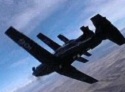
I had just landed a Pitts S-2C at Key West in January
and was getting out when a Southwest "four bars"
walked by an sneered at me about my "vomit machine".

Gee, thanks.
---------- ADS -----------
 
User avatar
Colonel Sanders
Top Poster
Top Poster
Posts: 7512
Joined: Sun Jun 14, 2009 5:17 pm
Location: Over Macho Grande

Re: Mishandling a forward slip

Post by Colonel Sanders »

Instructors I've found are generally not consistent on transmitting this supposed fear of bank you're talking about
Really? Well, you're doing a lot better out in Alberta
with flight instruction (as well as financially) as compared
to back east here in Ontario.

Every PPL I have ever flown with was crippled by his
ab initio instructor who sternly told him:

USE MAXIMUM X DEGREES OF BANK IN THE CIRCUIT OR YOU WILL DIE

Where X is some random number. Might be 30. Might
be 40. Might be 20.

And of course, they end up using a bootful of inside
rudder to skid the airplane around the turns in the
circuit. This is really dangerous.

They think I am insane when I tell them to use as
much bank as they want in the circuit, but I want
the ball in the center.

The sad irony is that during the turns from downwind
to base, and from base to final, you can safely use
as much bank as you want, and you will not stall
or spin (with the ball centered) because you are not
in level flight. You are allowing the aircraft to descend.
You are not working the wing. Your AOA is low.

But no one understands this. Not one frikken person.
Sigh. Vomit machine. Thanks, Four Bars.

www.pittspecials.com/articles/Aerobatics_intro.htm
---------- ADS -----------
 
photofly
Top Poster
Top Poster
Posts: 11306
Joined: Tue Jan 18, 2011 4:47 pm
Location: Hangry and crankypated

Re: Mishandling a forward slip

Post by photofly »

Colonel Sanders wrote:
most of the force holding the airplane up in the air is coming from drag and lift off the fuselage
Not with the ball in the center. In fact, there
is no force holding the airplane up in the air
because I am allowing it to fall ballistically.
Without any force holding you up gravity will increase your rate of descent at 1920fpm per second. If you're not accelerating earthwards exactly that fast, then something is holding you back... lift off the fuselage, drag in a steep descent, whatever.

You might be entirely ballistic for a fraction of a second, but you can't be for very long.
---------- ADS -----------
 
User avatar
Colonel Sanders
Top Poster
Top Poster
Posts: 7512
Joined: Sun Jun 14, 2009 5:17 pm
Location: Over Macho Grande

Re: Mishandling a forward slip

Post by Colonel Sanders »

Sure, there is some parasite drag at 120 mph turning
base with the ball in the center and 80 degrees of bank
on.

But that's kind of a sideshow. The important thing
is the wings. I have an AOA of zero. I am not asking
the wing to do any work. This is technically correct
because I have symmetrical airfoils with zero degrees
incidence.

Because the AOA is zero, I can safely fly with
zero mph on the ASI (and zero G on the meter)
even though I have 80 degrees of bank on, turning
base.
---------- ADS -----------
 
User avatar
Colonel Sanders
Top Poster
Top Poster
Posts: 7512
Joined: Sun Jun 14, 2009 5:17 pm
Location: Over Macho Grande

Re: Mishandling a forward slip

Post by Colonel Sanders »

You might be entirely ballistic for a fraction of a second, but you can't be for very long.
More stick, less chalk.

I can fly the entire base and final (to the runway
threshold) with an AOA of zero and hence a stall
speed of zero.

In fact, that is the preferred method of Gerry Younger.
It's a bit frightening, IMHO, but it works. I like
something a bit less dramatic.

Remember, we have a draggy airframe - even
with the ball in the center. Imagine how much
work it would be, to push a biplane down the
runway at 120 mph. You would get pretty tired.

Also, the constant speed prop provides plenty
of drag - perhaps even the majority of it.

But again, you're missing the main event, which
is that the wings can easily be at zero AOA for
a sustained period of time. The airplane does
not explode - merely descends.
---------- ADS -----------
 
photofly
Top Poster
Top Poster
Posts: 11306
Joined: Tue Jan 18, 2011 4:47 pm
Location: Hangry and crankypated

Re: Mishandling a forward slip

Post by photofly »

Colonel Sanders wrote:Sure, there is some parasite drag at 120 mph turning
base with the ball in the center and 80 degrees of bank
on.
That's not a sustainable mode of flight though.

It makes sense to me if you're saying you unload the wings (without a sideslip) in a downward-accelerating turn. But not in a constant descent-rate turn.

Try one more time...
---------- ADS -----------
 
User avatar
Colonel Sanders
Top Poster
Top Poster
Posts: 7512
Joined: Sun Jun 14, 2009 5:17 pm
Location: Over Macho Grande

Re: Mishandling a forward slip

Post by Colonel Sanders »

That's not a sustainable mode of flight though
Sure it is. You're in Toronto. Go to Waterloo
and go flying with Gerry in the S-2A and ask
him to show you an approach. He flies his
final with the wings completely unloaded.

It's quite something.
---------- ADS -----------
 
photofly
Top Poster
Top Poster
Posts: 11306
Joined: Tue Jan 18, 2011 4:47 pm
Location: Hangry and crankypated

Re: Mishandling a forward slip

Post by photofly »

Remember, we have a draggy airframe
Sure. Generate as much drag as you like and you can descend as slowly as you like, at zero AoA. A parachute proves that principle quite well. But if you're generating drag to slow your descent, you're not ballistic.
He flies his
final with the wings completely unloaded.
But he's not in a ballistic descent for more than a fraction of it. He's resisting gravity with i) the prop ii) drag from the fuselage iii) whatever else he has to hand.
He flies his
final with the wings completely unloaded.
I heard a story just yesterday about a glider pilot who flew an entire circuit (couldn't find any lift) with the pins that secure the wings still in the pocket of one of the ground crew. Luckily the friction-fit of the spars was quite tight. If he'd flown his final with wings unloaded, I wonder if the wings might have walked themselves out of the sockets and departed the airframe. Then he'd really have fly with zero AoA!
---------- ADS -----------
 
Last edited by photofly on Wed Apr 03, 2013 12:32 pm, edited 1 time in total.
User avatar
Colonel Sanders
Top Poster
Top Poster
Posts: 7512
Joined: Sun Jun 14, 2009 5:17 pm
Location: Over Macho Grande

Re: Mishandling a forward slip

Post by Colonel Sanders »

Losing focus here. You certainly start out ballistic
in the descent than as your speed builds the drag
from the prop, airframe, etc builds until some
equilibrium is reached.

But that's missing the point entirely. The point is
that during the descent, the wings are not working.
They are not producing any lift. They have no AOA.

Hence you will not stall, regardless of your angle
of bank, or your airspeed.


Edit -- At cisco, we used to call "rathole!" during
design meetings, when people would diverge off
into other topics of discussion that could not be
easily (or ever) resolved, and were orthonogal
to the topic at hand.
---------- ADS -----------
 
Last edited by Colonel Sanders on Wed Apr 03, 2013 12:32 pm, edited 2 times in total.
Post Reply

Return to “Flight Training”