99% of the light single engine airplanes I
observe, approach far too fast. They float
at least the first 1000 feet of the runway,
and land in a level attitude, which is ok for
tailwheel I guess, but not so good for nosewheel.
Here's an idea: knock off 5 mph from your
approach speed. You might find you like it.
Yesterday I landed the Maule on a 1000 foot
grass strip, using a 55 MPH IAS short final
speed, and it worked really nicely. Didn't need
to use any brakes, to lock up and flat-spot
the tires. Didn't need look inside the cockpit
and raise the flaps. Easy. A lot easier than
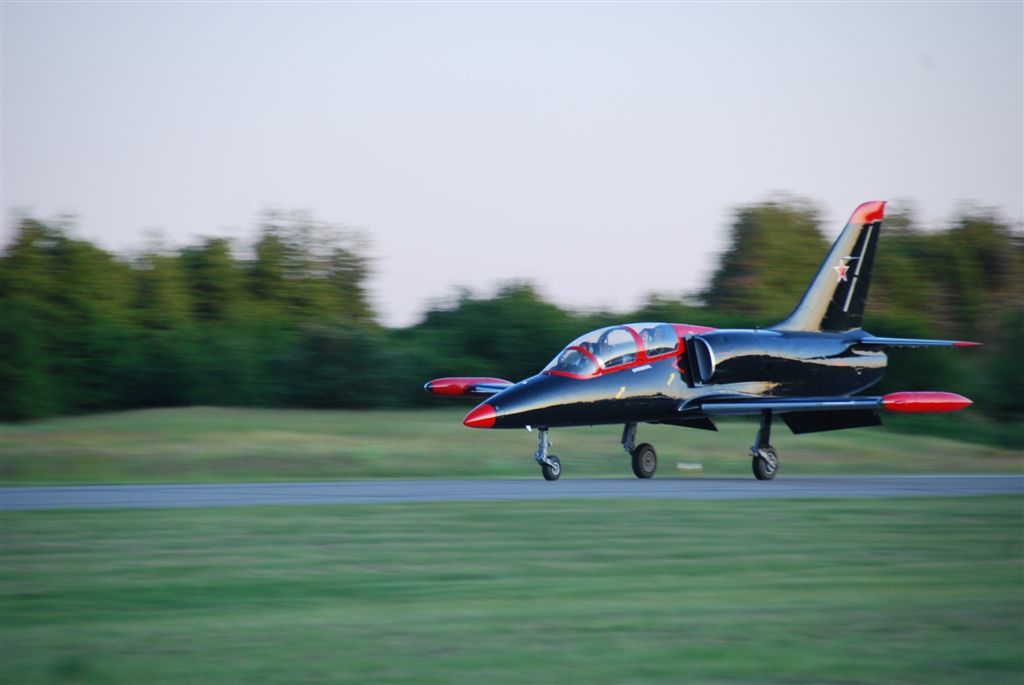
landing a jet with 125 knots over the runway
threshold, on 4000 feet of pavement.
Here's a 180hp (which isn't very much) Maule,
taking off and landing on the ramp in front of
the factory at Moultrie, GA:
http://www.youtube.com/watch?v=B-CV6WSkd1g
Believe it or not, that's 99% the pilot.
Approaching Much Too Fast
Moderators: sky's the limit, sepia, Sulako, Right Seat Captain, lilfssister, North Shore
-
Colonel Sanders

- Top Poster

- Posts: 7512
- Joined: Sun Jun 14, 2009 5:17 pm
- Location: Over Macho Grande


Re: Approaching Much Too Fast
Just out of curiosity, how close is that 55mph to the 1.3 Vso (corrected for weight, and CAS to IAS) that CPL students should be calculating?
-
Schooner69A
- Rank 7

- Posts: 639
- Joined: Thu Nov 06, 2008 5:17 pm
- Location: The Okanagan
Re: Approaching Much Too Fast
believe the 1.3 Vso refers to speed on approach whereas 1.15 Vso might be a target for flashing across the button. Competent pilots might shave some speed off the latter under smooth conditions and short runways. I think that is what Col. S has done.
I concur with CS: many aircraft cross the picket fence carrying several knots more than required. At present, I am flying OP aircraft (other people's) and tend to err on the side of prudence; however, once mine is flying, the threshold speeds will be more along the lines of "stall plus five" or somesuch. (Which, in an RV, will probably be along the lines of 1.1 Vso.) Van's RVs fitted with fixed-pitch propellers are notoriously devoid of drag and are a bear to slow down so any excess speed across the numbers translates into authorized low flying until reasonable touch down speeds are attained.
John
I concur with CS: many aircraft cross the picket fence carrying several knots more than required. At present, I am flying OP aircraft (other people's) and tend to err on the side of prudence; however, once mine is flying, the threshold speeds will be more along the lines of "stall plus five" or somesuch. (Which, in an RV, will probably be along the lines of 1.1 Vso.) Van's RVs fitted with fixed-pitch propellers are notoriously devoid of drag and are a bear to slow down so any excess speed across the numbers translates into authorized low flying until reasonable touch down speeds are attained.
John
-
sidestick stirrer
- Rank 5

- Posts: 383
- Joined: Wed Nov 23, 2005 10:22 pm
Re: Approaching Much Too Fast
It seems that folks do not consider that the energy they are carrying on approach is a combination of both height and speed that must be dissipated to avoid having to force the airplane onto the ground or risk overrunning a short runway.
If we can get them to realize this, then they will understand that being at the correct height but carrying excess speed is the same as being on-speed but high, something that is easier to sense and correct.
The weight of the airplane-and thus its momentum-will determine how quickly it dissipates the excess speed.
If we can get them to realize this, then they will understand that being at the correct height but carrying excess speed is the same as being on-speed but high, something that is easier to sense and correct.
The weight of the airplane-and thus its momentum-will determine how quickly it dissipates the excess speed.
-
Colonel Sanders
- Top Poster
- Posts: 7512
- Joined: Sun Jun 14, 2009 5:17 pm
- Location: Over Macho Grande
Re: Approaching Much Too Fast
Pretty much. I used 70 mph IAS in the continuous1.3 Vso refers to speed on approach whereas 1.15 Vso might be a target for flashing across the button
descending turn from downwind to final, and after
wings level on final, slowed it down to 65 mph, then
60 mph, then finally 55 mph IAS right before touchdown.
I would NOT recommend 55 mph for the entire final! No
reason to fly at that AOA, that far out. Analogous to a
sideslip in a crosswind - you could slip the whole final, but
unless you are training, there is no operational need to.
Note that in the Maule video, the factory test pilot is
completely unconcerned with a "greaser" landing, which
as far as I can tell, is the most important thing to a PPL.
Also note that for maximum performance, he immediately
raises the flaps after landing, and applies the brakes hard.
This is good for factory test pilots, but IMHO is not a good
technique for low-time PPLs to employ, to compensate
for excessive airspeed over the numbers. Instead, when
I land on grass, I leave the flaps down and don't use brakes.
Much easier to do, easier on the airplane and I can still easily
get it stopped in much less than 1000 feet.
-
Colonel Sanders
- Top Poster
- Posts: 7512
- Joined: Sun Jun 14, 2009 5:17 pm
- Location: Over Macho Grande
Re: Approaching Much Too Fast
Good point - constant speed props provide much morefixed-pitch propellers are notoriously devoid of drag and are a bear to slow down
thrust and drag than a fixed pitch prop. Totally transforms
the airplane. A three-blade constant speed prop, esp with
wide blades, provides amazing thrust and drag.
http://www.youtube.com/watch?v=GnuWuNyitzE
However, you're not likely to swap out your prop today.
One thing you can do something about, is your idle speed.
AME's love to set the idle extremely high at annual time.
800 or 900 RPM is quite common, and a really bad idea.
Even 200 extra RPM (even on a fixed pitch prop) really
extends your touchdown. Find out what your idle spec
is (eg 650 RPM) and insist that your AME sets it correctly.
I am sure that hordes of AME's will now point out that
setting idle speed is NOT "elementary work" and thusly
needs signatures in aircraft logbooks complete with
maintenance releases from authorized AME/AMO's ...
but for the homebuilt guys, just pull the cowl and tweak
the throttle stop 1/4 turn.
Last edited by Colonel Sanders on Thu Oct 10, 2013 8:18 am, edited 1 time in total.
-
sidestick stirrer
- Rank 5
- Posts: 383
- Joined: Wed Nov 23, 2005 10:22 pm
Re: Approaching Much Too Fast
Good technique if the braking coefficient is poor: leave full flaps deployed to create the drag that the brakes cannot produce.
Does the minimum hydro-planning onset speed change with tyre pressure?
According to the formula commercial pilots learn, it would theoretically be possible to alter the pressure to effect that speed...
Does the minimum hydro-planning onset speed change with tyre pressure?
According to the formula commercial pilots learn, it would theoretically be possible to alter the pressure to effect that speed...
-
Colonel Sanders
- Top Poster
- Posts: 7512
- Joined: Sun Jun 14, 2009 5:17 pm
- Location: Over Macho Grande
Re: Approaching Much Too Fast
Not sure the maintenance people would be veryit would theoretically be possible to alter the pressure to effect that speed
happy about us putting 200 psi in the mains

They're already p1ssed at me for mentioning
the idle speed ...
-
sidestick stirrer
- Rank 5
- Posts: 383
- Joined: Wed Nov 23, 2005 10:22 pm
Re: Approaching Much Too Fast
"Good point - constant speed props provide much more
thrust and drag than a fixed pitch prop. Totally transforms
the airplane. A three-blade constant speed prop, esp with
wide blades, provides amazing thrust and drag"
Something that Lead has to keep in mind when dragging around Wingmen with fixed-pitch props:)
thrust and drag than a fixed pitch prop. Totally transforms
the airplane. A three-blade constant speed prop, esp with
wide blades, provides amazing thrust and drag"
Something that Lead has to keep in mind when dragging around Wingmen with fixed-pitch props:)
-
iflyforpie
- Top Poster
- Posts: 8132
- Joined: Tue Apr 15, 2008 12:25 pm
- Location: Winterfell...
Re: Approaching Much Too Fast
WRT 1.3 Vso..... it's only for approach. Even pilots who are doing a correct approach speed can hang on to that speed for far too long... carrying it right to the tarmac. This will result in floating just as much as too much airspeed on approach.
Coming over the fence, airspeed is no longer relevant. Power comes off and you control altitude with attitude... slowly bleeding off airspeed and adding power if the aircraft sinks too much. This is before the flare. The airspeed indicator will be nearly off the scale at a correct touchdown speed on most light aircraft.
Another thing I often see is that when power is taken off, the nose of the plane is allowed to fall. This will allow airspeed to increase and also changes you aim point to one closer to you... not what you want if you were aiming at a specific point on the runway (which you will now overshoot because of the excessive speed). Losing speed in ground effect is much harder than losing it out of ground effect.
Power has a big effect on airspeed unless you are actively holding attitude. Take power off, your airspeed will want to increase unless you add a slight amount of back pressure. Put power on and your airspeed will want to decrease.... anyone who has ever done a go around will attest to that.... frantically re-trimming the aircraft as they push as hard as they can on the stick. If you can anticipate these scenarios, your speed control on final will be much better.
Coming over the fence, airspeed is no longer relevant. Power comes off and you control altitude with attitude... slowly bleeding off airspeed and adding power if the aircraft sinks too much. This is before the flare. The airspeed indicator will be nearly off the scale at a correct touchdown speed on most light aircraft.
Another thing I often see is that when power is taken off, the nose of the plane is allowed to fall. This will allow airspeed to increase and also changes you aim point to one closer to you... not what you want if you were aiming at a specific point on the runway (which you will now overshoot because of the excessive speed). Losing speed in ground effect is much harder than losing it out of ground effect.
Power has a big effect on airspeed unless you are actively holding attitude. Take power off, your airspeed will want to increase unless you add a slight amount of back pressure. Put power on and your airspeed will want to decrease.... anyone who has ever done a go around will attest to that.... frantically re-trimming the aircraft as they push as hard as they can on the stick. If you can anticipate these scenarios, your speed control on final will be much better.
-
shimmydampner
- Rank (9)

- Posts: 1764
- Joined: Sat Feb 21, 2004 3:59 pm
Re: Approaching Much Too Fast
Oh come on IFP, you can't possibly expect aspiring CPLs (aka aspiring ATPLs) to bother learning basic menial techniques, can you? I mean, manually adjusting the throttle on approach? Gross. After all, by the time the 250th hour is in the books they'll be right seat in a machine that does that automatically while approaching 10 000' runways on precision approaches.
Learning boring things like the physics and feel of landing landing a single engine airplane that uses AvGas (eww!) surely must be too old school and not applicable to future pilots.
Learning boring things like the physics and feel of landing landing a single engine airplane that uses AvGas (eww!) surely must be too old school and not applicable to future pilots.
-
iflyforpie
- Top Poster
- Posts: 8132
- Joined: Tue Apr 15, 2008 12:25 pm
- Location: Winterfell...

Re: Approaching Much Too Fast
Thread is right. One thing to think about is adapting short final speed for weight. Its amazing how much you can float even when below the short field approach speed when light enough.
Re: Approaching Much Too Fast
There's too much thinking going on here (and how ironic for me to be saying that.)
C172M POH says 55-65 knots with flaps. Make it 55 if you're light, 65 if you're heavy, 60 otherwise. Very nice, short, safe landings if you come over the fence at those speeds.
POH for the 150 says 50-60 knots. 55 knots works very well.
Just don't keep adding extra speed "for mother".
Anyone who's tempted to try slowing to 1.1Vs0 before crossing the threshold I invite to CYTZ when there's a strong southwesterly wind blowing. I will enjoy watching them cope with 15 knots of windshear on short final without getting their tires wet.
C172M POH says 55-65 knots with flaps. Make it 55 if you're light, 65 if you're heavy, 60 otherwise. Very nice, short, safe landings if you come over the fence at those speeds.
POH for the 150 says 50-60 knots. 55 knots works very well.
Just don't keep adding extra speed "for mother".
Anyone who's tempted to try slowing to 1.1Vs0 before crossing the threshold I invite to CYTZ when there's a strong southwesterly wind blowing. I will enjoy watching them cope with 15 knots of windshear on short final without getting their tires wet.
-
Schooner69A
- Rank 7
- Posts: 639
- Joined: Thu Nov 06, 2008 5:17 pm
- Location: The Okanagan
Re: Approaching Much Too Fast
Photofly posted: "...Anyone who's tempted to try slowing to 1.1Vs0 before crossing the threshold..."
I don't think anyone is suggesting that. In concert with Col. S's message, at some point, you're going to start slowing from approach speed (1.3 Vso) to threshold speed. Given smooth conditions and familiarity with the aircraft, it is easy to achieve 1.1 Vso just before touchdown. As mentioned earlier, I'm flying OP aircraft at present and my landings are a touch longer than necessary; when my aircraft is finally airborne, I will work on getting the speeds where they should be.
PS I do concur with your assessment of trying to do that in gusty conditions or windshear. There's a time a place...
John
I don't think anyone is suggesting that. In concert with Col. S's message, at some point, you're going to start slowing from approach speed (1.3 Vso) to threshold speed. Given smooth conditions and familiarity with the aircraft, it is easy to achieve 1.1 Vso just before touchdown. As mentioned earlier, I'm flying OP aircraft at present and my landings are a touch longer than necessary; when my aircraft is finally airborne, I will work on getting the speeds where they should be.
PS I do concur with your assessment of trying to do that in gusty conditions or windshear. There's a time a place...
John

Re: Approaching Much Too Fast
Come in on your numbers, take it to idle when you're supposed to, and never stop descending... However, it never hurts slowing the rate down a little 
Re: Approaching Much Too Fast
1.3Vs0 (which is 55-65kts for a 172M) is my threshold speed; my approach speed is 5-10 knots faster than that. Once over the threshold at 50' I've no idea what I slow to, I'm not looking at the ASI any more. There's very little float.Schooner69A wrote:Photofly posted: "...Anyone who's tempted to try slowing to 1.1Vs0 before crossing the threshold..."
I don't think anyone is suggesting that. In concert with Col. S's message, at some point, you're going to start slowing from approach speed (1.3 Vso) to threshold speed. Given smooth conditions and familiarity with the aircraft, it is easy to achieve 1.1 Vso just before touchdown. As mentioned earlier, I'm flying OP aircraft at present and my landings are a touch longer than necessary; when my aircraft is finally airborne, I will work on getting the speeds where they should be.
PS I do concur with your assessment of trying to do that in gusty conditions or windshear. There's a time a place...
John
1.1Vs0 for a 172 at typical landing weight is about 45KIAS, which is too slow for any phase of flight where you're still looking at the dials.
YMMV
EDIT: 1.3Vs0 for a 172N at max gross and forward cg works out at 59KIAS. Aiming for 60 when slightly under gross seems to work well.
-
Colonel Sanders
- Top Poster
- Posts: 7512
- Joined: Sun Jun 14, 2009 5:17 pm
- Location: Over Macho Grande
Re: Approaching Much Too Fast
What can fool people is the spread between
CAS and IAS at high alpha. For example, the
172M (I have the POH for it) has a 2300 lb
max gross stall speed, with 40 flap, of 49 mph
CAS.
But if we refer to the "airspeed correction table"
in the POH, we can see that a flaps-down CAS
of 49 mph converts to an IAS of 40 mph.
That's almost 10 mph that the airspeed indicator
is under-reading!
1.1 Vso is going to be around 55 mph CAS, which
converts to 50 mph IAS. That's at 2300 lb max
gross. At lighter weights that you typically fly,
50 mph IAS will give more margin above the stall.
Hence my 55 mph IAS (even more margin) really
isn't that insane in a 172, just before touchdown.
Too bad Eric is at school. We should make a youtube
video of some ridiculously short landings in a stock 172.
CAS and IAS at high alpha. For example, the
172M (I have the POH for it) has a 2300 lb
max gross stall speed, with 40 flap, of 49 mph
CAS.
But if we refer to the "airspeed correction table"
in the POH, we can see that a flaps-down CAS
of 49 mph converts to an IAS of 40 mph.
That's almost 10 mph that the airspeed indicator
is under-reading!
1.1 Vso is going to be around 55 mph CAS, which
converts to 50 mph IAS. That's at 2300 lb max
gross. At lighter weights that you typically fly,
50 mph IAS will give more margin above the stall.
Hence my 55 mph IAS (even more margin) really
isn't that insane in a 172, just before touchdown.
Too bad Eric is at school. We should make a youtube
video of some ridiculously short landings in a stock 172.
-
iflyforpie
- Top Poster
- Posts: 8132
- Joined: Tue Apr 15, 2008 12:25 pm
- Location: Winterfell...
Re: Approaching Much Too Fast
I use 55 knots at full gross on the 172... 50 if I am light. Never had a problem with wind shear or getting behind the power curve. It could be just position error or any number of things on my aircraft... but if you use 65... it is a float fest nearly to the end of the runway.
Re: Approaching Much Too Fast
I'm using 60 -62 KIAS in the 182 mid weight...works great...power on.......but realize I could be even slower when very light and calm conditions.
Re: Approaching Much Too Fast
I wrote some computer code to calculate exactly 1.3vs0 for a 182p for different numbers of occupants and fuel loads. I took into account the different tail plane loadings for different cg positions too. 60-62 KIAS is pretty much bang on in the middle of the range.
Re: Approaching Much Too Fast
As I discussed with an esteemed member the other day, the trend of the speed is every bit as important as the speed itself. Ideally, in a stabilized approach, everything is stable. But stability does not mean one speed, one heading, one attitude. It means that the changes between where you are on approach, and where you will be after a good landing, are stable.
So, if you have coordinated the speed, so you have a gentle, and stable trend deceleration, which terminates with a stall at the instant of touchdown, what you did worked. You may have a gentle turning final, which again, as long as it results in positioning the aircraft over and along the runway centerline for touchdown, is perfectly fine.
So, your approach will only be too fast, if it's the bit of the approach just before you touch down. All the rest can be too fast, if you have a plan to stably decelerate to touchdown. Indeed, there is an excellent theory to which I subscribe, that a glide approach should be very fast (compared to a best distance glide speed for the type) if possible, to a nearer landing site, and bleed off the speed short final.
Approaching too fast is probably not a problem, it's trying to bring the aircraft into contact with the surface too fast where the trouble begins. But, approaching too fast often gets to be trying to touchdown at too high a speed, because a stable deceleration was not established.
So, if you have coordinated the speed, so you have a gentle, and stable trend deceleration, which terminates with a stall at the instant of touchdown, what you did worked. You may have a gentle turning final, which again, as long as it results in positioning the aircraft over and along the runway centerline for touchdown, is perfectly fine.
So, your approach will only be too fast, if it's the bit of the approach just before you touch down. All the rest can be too fast, if you have a plan to stably decelerate to touchdown. Indeed, there is an excellent theory to which I subscribe, that a glide approach should be very fast (compared to a best distance glide speed for the type) if possible, to a nearer landing site, and bleed off the speed short final.
Approaching too fast is probably not a problem, it's trying to bring the aircraft into contact with the surface too fast where the trouble begins. But, approaching too fast often gets to be trying to touchdown at too high a speed, because a stable deceleration was not established.
-
Colonel Sanders
- Top Poster
- Posts: 7512
- Joined: Sun Jun 14, 2009 5:17 pm
- Location: Over Macho Grande
Re: Approaching Much Too Fast
Exactly - it doesn't matter what speed you fly the
final at. You could fly it at 100 mph in a 172. The
only speed that matters, with respect to the landing,
is your speed over the threshold.
Nobody talks about this, but proficient pilots will
fly approaches with changing airspeed. Some of
the very best pilots in the world - Sean Tucker,
Skip Stewart - will fly 200 mph until very short
final, then power off, the 3 wide-chord blades go
flat, and they plunk the mains on the numbers at
120 mph and go down the runway with the tail
in the air.
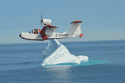
PilotDAR is here, because a piston amphib taxis
up in front of your hangar, turns around, then
backs up.
final at. You could fly it at 100 mph in a 172. The
only speed that matters, with respect to the landing,
is your speed over the threshold.
Nobody talks about this, but proficient pilots will
fly approaches with changing airspeed. Some of
the very best pilots in the world - Sean Tucker,
Skip Stewart - will fly 200 mph until very short
final, then power off, the 3 wide-chord blades go
flat, and they plunk the mains on the numbers at
120 mph and go down the runway with the tail
in the air.
Heh - that's a new description! You know whenAs I discussed with an esteemed member the other day
PilotDAR is here, because a piston amphib taxis
up in front of your hangar, turns around, then
backs up.
Re: Approaching Much Too Fast
What approach speed would you recommend in a fifty knot wind ?
What approach speed would you recommend in a fifty knot cross wind ?
A light C-172 can be landed in about 150 feet or the width of 08R at YVR. Ask the tower they have seen it done several times
What approach speed would you recommend in a fifty knot cross wind ?
A light C-172 can be landed in about 150 feet or the width of 08R at YVR. Ask the tower they have seen it done several times
-
Colonel Sanders
- Top Poster
- Posts: 7512
- Joined: Sun Jun 14, 2009 5:17 pm
- Location: Over Macho Grande
Re: Approaching Much Too Fast
Heck, with that much wind (winter LLJ?) I woulda fifty knot wind
fly backwards across the airport
We don't get that much wind, back east here,
which is a pity. I like to hover over the runway.