
Apparently, if I operate an experimental aircraft, I could modify a Lycoming engine and make it way more efficient and less expensive to maintain.
http://www.flyefii.com/EFII_desc.htm
It would cost me around 6000$.
Seems too good to be true.
Where's the catch?
Thanks,
Olivier
Electronic Fuel Injection and Ignition: where's the catch?
Moderators: sky's the limit, sepia, Sulako, North Shore
Electronic Fuel Injection and Ignition: where's the catch?
Think ahead or fall behind!
-
iflyforpie
- Top Poster

- Posts: 8132
- Joined: Tue Apr 15, 2008 12:25 pm
- Location: Winterfell...
Re: Electronic Fuel Injection and Ignition: where's the catc
How well will it function when you lose airframe electrical power? The Porsche Mooney had to have two complete electrical systems--including two alternators and batteries--in order to offer the same safety as traditional magnetos.
Most guys still run a traditional magneto setup on one side for redundancy when using electronic ignition.
Most guys still run a traditional magneto setup on one side for redundancy when using electronic ignition.
Geez did I say that....? Or just think it....?
Re: Electronic Fuel Injection and Ignition: where's the catc
That was my first concern.
However it seems like there are systems that can also use the mags as a backup: http://www.g3ignition.com/benefits.html
What about the injection?
However it seems like there are systems that can also use the mags as a backup: http://www.g3ignition.com/benefits.html
What about the injection?
Think ahead or fall behind!

Re: Electronic Fuel Injection and Ignition: where's the catc
Why don't you check out electroair: http://www.electroair.net/experimental_ ... _kits.html
Spencer Suderman swears by it, and flew his Pitts to FL220 with the electroair ignition. If you go dual, you must have another battery installed etc. You keep one mag for redundancy. Check out the article he wrote about it: https://www.iac.org/files/magazines/Sa-2013-08.pdf
The kit is about $2000 for a 4 cyl Lycoming
Spencer Suderman swears by it, and flew his Pitts to FL220 with the electroair ignition. If you go dual, you must have another battery installed etc. You keep one mag for redundancy. Check out the article he wrote about it: https://www.iac.org/files/magazines/Sa-2013-08.pdf
The kit is about $2000 for a 4 cyl Lycoming
Re: Electronic Fuel Injection and Ignition: where's the catc
Interesting, thanks.
I'm also curious about injection. Anyone has experience modifying a carburated engine to an injected one?
I'm slowly shopping for a Vans, and I see a couple of seemingly good deal on some RV-6 with a carb.
I was wondering if it was and interesting option to modify it at some point to get rid of the carb.
I'm also curious about injection. Anyone has experience modifying a carburated engine to an injected one?
I'm slowly shopping for a Vans, and I see a couple of seemingly good deal on some RV-6 with a carb.
I was wondering if it was and interesting option to modify it at some point to get rid of the carb.
Think ahead or fall behind!
-
iflyforpie
- Top Poster
- Posts: 8132
- Joined: Tue Apr 15, 2008 12:25 pm
- Location: Winterfell...
Re: Electronic Fuel Injection and Ignition: where's the catc
I've never heard of modifying an engine from carbureted to injected, though I'm sure it's been done. Not very common in the certified world.... though there is the PPonk conversion which takes a TSIO-520 bottom end and turns it into a high powered carbureted O-470.
All you'd need really is a suitable throttle body, metering system, injectors (they can go in the primer plugs), and a high pressure fuel pump. Most aircraft have both electric and mechanical fuel pumps for redundancy..... which might be an issue if there is no place to mount a high pressure fuel pump on the accessory case. I personally would not trust one fuel pump on an injected engine. But if it were my choice I would probably go carbureted.
All you'd need really is a suitable throttle body, metering system, injectors (they can go in the primer plugs), and a high pressure fuel pump. Most aircraft have both electric and mechanical fuel pumps for redundancy..... which might be an issue if there is no place to mount a high pressure fuel pump on the accessory case. I personally would not trust one fuel pump on an injected engine. But if it were my choice I would probably go carbureted.
Geez did I say that....? Or just think it....?
Re: Electronic Fuel Injection and Ignition: where's the catc
Instead of doing some sketchy mods or instead of paying more to get a real injected engine?iflyforpie wrote:But if it were my choice I would probably go carbureted.
Think ahead or fall behind!
-
iflyforpie
- Top Poster
- Posts: 8132
- Joined: Tue Apr 15, 2008 12:25 pm
- Location: Winterfell...
Re: Electronic Fuel Injection and Ignition: where's the catc
Instead of doing sketchy mods...... though it only takes one bout of trying to do a hot start with a Bendix RSA injection system to make you wish for carburetion.
Geez did I say that....? Or just think it....?
-
Pop n Fresh

- Rank (9)

- Posts: 1270
- Joined: Mon Jan 06, 2014 3:46 am
- Location: Freezer.
Re: Electronic Fuel Injection and Ignition: where's the catc
I'm guessing it's more maintenance and cost to use the awesome automotive electronic ignitions available. On a dragster that is being maintained and is within a quarter mile glide of the finish line at all times that stuff is way better.
The good colonel usually pops in to scoff at plans to use car stuff in your airplane. He might want me harmed sometimes, but he likes airplanes so I trust his advise about using I believe, slick brand magnetos in them. %100.
We will have to wait for him to chime in on what carbs/injection systems to use.
The good colonel usually pops in to scoff at plans to use car stuff in your airplane. He might want me harmed sometimes, but he likes airplanes so I trust his advise about using I believe, slick brand magnetos in them. %100.
We will have to wait for him to chime in on what carbs/injection systems to use.

Re: Electronic Fuel Injection and Ignition: where's the catc
check out http://www.sdsefi.com/ ...based out of Calgary and your not paying certified prices...
http://emagair.com/Intro.htm is a self powered electronic ignition the replaces both mags..
Seems like running a single mag as a back up kind of defeats the purpose of having variable ignition timing..
Jeff
http://emagair.com/Intro.htm is a self powered electronic ignition the replaces both mags..
Seems like running a single mag as a back up kind of defeats the purpose of having variable ignition timing..
Jeff
-
Colonel Sanders

- Top Poster
- Posts: 7512
- Joined: Sun Jun 14, 2009 5:17 pm
- Location: Over Macho Grande
Re: Electronic Fuel Injection and Ignition: where's the catc
If it saved you one gph, you would take 1000experimental aircraft ... less expensive ... cost me around $6000
hours to break even. That's kind of a long
payoff period. I would estimate that only
around one in a million homebuilts ever
clock 1000TT.
Meanwhile, back on the electronic ignition
subject, off the top of my head I know of at
least two recent local crashes of homebuilts
due to electronic ignition failure causing
engine failure. Both aircraft totalled. I'll
bet both owners wished they had old-fashioned
magnetos.
I'm not too bright, but I don't think that electronic
ignition is always easy or cheap. Ask Porsche
about their PFM 3200 engine.
As far as converting from carb to FI ... most people
use this on their homebuilts:
http://www.ellison-fluid-systems.com
Very expensive, though, and tricky to set up. IIRC
there is another, cheaper option.
I fly a 450hp R-985 Stearman with the rare, expensive
and now out-of-production large Ellison TBI and it works
wonderfully. No hiccups upside down. But you can buy
an ok used car for what it's worth.
Last edited by Colonel Sanders on Mon Feb 24, 2014 6:19 am, edited 1 time in total.

Re: Electronic Fuel Injection and Ignition: where's the catc
Engines can be modified, more so if installed on amateur build aircraft. Some people tinker with engines simply because it is their passion - power to them!
However, spending thousands on system changes on engines in the hope of a modest operational cost saving is a stretch. You might save, you might not. I have approved changes from injected to carburetted, but never the other way around. I am sure not a fan of injected engines, when I have a choice. Yes, they are more fuel efficient, simply because of precise fuel delivery, and near equal fuel distribution, which carburation just cannot match. However, as CS points out, the one GPH saving must be done for a large number of hours to be worthwhile. Beyond that, if you experience a few occasions of a start failure, with a flat battery or melted starter motor, or worse, you drifted with the wind into the trees on floats, the depenable and less efficient carburettor system will suddenly look a lot more attractive!
Choose the engine you want, maintain it well, and just accept that is costs money to operate.
However, spending thousands on system changes on engines in the hope of a modest operational cost saving is a stretch. You might save, you might not. I have approved changes from injected to carburetted, but never the other way around. I am sure not a fan of injected engines, when I have a choice. Yes, they are more fuel efficient, simply because of precise fuel delivery, and near equal fuel distribution, which carburation just cannot match. However, as CS points out, the one GPH saving must be done for a large number of hours to be worthwhile. Beyond that, if you experience a few occasions of a start failure, with a flat battery or melted starter motor, or worse, you drifted with the wind into the trees on floats, the depenable and less efficient carburettor system will suddenly look a lot more attractive!
Choose the engine you want, maintain it well, and just accept that is costs money to operate.
-
Colonel Sanders
- Top Poster
- Posts: 7512
- Joined: Sun Jun 14, 2009 5:17 pm
- Location: Over Macho Grande
Re: Electronic Fuel Injection and Ignition: where's the catc
They have one huge advantage: no carburetor icing.I am sure not a fan of injected engines
I do a lot of flying in the lee of the Great Lakes where
potentially fatal carb icing conditions are normal. Lots
of moisture in the air, and cool temps. Good way to
get killed.
-
Pop n Fresh
- Rank (9)
- Posts: 1270
- Joined: Mon Jan 06, 2014 3:46 am
- Location: Freezer.
Re: Electronic Fuel Injection and Ignition: where's the catc
Excellent discussion Trampbike.
I hope for the future and really like concepts for saving fuel via more efficient torque producing devices for reducing cost/consumption/carbon output/various other pollutants output, while increasing power. So people like us may continue to better enjoy things such as flying/driving/riding various motorized contraptions around.
I'm not frightened that my grand kids will over populate the livable space on this planet as the polar ice caps melt from me riding 2 stroke dirt bikes as a teenager. I still consider doing more mechanical work with less energy producing hydrocarbon based fuel converted by heat of a flame as progress.
I remember watching a person on television possibly in the seventies. They took a glass and filled it with about an ounce of water from the condensation coming out of the exhaust pipe of a hydrogen powered car. Then drank it.
 I was impressed.
Funny how expensive saving fuel really ends up being.
Seems like fuel saving measures or modifications must be done for entertainment or passion, rather than the hope a guy could save enough money to buy a tropical island populated by pretty girls to retire on.
I wistfully considered building a bio-diesel plant after I discovered it. That happened when I got married at the turn of the century and my wife's step father took seven of us on their first family vacation to Maui. http://www.biodiesel.com/index.php/tech ... el_maui_hi
At the time I thought, "Wow, this is going to take off, in a few years everything could be biodiesel powered." Maybe this spring I'll see if my dad wants to give building a small personal plant another try.
I have lost the excitement that was building a few years ago when Cessna seemed to be behind the electric 172 development. I think Cessna lost it too.
I'm starting to resign to the fact I'll never be in the financial position to experiment in portable electric/alternate potential energy storage devices for light planes and motorcycles. I have not managed to build a decent shop/lab to put together race car parts I was accumulating in my parent's partially finished garage starting decades ago.
Then again I got a paying second job this year so, "Never say never?" Well I should probably attempt a "restart" at sleeping.
Have a great week everyone!
I hope for the future and really like concepts for saving fuel via more efficient torque producing devices for reducing cost/consumption/carbon output/various other pollutants output, while increasing power. So people like us may continue to better enjoy things such as flying/driving/riding various motorized contraptions around.
I'm not frightened that my grand kids will over populate the livable space on this planet as the polar ice caps melt from me riding 2 stroke dirt bikes as a teenager. I still consider doing more mechanical work with less energy producing hydrocarbon based fuel converted by heat of a flame as progress.
I remember watching a person on television possibly in the seventies. They took a glass and filled it with about an ounce of water from the condensation coming out of the exhaust pipe of a hydrogen powered car. Then drank it.
I was impressed.Funny how expensive saving fuel really ends up being.
Even at the high costs of gasoline these days a well rebuilt 15 year old V-6 Pick up truck or even many older, cool V-8 muscle cars, could cost less over all to procure and operate than a $60 000 new car that uses slightly to significantly less fuel.I fly a 450hp R-985 Stearman with the rare, expensive
and now out-of-production large Ellison TBI and it works
wonderfully. No hiccups upside down. But you can buy
an ok used car for what it's worth.
Seems like fuel saving measures or modifications must be done for entertainment or passion, rather than the hope a guy could save enough money to buy a tropical island populated by pretty girls to retire on.
I wistfully considered building a bio-diesel plant after I discovered it. That happened when I got married at the turn of the century and my wife's step father took seven of us on their first family vacation to Maui. http://www.biodiesel.com/index.php/tech ... el_maui_hi
At the time I thought, "Wow, this is going to take off, in a few years everything could be biodiesel powered." Maybe this spring I'll see if my dad wants to give building a small personal plant another try.
I have lost the excitement that was building a few years ago when Cessna seemed to be behind the electric 172 development. I think Cessna lost it too.
I'm starting to resign to the fact I'll never be in the financial position to experiment in portable electric/alternate potential energy storage devices for light planes and motorcycles. I have not managed to build a decent shop/lab to put together race car parts I was accumulating in my parent's partially finished garage starting decades ago.
Then again I got a paying second job this year so, "Never say never?" Well I should probably attempt a "restart" at sleeping.
Have a great week everyone!
-
Colonel Sanders
- Top Poster
- Posts: 7512
- Joined: Sun Jun 14, 2009 5:17 pm
- Location: Over Macho Grande
Re: Electronic Fuel Injection and Ignition: where's the catc
One of the guys tried that here. It performedelectric 172 development
really well because it didn't have the weight of
a battery, but he couldn't figure out where to
get a long enough cord for it.
-
Pop n Fresh
- Rank (9)
- Posts: 1270
- Joined: Mon Jan 06, 2014 3:46 am
- Location: Freezer.
Re: Electronic Fuel Injection and Ignition: where's the catc
I laughed.Colonel Sanders wrote:One of the guys tried that here. It performedelectric 172 development
really well because it didn't have the weight of
a battery, but he couldn't figure out where to
get a long enough cord for it.
Be careful doing figure eights around pylons too. Remember your lawn mowing incident?

-
azimuthaviation
- Rank (9)
- Posts: 1409
- Joined: Sat Jun 21, 2008 9:34 pm
Re: Electronic Fuel Injection and Ignition: where's the catc
What would you say is the reason for that?Colonel Sanders wrote:I would estimate that only
around one in a million homebuilts ever
clock 1000TT.
Thanks everyone for the replies.
Think ahead or fall behind!
-
Colonel Sanders
- Top Poster
- Posts: 7512
- Joined: Sun Jun 14, 2009 5:17 pm
- Location: Over Macho Grande
Re: Electronic Fuel Injection and Ignition: where's the catc
Most homebuilders, well, are builders,
not flyers. Hard to have enough spare
time to do both. There is the odd rare
exception, but the vast majority of builders
prefer to tinker with their airplanes, not
go places in them.
Now, sometimes the 2nd (and 3rd) owners
of homebuilts fly them. That's because they
are pilots, not builders.
Not sure anyone cares, but that isn't the intent
at all, of homebuilt airplanes - a cheaper source
of aircraft, which is how I think you are viewing
them. They are supposed to be educational.
I doubt anyone here is old enough to remember
the kerfuffle at the FAA when the Christen Eagle
kit came out. That's laughable, when you look
at say a quick-build RV which is almost entirely
constructed by cheap labour in the Philippines.
My, how times have changed.

For your amusement, this is the picture that
drove the FAA into a rage, because it was
"too complete" at the time:
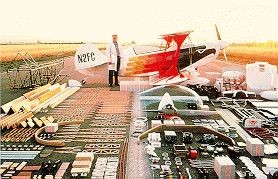
To placate the Regulator, they had to ship the
ribs in pieces, and the builder had to glue them
up, otherwise the "51%" rule was not met.
Funny to compare the two pictures.
not flyers. Hard to have enough spare
time to do both. There is the odd rare
exception, but the vast majority of builders
prefer to tinker with their airplanes, not
go places in them.
Now, sometimes the 2nd (and 3rd) owners
of homebuilts fly them. That's because they
are pilots, not builders.
Not sure anyone cares, but that isn't the intent
at all, of homebuilt airplanes - a cheaper source
of aircraft, which is how I think you are viewing
them. They are supposed to be educational.
I doubt anyone here is old enough to remember
the kerfuffle at the FAA when the Christen Eagle
kit came out. That's laughable, when you look
at say a quick-build RV which is almost entirely
constructed by cheap labour in the Philippines.
My, how times have changed.
For your amusement, this is the picture that
drove the FAA into a rage, because it was
"too complete" at the time:
To placate the Regulator, they had to ship the
ribs in pieces, and the builder had to glue them
up, otherwise the "51%" rule was not met.
Funny to compare the two pictures.
Re: Electronic Fuel Injection and Ignition: where's the catc
As an airplane is mostly designed to fly at a constant speed and rpm, the need for timing adjustments is not worth the hassle of making a dual EIS. Magnetos are light, self sustaining and relatively cheap. If you're going to the trouble to get a better spark then maybe try looking at other engine alternatives like diesel or small turbine or hybrid.
Re: Electronic Fuel Injection and Ignition: where's the catc
Electronic ignition: $6k
Replacement engine that burns diesel: $20k
Small turbine: $500k
Replacement engine that burns diesel: $20k
Small turbine: $500k
DId you hear the one about the jurisprudence fetishist? He got off on a technicality.
-
Colonel Sanders
- Top Poster
- Posts: 7512
- Joined: Sun Jun 14, 2009 5:17 pm
- Location: Over Macho Grande
Re: Electronic Fuel Injection and Ignition: where's the catc
Go with a "high tech" car engine instead.
I've spent the last three decades having
the "experts" tell me how superior car
engines are.
Not a single one on the field.
Not quite true. There was one. I did the
initial flight test on it (with the 2nd car
engine - the first car engine, a Ford V6
was such a porker it wouldn't fly). With
the 2nd car engine, scared the crap out
of me. Far more dangerous than anything
else I've ever flown, including Russian military
jets.
Every time I took off, all the temps went
over redline and we had to turn and land
in a heluva hurry. Very nervewracking.
No one else would fly it. Somehow all the
"experts" vanished when it was time to
step up and put your life where your mouth
was.
Eventually it crashed (without me on board)
and was destroyed because the electronic
ignition failed.
Simply glorious. Car engines everywhere,
just like the "experts" have been telling me
for all these decades.
Not one of those clowns ever strapped themselves
into one of those deathtraps. All they ever
did was talk.
I've spent the last three decades having
the "experts" tell me how superior car
engines are.
Not a single one on the field.
Not quite true. There was one. I did the
initial flight test on it (with the 2nd car
engine - the first car engine, a Ford V6
was such a porker it wouldn't fly). With
the 2nd car engine, scared the crap out
of me. Far more dangerous than anything
else I've ever flown, including Russian military
jets.
Every time I took off, all the temps went
over redline and we had to turn and land
in a heluva hurry. Very nervewracking.
No one else would fly it. Somehow all the
"experts" vanished when it was time to
step up and put your life where your mouth
was.
Eventually it crashed (without me on board)
and was destroyed because the electronic
ignition failed.
Simply glorious. Car engines everywhere,
just like the "experts" have been telling me
for all these decades.
Not one of those clowns ever strapped themselves
into one of those deathtraps. All they ever
did was talk.
Re: Electronic Fuel Injection and Ignition: where's the catc
$20K might be a little optimistic, no?photofly wrote:Replacement engine that burns diesel: $20k
http://www.avweb.com/avwebflash/news/Pr ... 474-1.htmlPremier Offers 172 Diesel Package The company will install the diesel for a base price of $95,000 and add whatever modern options the owners want for extra money.
On the $6000 electronic ignition/fuel injection package. One could argue that if done at overhaul time, a fair bit of the cost would be offset by not replacing mags, leads, plugs, carburator, etc. Also, if the ECU programmer includes engine monitoring functions, that's an item that many are shelling out for nowadays anyway.
I presume $6000 is for the base kit, not the full dual ECU version or with any DC power redundancy mods?
Re: Electronic Fuel Injection and Ignition: where's the catc
For a certified engine, very optimistic. Are there any road diesel engines that have been advertised for aviation use?$20K might be a little optimistic, no?
DId you hear the one about the jurisprudence fetishist? He got off on a technicality.

Re: Electronic Fuel Injection and Ignition: where's the catc
Colonel Sanders wrote:Go with a "high tech" car engine instead.
I've spent the last three decades having
the "experts" tell me how superior car
engines are.
Not a single one on the field.
Not quite true. There was one. I did the
initial flight test on it (with the 2nd car
engine - the first car engine, a Ford V6
was such a porker it wouldn't fly). With
the 2nd car engine, scared the crap out
of me. Far more dangerous than anything
else I've ever flown, including Russian military
jets.
Every time I took off, all the temps went
over redline and we had to turn and land
in a heluva hurry. Very nervewracking.
No one else would fly it. Somehow all the
"experts" vanished when it was time to
step up and put your life where your mouth
was.
Eventually it crashed (without me on board)
and was destroyed because the electronic
ignition failed.
Simply glorious. Car engines everywhere,
just like the "experts" have been telling me
for all these decades.
Not one of those clowns ever strapped themselves
into one of those deathtraps. All they ever
did was talk.
The GM LS1 series engines have been making there way into some experimental planes, and, from the limited information I have heard, they have been quite successful to date. If I had the time/money, I would love to research further into LS1 transplants into aircraft. They are light weight, high power, low fuel consumption, all aluminum for better cooling. Like I say if I had the money/time I would love to further investigate this.
But yea, when it comes to the Lycoming electronic ignition kits, I wouldnt go to far without a mag for backup on one side.


