AAAhhh, the joys of trying to decipher CAR's.
Hedley is correct a spin is an aerobatic manouver, however common sense dictates that pilots who are aspiring to be commercial pilots must be able to recover from a spin due to the the fact that a spin is an aerobatic manouver that can be entered into due to misshandling of the aircraft, whereas you would be hard pressed to claim you accidently entered a loop or a roll.
But technically Hedley is correct.
And common sense also dictates that TC Guy is correct, now what is needed is to have this clarified in CAR's.
Jeeeses what am I saying...CAR's and the word clarified.
Aerobatic Flight Maneuver
Moderators: Sulako, Right Seat Captain, lilfssister, North Shore, sky's the limit, sepia
-
Cat Driver

- Top Poster

- Posts: 18921
- Joined: Sun Feb 15, 2004 8:31 pm


http://www.tc.gc.ca/civilaviation/regse ... c/menu.htm
I made a submission to CARAC in the past, to more align the CARs to the FARs with respect to aerobatics, but I suspect because my name was on it, Tower C shot it down with the silliest reasoning you could imagine. I gave up.
I made a submission to CARAC in the past, to more align the CARs to the FARs with respect to aerobatics, but I suspect because my name was on it, Tower C shot it down with the silliest reasoning you could imagine. I gave up.

Guys, I hate to point this out again, but there really isn't a condradiction in the CARs over spins.
Now, here is maybe where it gets tricky:
From CARs 425.21 Qualifications of Flight Instructors
The long and the short of it is that there is nothing in the CARs that says it is illegal to teach spins in the CPL and PPL.
So, an utility category a/c that has spins listed as approved in the POH is legal to spin.523.3 Aeroplane Categories
(b) The utility category is limited to aeroplanes that have a seating configuration, excluding pilot seats, of nine or less, a maximum certificated takeoff weight of 5700 kg (12,566 lbs.) or less, and intended for limited aerobatic operation. Aeroplanes certificated in the utility category may be used in any of the operations covered under paragraph (a) of this section and in limited aerobatic operations. Limited aerobatic operation includes:
FAR:
(b) The utility category is limited to airplanes that have a seating configuration, excluding pilot seats, of nine or less, a maximum certificated takeoff weight of 12,500 lbs (5670 kg) or less, and intended for limited acrobatic operation. Airplanes certificated in the utility category may be used in any of the operations covered under paragraph (a) of this section and in limited acrobatic operations. Limited acrobatic operation includes:
(1) Spins (if approved for the particular type of aeroplane); and
(2) [ Lazy eights, chandelles, and steep turns, or similar manoeuvres, in which the angle of bank is more than 60 degrees but not more than 90 degrees.]
Now, here is maybe where it gets tricky:
From CARs 425.21 Qualifications of Flight Instructors
If someone from TC was wanting to pick a fight that they'd lose they could call you out on this one. However, the reg deals with training for experience in aerobatic manouvers. The purpose of teaching spins in the PPL and CPL is not for experience in aerobatics, but is for recognition, recovery and avoidance. It is also mandated in other parts of the CARs.(10) A person who conducts flight training for experience in aerobatic manoeuvres shall have:
(a) a Flight Instructor Rating - Aeroplane - Aerobatics; or
(b) a Flight Instructor Rating - Glider - Aerobatics, as appropriate.
The long and the short of it is that there is nothing in the CARs that says it is illegal to teach spins in the CPL and PPL.
I think the CARs are pretty clear that you need to be an aerobatic flight instructor to teach aerobatic maneuvers ... such as an upright or inverted spin, be it normal, flat or accelerated, etc.
Again, I'm pretty sure you'd also lose at the Tribunal on a 602.01 if you taught spins without parachutes. That is clearly something that a "prudent" pilot wouldn't do.
Again, I'm pretty sure you'd also lose at the Tribunal on a 602.01 if you taught spins without parachutes. That is clearly something that a "prudent" pilot wouldn't do.
-
Cat Driver
- Top Poster
- Posts: 18921
- Joined: Sun Feb 15, 2004 8:31 pm
Hiya .. Sorry, never flown the Reed clipped-wing cub conversion.
Like many other aerobatic adaptations of pre-existing designs, I might be a tad worried about how it handled excessive G (ie botched maneuvers) which is going to happen in training. Did I ever tell you about how I went flying with a guy that claimed he used to own a Pitts, and was an experienced acro pilot? First roll he tried in my B, he split-s'd out and pulled 6 G's
In skilled hands, I'm sure it's just fine. Charlie Kulp, for example, in this neck of the woods, routinely performs surface-level inside loops with his cub.
P.S. Back on topic ... anyone who thinks parachutes are unnecessary for aerobatics, click on:
http://www.timesofmalta.com/core/articl ... ite=midair
It would seem that anyone who can read a newspaper would conclude that a reasonable and prudent pilot would not fly aerobatics without a parachute, hence a 602.01 charge is entirely appropriate.
Like many other aerobatic adaptations of pre-existing designs, I might be a tad worried about how it handled excessive G (ie botched maneuvers) which is going to happen in training. Did I ever tell you about how I went flying with a guy that claimed he used to own a Pitts, and was an experienced acro pilot? First roll he tried in my B, he split-s'd out and pulled 6 G's
In skilled hands, I'm sure it's just fine. Charlie Kulp, for example, in this neck of the woods, routinely performs surface-level inside loops with his cub.
P.S. Back on topic ... anyone who thinks parachutes are unnecessary for aerobatics, click on:
http://www.timesofmalta.com/core/articl ... ite=midair
It would seem that anyone who can read a newspaper would conclude that a reasonable and prudent pilot would not fly aerobatics without a parachute, hence a 602.01 charge is entirely appropriate.
-
Cat Driver
- Top Poster
- Posts: 18921
- Joined: Sun Feb 15, 2004 8:31 pm
" First roll he tried in my B, he split-s'd out and pulled 6 G's "

AAhhh, yes, makes one wonder about that video of rolling the B1900.
How would you like to be in the back in that thing with someone who split-s'd because they did not have proper training?
AAhhh, yes, makes one wonder about that video of rolling the B1900.
How would you like to be in the back in that thing with someone who split-s'd because they did not have proper training?
The hardest thing about flying is knowing when to say no
After over a half a century of flying no one ever died because of my decision not to fly.
After over a half a century of flying no one ever died because of my decision not to fly.
I think the CARs are pretty clear that you need to be an aerobatic flight instructor to teach ........an upright or inverted spin
 Interesting that you didn't bring up this point until I posted the CARs reference. One would almost get the impression you weren't familiar with that reg before it was served up to you.
The key here is that spins are also a mandated part of regular flight training, and that a regular instructor is giving instruction for the purposes of getting a licence, not for "experience in aerobatic manoeuvres " as stated in the CARs. Therefor a regular instructor is acting within the privledges of their rating. At least that is the story according to one of my former aerobatics students, who made a tidy salary by being a (one would assume a very good) lawyer.
Hey.... its your opinion, you're welcome to it.Again, I'm pretty sure you'd also lose at the Tribunal on a 602.01 if you taught spins without parachutes. That is clearly something that a "prudent" pilot wouldn't do.
I've had a few students try and do that to me. The trick is to catch the error early and take control from the student.Did I ever tell you about how I went flying with a guy that claimed he used to own a Pitts, and was an experienced acro pilot? First roll he tried in my B, he split-s'd out and pulled 6 G's
-
Cat Driver
- Top Poster
- Posts: 18921
- Joined: Sun Feb 15, 2004 8:31 pm
" I've had a few students try and do that to me. The trick is to catch the error early and take control from the student. "
In a Pitts, I'd let the student get out of shape and split-s because recovery pulling 6 G's in a Pitts is well within limits.
Remember students who claim to be something they are not need to demonstrate to themselves their B.S. exceeds their ability.
But hey thats only my slant on it.
In a Pitts, I'd let the student get out of shape and split-s because recovery pulling 6 G's in a Pitts is well within limits.
Remember students who claim to be something they are not need to demonstrate to themselves their B.S. exceeds their ability.
But hey thats only my slant on it.
The hardest thing about flying is knowing when to say no
After over a half a century of flying no one ever died because of my decision not to fly.
After over a half a century of flying no one ever died because of my decision not to fly.
...sigh....
Head to google and search "midair breakup" or "inflight breakup". You will get 100+ pages of hits. The point? You need not be doing aerobatics for your wings to fold up. Some ying yangs have even lost control doing just normal flying. The point? If you feel the need to wear a paracute during aerobatics, cool, like I said, its your call. But you might just as well wear it for all your flying. For myself, personally, I prefer not to break or lose control of my a/c. For this reason, I don't feel the need to wear a paracute. If you think that I'm breaking the law, feel free to call enforcement on me. PM me and I'll give you my data so that you can pass it on to them. I'm certain that they'd be happy to hear from you (don't they have you on speeddial?) and we can let them referee.
Cat:
Good point about letting them pull the 6g in a Pitts, but I teach on a 7ECA /150 aerobat (for now), so I think I'll stick with what's worked up til now.
Head to google and search "midair breakup" or "inflight breakup". You will get 100+ pages of hits. The point? You need not be doing aerobatics for your wings to fold up. Some ying yangs have even lost control doing just normal flying. The point? If you feel the need to wear a paracute during aerobatics, cool, like I said, its your call. But you might just as well wear it for all your flying. For myself, personally, I prefer not to break or lose control of my a/c. For this reason, I don't feel the need to wear a paracute. If you think that I'm breaking the law, feel free to call enforcement on me. PM me and I'll give you my data so that you can pass it on to them. I'm certain that they'd be happy to hear from you (don't they have you on speeddial?) and we can let them referee.
Cat:
Good point about letting them pull the 6g in a Pitts, but I teach on a 7ECA /150 aerobat (for now), so I think I'll stick with what's worked up til now.
-
Cat Driver
- Top Poster
- Posts: 18921
- Joined: Sun Feb 15, 2004 8:31 pm
" but I teach on a 7ECA /150 aerobat (for now), so I think I'll stick with what's worked up til now. "
So would I.
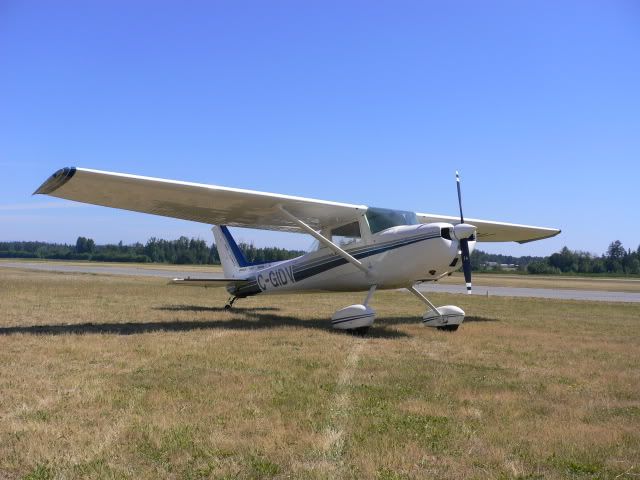
Why don't you buy my Aerobat?
http://i43.photobucket.com/albums/e353/ ... 010783.jpg
So would I.
Why don't you buy my Aerobat?
http://i43.photobucket.com/albums/e353/ ... 010783.jpg
The hardest thing about flying is knowing when to say no
After over a half a century of flying no one ever died because of my decision not to fly.
After over a half a century of flying no one ever died because of my decision not to fly.
-
Cat Driver
- Top Poster
- Posts: 18921
- Joined: Sun Feb 15, 2004 8:31 pm

I think you are right on the money mcrit about the INTENTION of the spin, to recognize and avoid... and if you look at the objective of exercise 13, well, it is (paraphraing here) 'to get the student to learn and to recognize and avoid the conditions which could lead into a spin'.. And congratulations for all the newcomers!
But there is still a little question that rises up... I've been showing all the stages of the spins to students, but should we as instrustors only keep to the incipient stage or even just the entry?
Again the flight instructor guide only states 'if the spin entry is allowed to proceed beyond this poin (incipient stage)' (Instructor and Student practice (1) (c) (ii)) And pretty much all other text about it only talks about entry and incipient....
So yes we need to teach spins for safety... but to which stage of the spin?
But there is still a little question that rises up... I've been showing all the stages of the spins to students, but should we as instrustors only keep to the incipient stage or even just the entry?
Again the flight instructor guide only states 'if the spin entry is allowed to proceed beyond this poin (incipient stage)' (Instructor and Student practice (1) (c) (ii)) And pretty much all other text about it only talks about entry and incipient....
So yes we need to teach spins for safety... but to which stage of the spin?
Good points Nappy. The intention is to teach the students to avoid a spin, but there is nothing wrong with teaching them how to get out of a fully developed one. After all, we teach the students to avoid an engine failure, but we still teach the forced approach, just in case them find themselves in that situation.
-
Single-Engine IFR
- Rank 1

- Posts: 31
- Joined: Mon Jun 26, 2006 9:59 pm
Aerobatic Flight Manoeuvre
A publication that was distributed to all registered flight instructors several years ago pretty well answers the question whether the training is supposed to stop at incipient spins or go all the way to full spins.
The masthead reads:
Transport Canada
Safety and Security
Civil Aviation
Guidance Notes
PRIVATE AND COMMERCIAL PILOT TRAINING
Stall/Spin Awareness
March 2000
On page 11 of the document, the text reads:
"Flight instructors must provide spin training as outlined in Exercise 13 of the Flight Instructor Guide (TP975) and the Flight Training Manual. Emphasize that techniques and procedures for each aircraft may differ and that pilots should be aware of the flight characteristics of each aircraft flown.
A demonstration of the full spin, by the student, is required during private pilot training. Students should be competent in recovery from a full spin while avoiding secondary stall, excessive airspeed, or excessive altitude loss."
The document goes on to say:
Spin avoidance, incipient spins, and actual spin entry, spin, and spin recovery techinques should be practised from an altitude recommended by the aircrafy manufacturer or at an altitude that will enable complete recovery by 2,000 feet AGL, whichever is greater.
The Aeroplane Flight Training Manual, revised 4th edition, (TP 1102) on pps 82 and 83 describes in detail how to enter and recover from a full spin.
The Cessna 172M Pilot's Operating Handbook, in section 4, Normal Procedures gives detailed instructions on how to enter a full spin, (pps 4-17 and 4-18.
If the spin is entered and recovered from in the way recommended I can see no chance of structural failure. During the recovery or if the airplane is too stable to spin, a spiral dive could result, which would be taken care of in the appropriate fashion. This could also happen during a steep turn, and I am sure no-one is suggesting that we all wear parachutes for steep turns.
If a spin were entered at a normal cruise speed, you would then have a snap roll, which is a aerobatic manoeuvre and is not part of this discussion.
Cheers,
SEI
The masthead reads:
Transport Canada
Safety and Security
Civil Aviation
Guidance Notes
PRIVATE AND COMMERCIAL PILOT TRAINING
Stall/Spin Awareness
March 2000
On page 11 of the document, the text reads:
"Flight instructors must provide spin training as outlined in Exercise 13 of the Flight Instructor Guide (TP975) and the Flight Training Manual. Emphasize that techniques and procedures for each aircraft may differ and that pilots should be aware of the flight characteristics of each aircraft flown.
A demonstration of the full spin, by the student, is required during private pilot training. Students should be competent in recovery from a full spin while avoiding secondary stall, excessive airspeed, or excessive altitude loss."
The document goes on to say:
Spin avoidance, incipient spins, and actual spin entry, spin, and spin recovery techinques should be practised from an altitude recommended by the aircrafy manufacturer or at an altitude that will enable complete recovery by 2,000 feet AGL, whichever is greater.
The Aeroplane Flight Training Manual, revised 4th edition, (TP 1102) on pps 82 and 83 describes in detail how to enter and recover from a full spin.
The Cessna 172M Pilot's Operating Handbook, in section 4, Normal Procedures gives detailed instructions on how to enter a full spin, (pps 4-17 and 4-18.
If the spin is entered and recovered from in the way recommended I can see no chance of structural failure. During the recovery or if the airplane is too stable to spin, a spiral dive could result, which would be taken care of in the appropriate fashion. This could also happen during a steep turn, and I am sure no-one is suggesting that we all wear parachutes for steep turns.
If a spin were entered at a normal cruise speed, you would then have a snap roll, which is a aerobatic manoeuvre and is not part of this discussion.
Cheers,
SEI
If the good Lord had intended man to fly, He wouldn't have given him railroads.
Spins occur when you are low and slow, either on final approach or after takeoff. At those altitudes, if a fully-developed spin is allowed to develop, there is no altitude to recover.
At higher altitudes, where a fully developed spin could be recovered from, aircraft are operated at cruising speeds, at which enormous G is required to stall/spin the aircraft. The only exception would be a thoroughly botched slow flight or stall practice exercise.
I do worry that most flight instructors know as much about fully developed spins, as I do about native american societies in 4000 BC.
Have you experienced a flat spin? An accelerated spin? A crossover spin?
I know, am fretting too much about nothing. I am sure you will tell me that spins are harmless. But if that is the case, why are there fatal spin accidents every year, often with supposedly spin-experienced pilot?
The answer is rather obviously that these pilots didn't know as much about spins as they thought they did.
At higher altitudes, where a fully developed spin could be recovered from, aircraft are operated at cruising speeds, at which enormous G is required to stall/spin the aircraft. The only exception would be a thoroughly botched slow flight or stall practice exercise.
I do worry that most flight instructors know as much about fully developed spins, as I do about native american societies in 4000 BC.
Have you experienced a flat spin? An accelerated spin? A crossover spin?
I know, am fretting too much about nothing. I am sure you will tell me that spins are harmless. But if that is the case, why are there fatal spin accidents every year, often with supposedly spin-experienced pilot?
The answer is rather obviously that these pilots didn't know as much about spins as they thought they did.
-
Cat Driver
- Top Poster
- Posts: 18921
- Joined: Sun Feb 15, 2004 8:31 pm
Hedley:
Fu.k this spin stuff.
This is what really matters.
" Transport Canada
Safety and Security "
Just reading their latest version of name spin makes my heart race far faster than any flat spin.
Hell to experience the sensations of spinning you need to get in an airplane.
But just reading the TC word spin is for free.
Ya just gotta love the fu.kin mental giants that think up these descriptions of TC.
Cat
Fu.k this spin stuff.
This is what really matters.
" Transport Canada
Safety and Security "
Just reading their latest version of name spin makes my heart race far faster than any flat spin.
Hell to experience the sensations of spinning you need to get in an airplane.
But just reading the TC word spin is for free.
Ya just gotta love the fu.kin mental giants that think up these descriptions of TC.
Cat
The hardest thing about flying is knowing when to say no
After over a half a century of flying no one ever died because of my decision not to fly.
After over a half a century of flying no one ever died because of my decision not to fly.
-
Single-Engine IFR
- Rank 1
- Posts: 31
- Joined: Mon Jun 26, 2006 9:59 pm
Aerobatic Manoeuvres
Hence the reason to practice them at a safe altitude so one day you won't be caught, as the old saying goes, "Running out of airspeed, altitude and ideas all at the same time."Hedley wrote:Spins occur when you are low and slow, either on final approach or after takeoff. At those altitudes, if a fully-developed spin is allowed to develop, there is no altitude to recover.
If the good Lord had intended man to fly, He wouldn't have given him railroads.

You can find that in TP16747 -- Guidance Notes - Stall/Spin Awareness. The document has been revised. The current version is 2 (Oct 2003). That reference is now found on page 18. The document was mainly written to provide examples and to encourage the use of scenario based training when teaching "stalls from practical fligt scenarios". You will likely find it very useful to provide to new instructor candidates. At the same time, many current instructors will also find it quite useful too.mcrit wrote:Single Engine: Thanks for digging out that old reference, it sure cleared up some stuff, I couldn't prevail on you for a TP number? (I think that it would make great reading for the instructor candidates that I train)
TP13747 Guidance Notes -- Stall/Spin Awareness
-
Cat Driver
- Top Poster
- Posts: 18921
- Joined: Sun Feb 15, 2004 8:31 pm
I may be risking been seen as an as.hole here but I would like to make a comment about these training exercises.
There is no argument that spin awareness, entry and recovery needs to be taught to famaliarlize the student with the dangers of inadvertant spin entry.
However what I would really like to see is pilots who have been taught how to taxi using power to control speed instead of brakes.
Also pilots who fly the climbout using outside reference for pitch control instead of looking outside, inside at the airspeed, outside, inside and climbing like a rocking horse.
Once they get to level off altitude I would be delighted if they understood how to level off...Nose down to the level attitude...wait for desired airspeed ....then set power and fine trim the thing so they don't have to chase altitude.
Those faults are in my opinion far more important than spin entry and recovery
Teach them how to control attitude correctly and they won't accidently enter a spin.
Cat
There is no argument that spin awareness, entry and recovery needs to be taught to famaliarlize the student with the dangers of inadvertant spin entry.
However what I would really like to see is pilots who have been taught how to taxi using power to control speed instead of brakes.
Also pilots who fly the climbout using outside reference for pitch control instead of looking outside, inside at the airspeed, outside, inside and climbing like a rocking horse.
Once they get to level off altitude I would be delighted if they understood how to level off...Nose down to the level attitude...wait for desired airspeed ....then set power and fine trim the thing so they don't have to chase altitude.
Those faults are in my opinion far more important than spin entry and recovery
Teach them how to control attitude correctly and they won't accidently enter a spin.
Cat
The hardest thing about flying is knowing when to say no
After over a half a century of flying no one ever died because of my decision not to fly.
After over a half a century of flying no one ever died because of my decision not to fly.