Hmm, I'll bite, this bait looks tastey. Yes, I do know _just a little_ about aerodynamics.MUSICMAN wrote: Anyone that know's anything about aerodynamics will tell you that compression is less drag than suction, thus giving you better air flow. Ta Da!! science lesson for the day. Oh, by the way.... this is why the tail of aircraft are the pointy end.
MM
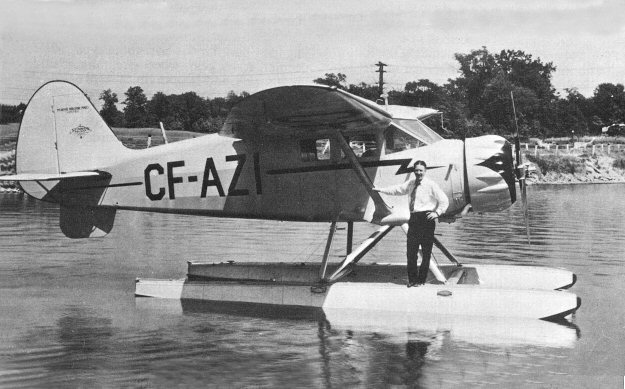
I can remember pretty clearly, back in 81, I had just finished another season 'in the bush', flew a bunch of boats that summer, on a beaver, pointy end to the back. I had tried to analyze the reasons mathematically, but, never did find a proper solution over the summer, sooo, when I got back to school for the winter, I asked my aerodymanics professor about it (ya, that was one of the courses in an aerospace engineering program). He was a crafty old one tho, and wouldn't give me a strait answer. Guess i shouldn't have been surprised 2 weeks later when we started getting term project assignments. My task, wind tunnel analysis of a 14 foot fishboat, using a scale model. Yipppeeeee, see, there is actually practical reasons to go to university. Off I went to do analysis of stability, control, and efficiency of flying a 14 footer, great fun, and my entire academic semester rested on the results.
I'll spare you the math and all the tables of pressure plot measurements. The conclusions were quite a surprise, NOT. The fishboat is stable flown pointy end forward. It creates a significant amount of drag, with an insignificant amount of lift. Properly oriented (keel down) it can be made to fly with sufficient airspeeed, but then again, so can a brick. Downstream of the stern, there is a significant area of turbulent airflow, the exact geometry of that turbulence is a function of the speed you drag it thru the air. The turbulent region exists for all airspeeds.
Turn it around in the wind tunnel now, and 'fly' it with the pointy end to the back. The boat is unstable, and produces virtually no lift in any configuration. At low airspeeds, there is no area of turbulence aft of the boat. Boundary layer breakaway is a function of reynolds number, so crank up the speed and you will be able to determine when the system starts to produce a turbulent airflow behind the boat. Crank the speed up high enough, and, the turbulence behind the boat is almost equivalent to the other way around, but at lower speeds it is significantly lower. The total drag produced is substantially lower at low speeds, more than a little bit significant.
The final part of my paper, take all the wind tunnel data, and extrapolate to calculate the effect of that boat when it is configured to be an appendage on an aircraft in flight, ie tied on. The final conclusions, at high speeds it becomes a bit of a wash, varios conflicting factors. At low speeds, blunt end forward produces less drag, and substantially less turbulence downstream, at the expense of a little aircraft stability. Maybe some day I'll see a high speed beaver, but, till then, guess the old farts were right after all, tie it on good (that stability thing) and put the blunt end forward. The slower you go, the more difference it makes, think takeoff and landing now....










 [/img]