Who needs F-35
Moderators: sky's the limit, sepia, Sulako, lilfssister, North Shore, I WAS Birddog
-
Beefitarian

- Top Poster

- Posts: 6618
- Joined: Wed Dec 01, 2010 10:53 am
- Location: A couple of meters away from others.


Re: Who needs F-35
As AuxBatOn said, the threats posed by the libyan air force most likely did not require the capabilities of the F-22 ...
At the same time, even if an an air superiority fighter is not the right tool for a ground offensive, it sure seems like exactly the right tool to enforce a *no-fly* zone.
At the same time, even if an an air superiority fighter is not the right tool for a ground offensive, it sure seems like exactly the right tool to enforce a *no-fly* zone.
Re: Who needs F-35
http://www.washingtontimes.com/news/201 ... /?page=all
Gen. McPeak is one of the F-22’s founding fathers. He helped write the requirements for what would become a stealthy air-superiority jet that would fly higher and accelerate faster than any previous fighter.
As chief, he made an important change by ordering manufacturer Lockheed Martin Corp. to add a bomb bay to give it not just air-to-air lethality but also air-to-ground capability to strike air defenses.
“Unless we had an air-to-ground munitions capability that really made it a dual-role fighter, it wouldn’t have survived congressional scrutiny,” Gen. McPeak said. “I’m a strong volunteer to fly the airplane myself.”
Some retired top brass blame the chain of command, from the Guard unit up to Air Combat Command, for letting the two pilots’ complaints evolve into a national TV spectacle.
“If all that were in my chain of command, there would be some heads rolling somewhere,” said retired Air ForceMaj. Gen. Charles D. Link. “Pilots shouldn’t have to go to congressmen and get whistleblower protection in order to get relief from some kind of problem. It just shouldn’t happen. There’s a chain-of-accountability breakdown there somewhere.”
Retired Lt. Gen. Thomas G. McInerney, who logged 4,000 flying hours in fighters in Vietnam and other venues, offered blunt advice: “The Air Force has a problem, and they should not ground pilots or reprimand them. The Air Force should fix the problem.”
The ‘Raptor cough’
The Air Force says the 25 cases of pilot hypoxia, the most frequent for any fighter aircraft, stems from one of two problems: Either the onboard oxygen generation system is not providing sufficient air or the air itself is contaminated.
Until technicians figure it out, Gen. McInerney said, the Air Force should employ the Vietnam-era system of installing oxygen bottles in the cockpit and “get rid of the [oxygen generation] system, which is the problem.”
Col. Sholtis said the Air Force has discussed using oxygen bottles but has not made a final decision. What it has tried to do, after the plane was grounded for five months last year, is make the F-22 safer.
“We instituted a number of measures designed to protect our pilots, ensure the safe completion of operations and assess the possible physiological effects of flying the aircraft,” he said.
Those include conducting blood and pulmonary-function tests and providing each pilot with an in-flight pulse oximeter, which monitors the amount of oxygen in the blood.
The service also installed activated carbon C2A1 filters to trap any contaminants moving through the oxygen-generating machine into the pilots’ throats and lungs.
That created another problem: Carbon dust leaked into the hoses and, according to CBS, into pilots’ throats, causing what pilots have dubbed the “Raptor cough.”
Col. Sholtis said the dust has been used in air and water systems for years “without any significant evidence of harm.”
He said 30 throat swabs were taken from pilots and no carbon was found. An analysis of more than 500 filters showed “no significant levels of contaminants.”
The service discontinued the filters and is installing contaminant sensors to monitor the air hoses.
Pilot error or cover-up?
The Nov. 16, 2010, crash of an F-22 Raptor that killed pilot Capt. Jeffrey Haney involved a lack of oxygen in the cockpit.
The Air Force’s official accident investigation said the plane’s bleed air intake, which is used to generate power, malfunctioned and caused the oxygen-generating system to shut down.
The report blamed Haney for the crash for not quickly activating the emergency oxygen system and recovering from a dive. The investigation said the onboard oxygen generation system did not malfunction.
“Due to the high affinity of oxygen to hemoglobin, [Haney] would have had adequate blood oxygen supply after the [system] failed,” the report states, according to the Air Force Times.
“It was concluded that the late recognition of the [Raptor’s] unusual altitude and appropriate corrective actions attempted by [Capt. Haney] demonstrates that hypoxia was not a factor in this mishap.”
Capt. Haney’s family charges that the Air Force is protecting its multibillion-dollar fighter by blaming the pilot when the real culprit was the F-22 itself.
“I’d like to think it’s easier to blame Jeff. He’s not here to defend himself,” Jennifer Haney, his sister, told ABC News. “To them, Jeff was a number, it feels like sometimes. But those jets are worth a lot of money.
“I don’t agree with [the Air Force]. I think there was a lot more going on inside that cockpit,” she said. “A cover-up? I don’t know. But there’s something.”
The Pentagon’s inspector general is investigating how the Air Force Accident Investigation Board reached its conclusion of pilot error.
Ironically, when Gen. Norton Schwartz, the Air Force chief of staff, appeared before a congressional committee in March, he maintained that the service was not blaming the pilot — while, in fact, the accident report did just that.
A troubled chronology
Until the Air Force solves the F-22 mystery, the investigation and outreach to pilots continue.
“We’ve conducted road shows where we have gone out to each Raptor base and conducted town-hall meetings where we talk about what’s going on, take their questions, address their concerns,” Col. Sholtis said.
“There are biweekly video teleconferences. All the unit commanders are updated on what’s being done to advance the root-cause analysis.”
The F-22’s founders 20 years ago could not have predicted the aircraft’s spotty chronology.
It was declared operational in 2005 but never deployed to prolonged wars in Afghanistan and Iraq, where air power was used extensively.
The Air Force wanted at least 243 F-22s, but, as defense secretary, Robert M. Gates capped the purchase at 187. The last plane was delivered recently.
The Raptor took another hit this month when Sen. John McCain of Arizona, the top Republican on the Senate Armed Services Committee, told ABC News that the F-22, pegged at $400 million a copy, has no mission in today’s conflicts.
“There is no purpose, no mission in Afghanistan or Iraq, unless you believe that al Qaeda is going to have a fleet of aircraft,” said Mr. McCain, a former Navy fighter pilot.
F-22 backers disagree, saying a conflict with China’s growing air force or strikes on Iran would fit the plane’s ability to penetrate defended airspace to drop bombs and to out-dogfight any enemy fighter.
In fact, the Pentagon for the first time deployed F-22s to a potential war theater: The planes flew to the United Arab Emirates, a U.S. ally across the Persian Gulf from bellicose Iran.
Whistleblower protection
Col. Sholtis said the final answer to F-22 pilots’ high rate of hypoxia may be the plane’s unique performance.
“We’ve got normally healthy pilots who go up, fly a mission, experience some kind of physiological symptoms, come back, and after a period of time, those symptoms go away,” he said.
“The approach now is more holistic. We are not just talking about the machine. We’re talking about how that machine interacts with a human in the cockpit.
“In a particular operational environment, the relevant factors being high altitude, high gravitational forces, the normal things we ask this aircraft to do as part of its mission,” the Air Force spokesman said.
As for Maj. Gordon and Capt. Wilson, Air Force Lt. Gen. Janet C. Wolfenbarger, the military deputy for the office of the assistant secretary of the Air Force for acquisition, told a Senate committee this week that they are covered by the Military Whistleblower Protection Act and will not be punished for their unauthorized appearance on “60 Minutes.”
Their attorney, Frederick M. Morgan, said his clients exhausted internal complaints and thus decided to go public.
“They made the choices they made because they felt it was not receiving attention internally that they felt was appropriate,” Mr. Morgan told The Times. “It did not seem to them to be headed in the right direction. They simply exercised a statutory right to get the word out.”
Both pilots stopped flying this year because of bouts of hypoxia and perceived side effects from the charcoal filters. Capt. Wilson was reprimanded for adhering to his doctor’s recommendation that he not fly with the filter.
Mr. Morgan said Maj. Gordon has told the command that he is willing to resume flying “with close medical scrutiny and coordination with those evaluating the life-support system” now that the filter has been removed.
Asked what the two thought they accomplished by appearing on TV, Mr. Morgan said: “My fervent hope is the fix to the problem gets expedited even more than it was. We have no doubt the Air Force was working hard on it, but I think you can always work harder, and that’s what
Read more: http://www.washingtontimes.com/news/201 ... z2nDXKon8J
Follow us: @washtimes on Twitter
I think this is just a snow job, Why ?
Because as they are re-fitting the oxygen system they are also upgrading the stealth with a new anti-laser and ultra-sonic absorbent coatings and a new exhaust that will make them go Faster and Higher
(ok I made that last part up )
)
Gen. McPeak is one of the F-22’s founding fathers. He helped write the requirements for what would become a stealthy air-superiority jet that would fly higher and accelerate faster than any previous fighter.
As chief, he made an important change by ordering manufacturer Lockheed Martin Corp. to add a bomb bay to give it not just air-to-air lethality but also air-to-ground capability to strike air defenses.
“Unless we had an air-to-ground munitions capability that really made it a dual-role fighter, it wouldn’t have survived congressional scrutiny,” Gen. McPeak said. “I’m a strong volunteer to fly the airplane myself.”
Some retired top brass blame the chain of command, from the Guard unit up to Air Combat Command, for letting the two pilots’ complaints evolve into a national TV spectacle.
“If all that were in my chain of command, there would be some heads rolling somewhere,” said retired Air ForceMaj. Gen. Charles D. Link. “Pilots shouldn’t have to go to congressmen and get whistleblower protection in order to get relief from some kind of problem. It just shouldn’t happen. There’s a chain-of-accountability breakdown there somewhere.”
Retired Lt. Gen. Thomas G. McInerney, who logged 4,000 flying hours in fighters in Vietnam and other venues, offered blunt advice: “The Air Force has a problem, and they should not ground pilots or reprimand them. The Air Force should fix the problem.”
The ‘Raptor cough’
The Air Force says the 25 cases of pilot hypoxia, the most frequent for any fighter aircraft, stems from one of two problems: Either the onboard oxygen generation system is not providing sufficient air or the air itself is contaminated.
Until technicians figure it out, Gen. McInerney said, the Air Force should employ the Vietnam-era system of installing oxygen bottles in the cockpit and “get rid of the [oxygen generation] system, which is the problem.”
Col. Sholtis said the Air Force has discussed using oxygen bottles but has not made a final decision. What it has tried to do, after the plane was grounded for five months last year, is make the F-22 safer.
“We instituted a number of measures designed to protect our pilots, ensure the safe completion of operations and assess the possible physiological effects of flying the aircraft,” he said.
Those include conducting blood and pulmonary-function tests and providing each pilot with an in-flight pulse oximeter, which monitors the amount of oxygen in the blood.
The service also installed activated carbon C2A1 filters to trap any contaminants moving through the oxygen-generating machine into the pilots’ throats and lungs.
That created another problem: Carbon dust leaked into the hoses and, according to CBS, into pilots’ throats, causing what pilots have dubbed the “Raptor cough.”
Col. Sholtis said the dust has been used in air and water systems for years “without any significant evidence of harm.”
He said 30 throat swabs were taken from pilots and no carbon was found. An analysis of more than 500 filters showed “no significant levels of contaminants.”
The service discontinued the filters and is installing contaminant sensors to monitor the air hoses.
Pilot error or cover-up?
The Nov. 16, 2010, crash of an F-22 Raptor that killed pilot Capt. Jeffrey Haney involved a lack of oxygen in the cockpit.
The Air Force’s official accident investigation said the plane’s bleed air intake, which is used to generate power, malfunctioned and caused the oxygen-generating system to shut down.
The report blamed Haney for the crash for not quickly activating the emergency oxygen system and recovering from a dive. The investigation said the onboard oxygen generation system did not malfunction.
“Due to the high affinity of oxygen to hemoglobin, [Haney] would have had adequate blood oxygen supply after the [system] failed,” the report states, according to the Air Force Times.
“It was concluded that the late recognition of the [Raptor’s] unusual altitude and appropriate corrective actions attempted by [Capt. Haney] demonstrates that hypoxia was not a factor in this mishap.”
Capt. Haney’s family charges that the Air Force is protecting its multibillion-dollar fighter by blaming the pilot when the real culprit was the F-22 itself.
“I’d like to think it’s easier to blame Jeff. He’s not here to defend himself,” Jennifer Haney, his sister, told ABC News. “To them, Jeff was a number, it feels like sometimes. But those jets are worth a lot of money.
“I don’t agree with [the Air Force]. I think there was a lot more going on inside that cockpit,” she said. “A cover-up? I don’t know. But there’s something.”
The Pentagon’s inspector general is investigating how the Air Force Accident Investigation Board reached its conclusion of pilot error.
Ironically, when Gen. Norton Schwartz, the Air Force chief of staff, appeared before a congressional committee in March, he maintained that the service was not blaming the pilot — while, in fact, the accident report did just that.
A troubled chronology
Until the Air Force solves the F-22 mystery, the investigation and outreach to pilots continue.
“We’ve conducted road shows where we have gone out to each Raptor base and conducted town-hall meetings where we talk about what’s going on, take their questions, address their concerns,” Col. Sholtis said.
“There are biweekly video teleconferences. All the unit commanders are updated on what’s being done to advance the root-cause analysis.”
The F-22’s founders 20 years ago could not have predicted the aircraft’s spotty chronology.
It was declared operational in 2005 but never deployed to prolonged wars in Afghanistan and Iraq, where air power was used extensively.
The Air Force wanted at least 243 F-22s, but, as defense secretary, Robert M. Gates capped the purchase at 187. The last plane was delivered recently.
The Raptor took another hit this month when Sen. John McCain of Arizona, the top Republican on the Senate Armed Services Committee, told ABC News that the F-22, pegged at $400 million a copy, has no mission in today’s conflicts.
“There is no purpose, no mission in Afghanistan or Iraq, unless you believe that al Qaeda is going to have a fleet of aircraft,” said Mr. McCain, a former Navy fighter pilot.
F-22 backers disagree, saying a conflict with China’s growing air force or strikes on Iran would fit the plane’s ability to penetrate defended airspace to drop bombs and to out-dogfight any enemy fighter.
In fact, the Pentagon for the first time deployed F-22s to a potential war theater: The planes flew to the United Arab Emirates, a U.S. ally across the Persian Gulf from bellicose Iran.
Whistleblower protection
Col. Sholtis said the final answer to F-22 pilots’ high rate of hypoxia may be the plane’s unique performance.
“We’ve got normally healthy pilots who go up, fly a mission, experience some kind of physiological symptoms, come back, and after a period of time, those symptoms go away,” he said.
“The approach now is more holistic. We are not just talking about the machine. We’re talking about how that machine interacts with a human in the cockpit.
“In a particular operational environment, the relevant factors being high altitude, high gravitational forces, the normal things we ask this aircraft to do as part of its mission,” the Air Force spokesman said.
As for Maj. Gordon and Capt. Wilson, Air Force Lt. Gen. Janet C. Wolfenbarger, the military deputy for the office of the assistant secretary of the Air Force for acquisition, told a Senate committee this week that they are covered by the Military Whistleblower Protection Act and will not be punished for their unauthorized appearance on “60 Minutes.”
Their attorney, Frederick M. Morgan, said his clients exhausted internal complaints and thus decided to go public.
“They made the choices they made because they felt it was not receiving attention internally that they felt was appropriate,” Mr. Morgan told The Times. “It did not seem to them to be headed in the right direction. They simply exercised a statutory right to get the word out.”
Both pilots stopped flying this year because of bouts of hypoxia and perceived side effects from the charcoal filters. Capt. Wilson was reprimanded for adhering to his doctor’s recommendation that he not fly with the filter.
Mr. Morgan said Maj. Gordon has told the command that he is willing to resume flying “with close medical scrutiny and coordination with those evaluating the life-support system” now that the filter has been removed.
Asked what the two thought they accomplished by appearing on TV, Mr. Morgan said: “My fervent hope is the fix to the problem gets expedited even more than it was. We have no doubt the Air Force was working hard on it, but I think you can always work harder, and that’s what
Read more: http://www.washingtontimes.com/news/201 ... z2nDXKon8J
Follow us: @washtimes on Twitter
I think this is just a snow job, Why ?
Because as they are re-fitting the oxygen system they are also upgrading the stealth with a new anti-laser and ultra-sonic absorbent coatings and a new exhaust that will make them go Faster and Higher
(ok I made that last part up
)
Re: Who needs F-35
Thank you for digging up that article from over a year ago.
So we are moving onto the F-22 now?
So we are moving onto the F-22 now?
Re: Who needs F-35
Somebody was asking why the F-22 was not used in Libya ,sick pilots might be the reason.
We should wait for the sixth generation aircraft ,any guess what they might look like.
One Hint they will contain a lot of "LONG FORGED PARTS' Made in Germany at the only long forging plant in the west. Long Forging will reduce the cost of production of Airframes.
Long forging will do for fighter spars and structures what the Farnham milling machine did for Douglas Aircraft steel wing spars.
We should wait for the sixth generation aircraft ,any guess what they might look like.
One Hint they will contain a lot of "LONG FORGED PARTS' Made in Germany at the only long forging plant in the west. Long Forging will reduce the cost of production of Airframes.
Long forging will do for fighter spars and structures what the Farnham milling machine did for Douglas Aircraft steel wing spars.
Re: Who needs F-35
I operated alongside F-22s during exercises and ther A/G capes are very limited when compared to a true multi-rol fighter (ie: it can't drop and LGB and lase it, which was 90% of the work in Libya).
Going for the deck at corner


Re: Who needs F-35
In the big scheme of things... Canada's best suited aircraft would actually be the SAAB Gripen. Sure... I'd love to see them get F-35's or Super Flankers... but for what the RCAF actually does? Gripen. Not to mention fuel savings and maintenance costs would be lower. They did argue that only having one engine hurt it's chances... but common? How often does an engine actually fail now adays? They have 2 seater and 1 seater variations as well. The Swedes also use them from gravel strips and have been known to test from grass fields... Pretty common in Canada EH?
And because posts are dull without pictures and videos... Here ya go: lol
http://www.youtube.com/watch?v=5vl8Uah1Exk

*edit* My grammer sucks to begin with... but noticed some VERY bad grammer! haha
And because posts are dull without pictures and videos... Here ya go: lol
http://www.youtube.com/watch?v=5vl8Uah1Exk
*edit* My grammer sucks to begin with... but noticed some VERY bad grammer! haha
Meatservo wrote:I just slap 'em in there. I don't even make sure they are lined up properly.

Re: Who needs F-35
There are three aircraft that are good for Canada:
The F-15
The F-18 Super or Growth Hornet
The SU-27
The SU-27 would be the most capable of the three and best suited to Canada's unique requirements, but the hardest to justify, non-NATO parts, maintenance issues, Canada and Russia political sabre rattling...
The F-15 is the second most capable, but the most expensive of the three options, and has no real commonality with the current type we operate.
The Super/Growth Bug would be the least capable, but the easiest to integrate into the RCAF based on our current training standards, and of course, a reasonable price tag.
The F-35 is a POS.
The F-15
The F-18 Super or Growth Hornet
The SU-27
The SU-27 would be the most capable of the three and best suited to Canada's unique requirements, but the hardest to justify, non-NATO parts, maintenance issues, Canada and Russia political sabre rattling...
The F-15 is the second most capable, but the most expensive of the three options, and has no real commonality with the current type we operate.
The Super/Growth Bug would be the least capable, but the easiest to integrate into the RCAF based on our current training standards, and of course, a reasonable price tag.
The F-35 is a POS.

Re: Who needs F-35
You really should inform all the guys who are actually involved right now in flying fighters or planning development or purchases.boxcut wrote: The F-35 is a POS.
I do not think they are aware of all the relevant facts you just brought up with an amazing certainty.
Think ahead or fall behind!
Re: Who needs F-35
Your sarcasm is noted, but I can tell you after having been in your position that it is entirely likely you are not fully aware of the relevant facts either. There is a point of view other than the military's. Since that point of view originates from the citizens of this country who elect politicians and political parties, who then put in place the minister in charge of defense, who then directs virtually everything you do as a military, I would pay more attention to what those people think. You work for the people of Canada and they are not as entirely stupid as you think they are.trampbike wrote:You really should inform all the guys who are actually involved right now in flying fighters or planning development or purchases.boxcut wrote:
The F-35 is a POS.
I do not think they are aware of all the relevant facts you just brought up with an amazing certainty.
Re: Who needs F-35
Fully aware of that, and I challenge you to find a post from me where I claimed things about the F-35 with an absolute certitude or turned an opinion into a fact.Rockie wrote: you are not fully aware of the relevant facts either.
Nice of you to assume I think that.Rockie wrote:You work for the people of Canada and they are not as entirely stupid as you think they are.
I do pay attention, doesn't mean I have to agree... they gave a majority to the conservative, would you say that was a great example of wisdom from the population?Rockie wrote:I would pay more attention to what those people think
What most of these people think is mainly based upon the mainstream media coverage of the subject. It would be pretty easy to actually turn the situation around and make the F35 look good and the other aircrafts bad (that's what the poster "Haletown" does in that huge F35 thread: http://forums.army.ca/forums/index.php/ ... 809.0.html. He posts good news about the F35 all the time, it just so happens that they are not the ones that make it to the front pages of canadian newspapers...)
EDIT: Heck I went to another F35 thread on this website and found this:
trampbike wrote:Too bad the government thinks he doesn't have to make the pertinent information available to the people he is supposed to be representing.
Think ahead or fall behind!

Re: Who needs F-35
"I do pay attention, doesn't mean I have to agree... they gave a majority to the conservative, would you say that was a great example of wisdom from the population?" Quote
I think in a round about way you just called the majority population of Canada who voted conservative stupid. Is that because they didn't vote your flavour into power? Or maybe Rockie's onto something.
I think in a round about way you just called the majority population of Canada who voted conservative stupid. Is that because they didn't vote your flavour into power? Or maybe Rockie's onto something.
Re: Who needs F-35
You get offended quite easily, because that's not what I said at all.MUSKEG wrote: I think in a round about way you just called the majority population of Canada who voted conservative stupid.
Refer to Rockie's comments about the government (in many other threads), and you'll understand why I wrote him that. In the F35 case, seems like it's really important for him that we take into account what the population thinks, but not so when it comes to the government.
Think ahead or fall behind!
Re: Who needs F-35
Don't feed the troll.trampbike wrote:You really should inform all the guys who are actually involved right now in flying fighters or planning development or purchases.boxcut wrote: The F-35 is a POS.
I do not think they are aware of all the relevant facts you just brought up with an amazing certainty.
I would have to disagree, you ever read the comments on CBC F35 articles?Rockie wrote:You work for the people of Canada and they are not as entirely stupid as you think they are.
Re: Who needs F-35
The government has botched this thing from day one so they cannot be trusted with it, and everything they say anyway is either to further their agenda - which is entirely political - or to cover their ass. I only wish we could trust the government but that would be foolish.trampbike wrote: In the F35 case, seems like it's really important for him that we take into account what the population thinks, but not so when it comes to the government.
You can find stupid everywhere. But when the people smell rotting garbage when it comes to spending billions of their dollars they're usually right despite their lack of expertise in modern combat aircraft.frosti wrote:I would have to disagree, you ever read the comments on CBC F35 articles?
Re: Who needs F-35
The governments of South Korea, Japan, Singapore and other nations who are not part of the initial JSF consortium are obviously idiots for purchasing the F-35. They should really listen to Canadian "experts" who see the F-35 as a dud. You seem to forget the Conservatives were elected as a majority government right in the midst of the problems the F-35 was having. So in reality, the majority of Canadians support the F-35.Rockie wrote:usually right despite their lack of expertise in modern combat aircraft.
Re: Who needs F-35
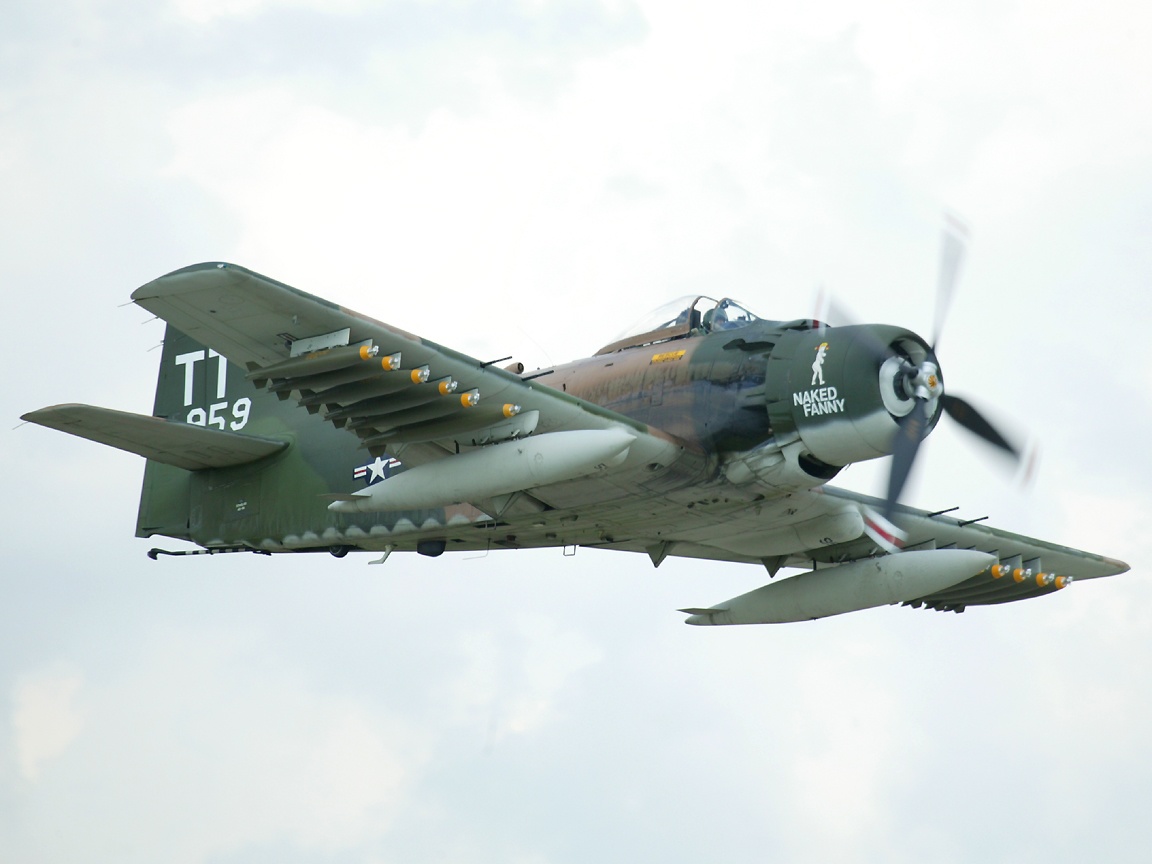
This would be a more effective aircraft then the F-35 in almost all cases:
Re: Who needs F-35
South Korea was going to get the F-15 Silent Eagle until Lockheed bribed their government. Japan wanted the F-22, not the F-35. Singapore, well the F-35 might be mildly useful for them, instead of just buying the next block of F-16s, but they're rich so they can afford the boondoggle.frosti wrote:The governments of South Korea, Japan, Singapore and other nations who are not part of the initial JSF consortium are obviously idiots for purchasing the F-35. They should really listen to Canadian "experts" who see the F-35 as a dud. You seem to forget the Conservatives were elected as a majority government right in the midst of the problems the F-35 was having. So in reality, the majority of Canadians support the F-35.Rockie wrote:usually right despite their lack of expertise in modern combat aircraft.
And as to the majority issue, Canadians wanted to stop having elections every year, so they voted in a majority. It wasn't a vote of confidence in the F-35.
Re: Who needs F-35
The funny thing is... despite what I think was your attempt to be funny... Your absolutely right!boxcut wrote:This would be a more effective aircraft then the F-35 in almost all cases:
Meatservo wrote:I just slap 'em in there. I don't even make sure they are lined up properly.
Re: Who needs F-35
Oh it wasn't me trying to be funny. Great Loiter time, excellent delivery of ordnance, cheap, tough. The only part it would fall down at is Air Superiority.xchox wrote:The funny thing is... despite what I think was your attempt to be funny... Your absolutely right!boxcut wrote:This would be a more effective aircraft then the F-35 in almost all cases:
Modern Warfare: A 125 Million dollar plane drops a 300,000 dollar munition to destroy a ten dollar tent...
Re: Who needs F-35
Please expand on this and reference your post.boxcut wrote: The only part it would fall down at is Air Superiority.
Believe it or not, this is taken into consideration within the targetting cycle. Sometimes what is in that tent may be worth the shot.boxcut wrote:
Modern Warfare: A 125 Million dollar plane drops a 300,000 dollar munition to destroy a ten dollar tent...
Going for the deck at corner
Re: Who needs F-35
A "majority" government in the Canadian parliamentary system doesn't mean a "majority" of people support them. Harper got his majority only because the opposition was split. 39.62% of the popular vote went to Harper whereas just under 50% went toward the Liberals and NDP combined with the rest split amongst the remaining parties. Clearly the majority of Canadians do not support the Conservatives or their shameful incompetence in capital procurement projects.frosti wrote:You seem to forget the Conservatives were elected as a majority government right in the midst of the problems the F-35 was having. So in reality, the majority of Canadians support the F-35.
Under your logic you could also say a majority of Canadians supported the Conservatives misappropriating $50 million of our money to build gazebo's and losing the whereabouts of $3 billion dollars. A majority of Canadians would also then support suppressing investigations into unlawful spending by the Senate, illegal activities by CSEC, and absolute secrecy surrounding anything this government does.
Re: Who needs F-35
This is wrong on so many levels…frosti wrote:You seem to forget the Conservatives were elected as a majority government right in the midst of the problems the F-35 was having. So in reality, the majority of Canadians support the F-35.
EDIT: Just saw Rockie's reply. Sums it up quite nicely.
Think ahead or fall behind!

Re: Who needs F-35
These F35 threads always boil down to
1. "I like ____ airplane, it's super neat"
2. "No, this one is way better"
3. Government/mil purchasing is stupid, or let's have a vote and pick what the layman non pilot (and non fighter pilot) public likes
4. Let's build our own (ha)
And then the cycle repeats itself.
If you took all the relevant testing and development engineering data, tactics and strategy, operational employment concept plans, training plans, future projections, logistics and supply management plans, yata yata yata, for this project, you could likely fill an entire university sized library at size 10 font. This is a complicated item. It's WAY more complex than say, buying an MRI machine for a hospital, or picking which nuclear reactor to put into a power plant, or which brand of satellite Environment Canada should get in on. Just about ever pilot on this forum knows less about picking a fighter jet than they would know if asked which shipyard should build the next icebreaker.
You could fill 20 blackboards with the aerodynamic equations that describe how the combat flaps come out and change the alpha to provide some pitch rate/turning radius performance. And it generally boils down to someone saying "hey, I say this at an airshow/in a magazine, and it looks sweeeeet!" It just becomes the aviation equivalent of "my dad's truck is better than your dad's truck." It's the eternal Ford vs Chevy argument.
I will let the 18 drivers, the FWIC qualified guys, the guys wearing the Test Pilot patches provide the $0.02 that they're allowed to. I know that I will never be able to out do their understanding of what fighter aircraft X does, in combat situation Y. If the 35 is the best choice (albeit with several compromises for the RCAF) then I'd rather the RCAF have what the experts want, than buy some something that's largely irrelevant, outdated, and doesn't allow us to work and play well with our allies. Despite the potential savings, bang for your buck is much worse if it doesn't work right.
1. "I like ____ airplane, it's super neat"
2. "No, this one is way better"
3. Government/mil purchasing is stupid, or let's have a vote and pick what the layman non pilot (and non fighter pilot) public likes
4. Let's build our own (ha)
And then the cycle repeats itself.
If you took all the relevant testing and development engineering data, tactics and strategy, operational employment concept plans, training plans, future projections, logistics and supply management plans, yata yata yata, for this project, you could likely fill an entire university sized library at size 10 font. This is a complicated item. It's WAY more complex than say, buying an MRI machine for a hospital, or picking which nuclear reactor to put into a power plant, or which brand of satellite Environment Canada should get in on. Just about ever pilot on this forum knows less about picking a fighter jet than they would know if asked which shipyard should build the next icebreaker.
You could fill 20 blackboards with the aerodynamic equations that describe how the combat flaps come out and change the alpha to provide some pitch rate/turning radius performance. And it generally boils down to someone saying "hey, I say this at an airshow/in a magazine, and it looks sweeeeet!" It just becomes the aviation equivalent of "my dad's truck is better than your dad's truck." It's the eternal Ford vs Chevy argument.
I will let the 18 drivers, the FWIC qualified guys, the guys wearing the Test Pilot patches provide the $0.02 that they're allowed to. I know that I will never be able to out do their understanding of what fighter aircraft X does, in combat situation Y. If the 35 is the best choice (albeit with several compromises for the RCAF) then I'd rather the RCAF have what the experts want, than buy some something that's largely irrelevant, outdated, and doesn't allow us to work and play well with our allies. Despite the potential savings, bang for your buck is much worse if it doesn't work right.
Re: Who needs F-35
Finally someone gets it.Gannet167 wrote:I will let the 18 drivers, the FWIC qualified guys, the guys wearing the Test Pilot patches provide the $0.02 that they're allowed to. I know that I will never be able to out do their understanding of what fighter aircraft X does, in combat situation Y. If the 35 is the best choice (albeit with several compromises for the RCAF) then I'd rather the RCAF have what the experts want, than buy some something that's largely irrelevant, outdated, and doesn't allow us to work and play well with our allies. Despite the potential savings, bang for your buck is much worse if it doesn't work right.


