With this crowd, that would be likely. Fortunately we will never find out for sure.Last one to crash wins
INSTRUCTORS AND SPINS
Moderators: sky's the limit, sepia, Sulako, Right Seat Captain, lilfssister, North Shore
-
Colonel Sanders
- Top Poster

- Posts: 7512
- Joined: Sun Jun 14, 2009 5:17 pm
- Location: Over Macho Grande
Re: INSTRUCTORS AND SPINS
-
Beefitarian

- Top Poster
- Posts: 6610
- Joined: Wed Dec 01, 2010 10:53 am
- Location: A couple of meters away from others.
-
Colonel Sanders
- Top Poster
- Posts: 7512
- Joined: Sun Jun 14, 2009 5:17 pm
- Location: Over Macho Grande
Re: INSTRUCTORS AND SPINS
More likely a 10 knot crosswind would come up and all flying would have to cease!
-
Beefitarian
- Top Poster
- Posts: 6610
- Joined: Wed Dec 01, 2010 10:53 am
- Location: A couple of meters away from others.
-
iflyforpie
- Top Poster
- Posts: 8132
- Joined: Tue Apr 15, 2008 12:25 pm
- Location: Winterfell...
Re: INSTRUCTORS AND SPINS
Any of you ever hear of that mechanic who was doing engine runs on an English Electric Lightning and the cables broke loose? He was solo in an open-cockpit Mach 2 interceptor with only a few hours of light aircraft time. He couldn't eject because the seat wasn't armed and he didn't have a flight suit. Took a couple tries, but he got it down in one piece.
-
Shiny Side Up

- Top Poster
- Posts: 5335
- Joined: Tue Feb 17, 2004 5:02 pm
- Location: Group W bench
Re: INSTRUCTORS AND SPINS
Now you're the one getting the history incorrect.iflyforpie wrote:Any of you ever hear of that mechanic who was doing engine runs on an English Electric Lightning and the cables broke loose? He was solo in an open-cockpit Mach 2 interceptor with only a few hours of light aircraft time. He couldn't eject because the seat wasn't armed and he didn't have a flight suit. Took a couple tries, but he got it down in one piece.

You're probably thinking of this guy. Apparently 2 hours in a cub was enough to learn everything about flying.
 Either way, the people here deserve a picture of a Lighting since they're cool.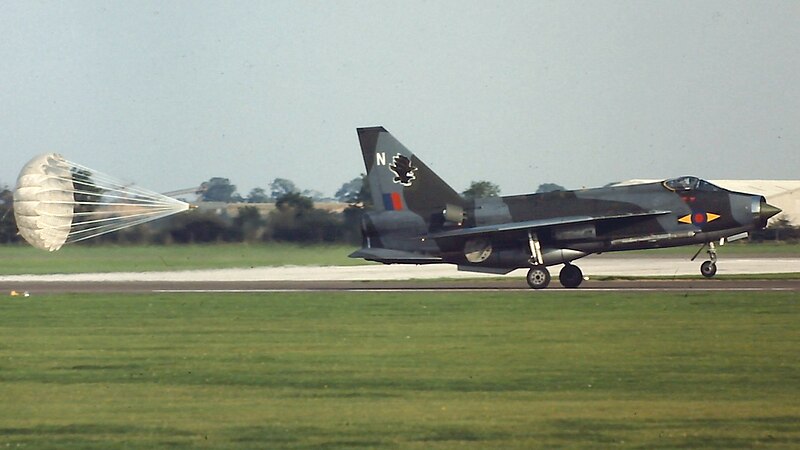
-
Beefitarian
- Top Poster
- Posts: 6610
- Joined: Wed Dec 01, 2010 10:53 am
- Location: A couple of meters away from others.
-
iflyforpie
- Top Poster
- Posts: 8132
- Joined: Tue Apr 15, 2008 12:25 pm
- Location: Winterfell...
Re: INSTRUCTORS AND SPINS
Not likely. Got you again SSU!Shiny Side Up wrote: Now you're the one getting the history incorrect.
http://www.youtube.com/watch?v=GYHdBQzIN-0
http://forum.keypublishing.co.uk/showthread.php?t=20807
But you are right, this thread definitely needed a Lightning picture... IMHO one of the coolest planes ever made.
-
Shiny Side Up
- Top Poster
- Posts: 5335
- Joined: Tue Feb 17, 2004 5:02 pm
- Location: Group W bench
Re: INSTRUCTORS AND SPINS
Ah, I bow to your internet-fu.iflyforpie wrote: Not likely. Got you again SSU!
http://www.youtube.com/watch?v=GYHdBQzIN-0
http://forum.keypublishing.co.uk/showthread.php?t=20807
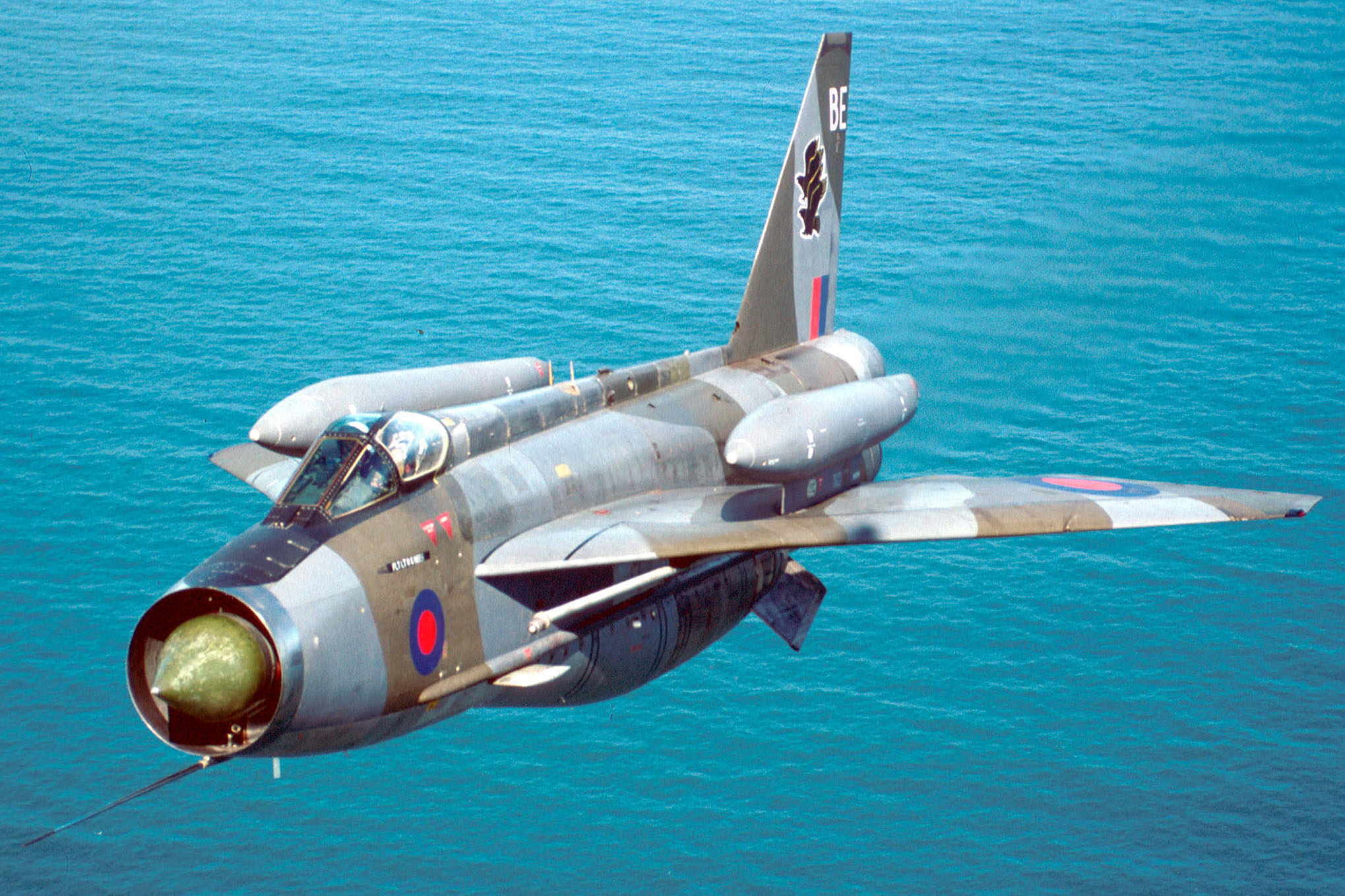
The lightning was soooo awesome it had stuff on top of the wings! Screw you conventional layout!
-
Colonel Sanders
- Top Poster
- Posts: 7512
- Joined: Sun Jun 14, 2009 5:17 pm
- Location: Over Macho Grande
Re: INSTRUCTORS AND SPINS
Now that is a butt-ugly airplane!
Checking a piston-aircraft pilot out in a pure jet, the first thing you have to get used to is the larger radiuses of the turns, because of the much higher speeds. With the same G, the radius is actually a function of the square of the airspeed. So if you're travelling four times as fast as you're used to, your turn radius is now 16x as large - if you pull the same G. This isn't rocket science. It's first year university physics, actually.
Next thing a piston-aircraft pilot needs to do - after he flies an approach by the numbers - is to learn to control the airspeed on final. Up until this point, he has been flying a light aircraft with virtually no momentum, with plenty of drag and instant throttle response. Well, in a pure jet pretty well all of that is turned upside down, and it's common to see people over-control the throttle, with sometimes disastrous results if they simultaneously are low on N1, airspeed and altitude. It's not hard for people to program the jet to crash-land short of the runway. Not good.
With a long enough runway, precise airspeed control is not as crucial. However with a short runway, it is absolutely crucial because your kinetic energy is a function of the square of your airspeed.
So, if nothing goes wrong, you fly a big circuit, and you pad the airspeed to a landing to a 2+ mile-long runway, yeah, it's really not that hard. Several F-104 pilots have told me the Pitts is much harder to land than the -104, which after all has a nosewheel.
Remember, all aircraft have a wing that pushes air down, and an engine that pushes air back.
Still, if you're struggling with crosswinds, think twice about taking on new aircraft types, because you haven't mastered the one you're already flying.
Flying a jet - as long as nothing goes wrong - is really not that hard. The ailerons, elevator and throttle work pretty much as expected, and frankly you don't have to do much with the rudder pedals. Things just happen a little quicker.He was solo in an open-cockpit Mach 2 interceptor with only a few hours of light aircraft time
Checking a piston-aircraft pilot out in a pure jet, the first thing you have to get used to is the larger radiuses of the turns, because of the much higher speeds. With the same G, the radius is actually a function of the square of the airspeed. So if you're travelling four times as fast as you're used to, your turn radius is now 16x as large - if you pull the same G. This isn't rocket science. It's first year university physics, actually.
Next thing a piston-aircraft pilot needs to do - after he flies an approach by the numbers - is to learn to control the airspeed on final. Up until this point, he has been flying a light aircraft with virtually no momentum, with plenty of drag and instant throttle response. Well, in a pure jet pretty well all of that is turned upside down, and it's common to see people over-control the throttle, with sometimes disastrous results if they simultaneously are low on N1, airspeed and altitude. It's not hard for people to program the jet to crash-land short of the runway. Not good.
With a long enough runway, precise airspeed control is not as crucial. However with a short runway, it is absolutely crucial because your kinetic energy is a function of the square of your airspeed.
So, if nothing goes wrong, you fly a big circuit, and you pad the airspeed to a landing to a 2+ mile-long runway, yeah, it's really not that hard. Several F-104 pilots have told me the Pitts is much harder to land than the -104, which after all has a nosewheel.
Remember, all aircraft have a wing that pushes air down, and an engine that pushes air back.
Still, if you're struggling with crosswinds, think twice about taking on new aircraft types, because you haven't mastered the one you're already flying.
-
Beefitarian
- Top Poster
- Posts: 6610
- Joined: Wed Dec 01, 2010 10:53 am
- Location: A couple of meters away from others.
-
iflyforpie
- Top Poster
- Posts: 8132
- Joined: Tue Apr 15, 2008 12:25 pm
- Location: Winterfell...
Re: INSTRUCTORS AND SPINS
I haven't had to deal with crosswinds for a while. Now that we have functioning wind socks at AA8 I'll have to practice. 
-
Shiny Side Up
- Top Poster
- Posts: 5335
- Joined: Tue Feb 17, 2004 5:02 pm
- Location: Group W bench
Re: INSTRUCTORS AND SPINS
Screw that, Lightnings are so awesome just looking at pictures of them is going to make you awesome. Even at crosswinds. Besides this thread needs more cowbell.iflyforpie wrote:I'll have to practice.
See so awesome they break the soundbarrier in an awesome manner.

Mounting missiles on your fuselage is also another sure sign of awesomeness!

Proof of that is here:

Pure awesome!
-
Colonel Sanders
- Top Poster
- Posts: 7512
- Joined: Sun Jun 14, 2009 5:17 pm
- Location: Over Macho Grande
Re: INSTRUCTORS AND SPINS
. Norris doesn't often fly a fighter jet, but if he did, he would fly a Lightning, because he is the most interesting man in the world.
If MacGyver flew a fighter, it would be an ancient F-4 off a pylon, held together with duct tape.
If MacGyver flew a fighter, it would be an ancient F-4 off a pylon, held together with duct tape.
-
Shiny Side Up
- Top Poster
- Posts: 5335
- Joined: Tue Feb 17, 2004 5:02 pm
- Location: Group W bench
Re: INSTRUCTORS AND SPINS
Bob Hoover is generally considered the greatest pilot of all time but that's because . Norris generally prefers to walk. Bob grows only a Mustash, in homage to .'s beard as a sign of respect.
. Norris's spin and spiral recovery is the same, he merely roundhouse kicks the airplane back to straight and level.
A single tear from . Norris applied to the skin of an airplane will be sufficient to keep the airplane de-iced indefinitely. Too bad he never cries.
. Norris's spin and spiral recovery is the same, he merely roundhouse kicks the airplane back to straight and level.
A single tear from . Norris applied to the skin of an airplane will be sufficient to keep the airplane de-iced indefinitely. Too bad he never cries.
-
tractor747
- Rank 3

- Posts: 137
- Joined: Fri Aug 26, 2011 1:54 am
Re: INSTRUCTORS AND SPINS
I don't know how true it is, but during the spin (autorotation) if you "let go" of the controls what happens next?
Does it get out of the spin or continue to tighten and this is of course when you are demonstrating spins up at 5000 feet or higher not in the circuit pattern where obviously the time won't be there.
I have heard about it, so just wanted to get more info from pilots/instructors that have done it or demonstrated.
thanks
Does it get out of the spin or continue to tighten and this is of course when you are demonstrating spins up at 5000 feet or higher not in the circuit pattern where obviously the time won't be there.
I have heard about it, so just wanted to get more info from pilots/instructors that have done it or demonstrated.
thanks

Re: INSTRUCTORS AND SPINS
Depends on the aircraft.
In some aircraft yes pulling power and letting go of everything including rudder will stop the spin and put you in a spiral dive.
Infact the spiral dive is where most planes end up without other inputs anyway.
In some aircraft yes pulling power and letting go of everything including rudder will stop the spin and put you in a spiral dive.
Infact the spiral dive is where most planes end up without other inputs anyway.

Re: INSTRUCTORS AND SPINS
A 172 is hard to keep in a spin in the utility catagory without pro spin input. The 150, if you hold pro spin input after 3 or 4 complete rotations, will require spin recovery but still recovers nicely.
Re: INSTRUCTORS AND SPINS
I don't know how true it is, but during the spin (autorotation) if you "let go" of the controls what happens next?
First of all, you are being taught spin recovery, which as it happens, requires you to get the plane into a spin first.
But, if this does happen later it may be the result of a bad C of G, a shift in the C of G, or maybe in a plane that is not certified for spins because of a bad characteristic. You are not going to be doing the spin entry intentionally.
So, lets look at the TC FTM...I hope it has not changed to much, but even if it has, I do not think you will find anywhere in it where is suggests "letting go" of the controls...That may work in a certain type or types of trainers, and I am quite aware that more than a few FTU's use it as a truism and somehow think it will apply to all planes and every situation....But get it out of your head..That is not something you want bouncing around in your aviatior brain...Hopefully you will never get into an unintenional spin, but if you do, letting go is not really something you want to spring to the surface of you mind.
If the FTM has not changed to require a check list for recovery
 , there are several definite recovery actions...Memorize them...Get them so well implanted in your head that you can recite them without hesitation. And then sit yourself on a chair and go through the motions until they are in your muscle memory... Costs you nothing but time. It will make spin training very simple, and you will have hopefully burned in your memory a procedure that you may never need in the rest of your career, but it will be there if needed.
-
Colonel Sanders
- Top Poster
- Posts: 7512
- Joined: Sun Jun 14, 2009 5:17 pm
- Location: Over Macho Grande
Re: INSTRUCTORS AND SPINS
I would hesitate to give any advice to the spin experts
here, but in the early 1980's Gene Beggs and Eric Mueller
performed thousands of spins in many, many different
types of aircraft and developed the Beggs-Mueller spin
recovery technique.
Again, the experts on AvCan know more about spins
than say Eric Mueller - a former World Aerobatic Champion -
but a little google time might be worthwhile for some.
here, but in the early 1980's Gene Beggs and Eric Mueller
performed thousands of spins in many, many different
types of aircraft and developed the Beggs-Mueller spin
recovery technique.
Again, the experts on AvCan know more about spins
than say Eric Mueller - a former World Aerobatic Champion -
but a little google time might be worthwhile for some.
Re: INSTRUCTORS AND SPINS
http://www.eaa.org/intheloop/articles/1 ... covery.asp
From that article
(I stand to be corrected as I have not looked at a TC FTM for many years.)
From that article
And the current definitive one..Over time pilots have gotten in the habit of calling the Beggs/Mueller emergency spin recovery the hands-off spin recovery. This slang title is not completely inaccurate, but it can lead to a dangerous misunderstanding on how to correctly perform the procedure. Some people mistakenly believe that letting go of all controls, meaning the throttle and rudder as well as the stick or yoke, is the only positive action they must perform. This mistaken belief can result in what we in the airline industry call “improper ground contact.”
I think PARE is pretty much the same as what TC uses in their FTM, is it not?His EMT program is based heavily on the NASA program and test pilot input from luminaries like Lockheed test pilot Sammy Mason and the head of the NASA program itself, Jim Patton. His trademarked PARE procedure (Power – Idle, Ailerons – Neutral, Rudder – Full Opposite, Elevator – Through Neutral) also works whether in an upright or inverted spin
(I stand to be corrected as I have not looked at a TC FTM for many years.)
Last edited by trey kule on Tue May 29, 2012 7:01 am, edited 1 time in total.
Re: INSTRUCTORS AND SPINS
Beggs wrote a nice little book about spins, Spinning the Pitts I believe it was called. He mentioned the 150 was one plane the Beggs/Mueller recovery did not work on. I think there was a few more as well.
Re: INSTRUCTORS AND SPINS
Clearly you should avoid spins and if you do get in one you should follow the POH procedure.
The issue however was that if you are confused enough to get in a spin you likely wont even know what rudder is opposite or where neutral anything is and people panic.
As a result they studied what letting go does and found in a great many cases it worked well. I have the paper at home and I think there was a model of 150 after 10 or so rotations than needed help:)
The study was originally because of aerobatic spins going wrong were the pilots knew what to do but were getting it wrong. Too quick on the elevator, too far forward too much rudder etc. was resulting in inverted and confusing modes that people rode into the ground.
The issue however was that if you are confused enough to get in a spin you likely wont even know what rudder is opposite or where neutral anything is and people panic.
As a result they studied what letting go does and found in a great many cases it worked well. I have the paper at home and I think there was a model of 150 after 10 or so rotations than needed help:)
The study was originally because of aerobatic spins going wrong were the pilots knew what to do but were getting it wrong. Too quick on the elevator, too far forward too much rudder etc. was resulting in inverted and confusing modes that people rode into the ground.
Re: INSTRUCTORS AND SPINS
Yes, some planes will cross over pretty easy if you are too agressive.
-
Colonel Sanders
- Top Poster
- Posts: 7512
- Joined: Sun Jun 14, 2009 5:17 pm
- Location: Over Macho Grande
Re: INSTRUCTORS AND SPINS
Not sure anyone really cares, but ...
Most people don't even know that they are
entering a spin. All they know is that the aircraft
is not doing what they want - often with a high
rate of yaw at slow speed - which they try to
correct with aileron, which is horrible because
of the adverse yaw it creates. At slow speed,
use the rudder, not the aileron. I spend an awful
lot of time trying to convince people of this.
Pilots often don't know if they are spinning upright
or inverted. The spin might be accelerated due to
bad flight control inputs, but they don't know that,
either. They might be doing inside or outside snaps
instead of a spin, but they don't know that, either.
Another thing I spend a lot of time on, is trying to
convince people that power at slow speed is really
bad news. When you get slow and screwed up,
the prop is going to screw you up even more with
the pronounced effects of slipstream, gyroscopics,
etc which you cannot always easily oppose with
flight controls because so little mass of air is passing
over them at slow speed.
When you get screwed up, power off to try to reduce
the problems that the prop is creating.
And full rudder opposite the yaw that you see across
the nose cowl.
Neutral ailerons to get rid of problems created by
them, and be careful with jamming the stick full
forward. People love to do that, but if you do it
too early, in a fully-developed spin, it can wildly
accelerate the spin, which you won't like. POH
is of course golden in this regard. Spins are highly
type-specific, and are not only modified by the
C of G, also the PMI. I won't define PMI here
because the last time I did, I was attacked by
someone who felt insulted that I dare define PMI
in a public forum. Fair enough. I therefore presume
that everyone reading this is familiar with it.
Spin recovery is all about teaching pilots to stop
doing bad things to the airplane. Yesterday I was
flying with a student who was hauling the nose
around in a flat turn. No bank. I told him to take
his feet off the rudder pedals. The ball instantly
centered. I told him, "See how much better the
airplane is flying, now that you aren't doing anything?"
Most people don't even know that they are
entering a spin. All they know is that the aircraft
is not doing what they want - often with a high
rate of yaw at slow speed - which they try to
correct with aileron, which is horrible because
of the adverse yaw it creates. At slow speed,
use the rudder, not the aileron. I spend an awful
lot of time trying to convince people of this.
Pilots often don't know if they are spinning upright
or inverted. The spin might be accelerated due to
bad flight control inputs, but they don't know that,
either. They might be doing inside or outside snaps
instead of a spin, but they don't know that, either.
Another thing I spend a lot of time on, is trying to
convince people that power at slow speed is really
bad news. When you get slow and screwed up,
the prop is going to screw you up even more with
the pronounced effects of slipstream, gyroscopics,
etc which you cannot always easily oppose with
flight controls because so little mass of air is passing
over them at slow speed.
When you get screwed up, power off to try to reduce
the problems that the prop is creating.
And full rudder opposite the yaw that you see across
the nose cowl.
Neutral ailerons to get rid of problems created by
them, and be careful with jamming the stick full
forward. People love to do that, but if you do it
too early, in a fully-developed spin, it can wildly
accelerate the spin, which you won't like. POH
is of course golden in this regard. Spins are highly
type-specific, and are not only modified by the
C of G, also the PMI. I won't define PMI here
because the last time I did, I was attacked by
someone who felt insulted that I dare define PMI
in a public forum. Fair enough. I therefore presume
that everyone reading this is familiar with it.
Spin recovery is all about teaching pilots to stop
doing bad things to the airplane. Yesterday I was
flying with a student who was hauling the nose
around in a flat turn. No bank. I told him to take
his feet off the rudder pedals. The ball instantly
centered. I told him, "See how much better the
airplane is flying, now that you aren't doing anything?"


