Centerline Thrust Twin Time Vs. Conventional
Moderators: Sulako, lilfssister, North Shore, sky's the limit, sepia, I WAS Birddog
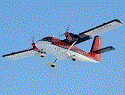

Centerline Thrust Twin Time Vs. Conventional
Okay, so what's the consensus here? Is it worth building a few hundred hours in a 337, or do employers discount that time because it's not a "real" twin? Or do they really care as long as it's multi time? If anyone has any personal experience in this regard I'd like to hear about it.
Understanding begets harmony; in seeking the first you will find the last.

I have 400 hrs on a 337. GREAT aircraft, and it beats any single on the logbook so i say fly it. conv. twins are better for the book but you can fly a 337 in the summer and build 400 multi pic, which is always nice to have.
great aircraft for the bush, gravel and grass strips.
had alot of fun flying them.
Capt
great aircraft for the bush, gravel and grass strips.
had alot of fun flying them.
Capt
-
wha happen
- Rank 8

- Posts: 963
- Joined: Fri Jan 21, 2005 11:39 am

-
alpha speed
- Rank 3

- Posts: 131
- Joined: Sat May 22, 2004 3:48 pm
- Location: Canada

-
golden hawk
- Rank 7

- Posts: 696
- Joined: Thu Oct 07, 2004 8:43 am
-
twinpratts
- Rank (9)

- Posts: 1625
- Joined: Tue Feb 17, 2004 5:38 am
- Location: The Wild Wild West.
- Contact:
-
Flying Low
- Rank 8
- Posts: 928
- Joined: Sun Feb 15, 2004 7:22 pm
- Location: Northern Ontario...why change now?
ZLIN 142C:
Yes it is definately worth building the time on a 337. I flew a push-pull for two summers building over 600 hours MPIC. My next job was right seat on an MU-2 and then an upgrade to Captain seven months later.
Yes it is definately worth building the time on a 337. I flew a push-pull for two summers building over 600 hours MPIC. My next job was right seat on an MU-2 and then an upgrade to Captain seven months later.
"The ability to ditch an airplane in the Hudson does not qualify a pilot for a pay raise. The ability to get the pilots, with this ability, to work for 30% or 40% pay cuts qualifies those in management for millions in bonuses."
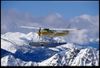
Many idiosyncracies with the push-pull Skymaster. The performance is actually better with the rear engine running, but the hydraulic pump is off the front engine, so systems-wise, you're better off if the rear engine is the one to cave. There is a big placard in front of the piot that reads "DO NOT ATTEMPT SINGLE-ENGINE TAKEOFF" to try and attempt to protect Darwin's disciples  . This feat CAN be accomplished, but you need to get some altitude before retracting the gear, becausew with the doors open (drag chutes deployed) you're going down at between 110 and 140 fpm. Kinda like flying a Semin-hole.
. This feat CAN be accomplished, but you need to get some altitude before retracting the gear, becausew with the doors open (drag chutes deployed) you're going down at between 110 and 140 fpm. Kinda like flying a Semin-hole. Aviation- the hardest way possible to make an easy living!
"You can bomb the world to pieces, but you can't bomb it into peace!" Michael Franti- Spearhead
"Trust everyone, but cut the cards". My Grandma.
"You can bomb the world to pieces, but you can't bomb it into peace!" Michael Franti- Spearhead
"Trust everyone, but cut the cards". My Grandma.
I spent a couple of years in a Huff Puff and although they are a bit of a piece of shit airplane compared to many, they are a twin, you build twin time and they have all the attributes of a twin except for the assymetric thrust. This used to be enough of a factor that Cessna felt it deserved attention but proper training has more or less solved this problem. Just don't get into the habit of shutting down the front engine when you taxi in. It causes the rear engine to overheat in hot weather.
The average pilot, despite the somewhat swaggering exterior, is very much capable of such feelings as love, affection, intimacy and caring.
These feelings just don't involve anyone else.
These feelings just don't involve anyone else.


ZLIN,
I agree with the gang...at the end of the day it's still 'multi'!
What pisses me off is the fact that we as pilots spend our first 3,000 hours having to constantly worry about what kind of time we have.
Right from the beginning (200h) we are told "sorry, you don't have enough time"...and out the door you go.
Then one stumbles on an instructing job and at 800h are told "sorry, but it's only instructor time". Others get a ramp-job and make it on to a 206 and at 1,000h are told, "sorry, but you have no multi-time". Few make it on to an Aztec or C-310 and at 1,200h are told, "sorry, but you don't have enough IFR time". Eventually some make it on to a Navajo or a C-400 and at 2,000h are told, "sorry, but you don't have any Turbine time". The lucky ones who make it to Turbines apply for jet jobs are told, "sorry but you have no jet time"!
It never ends!!
On the bright side...we all make it in the end!!
G
I agree with the gang...at the end of the day it's still 'multi'!
What pisses me off is the fact that we as pilots spend our first 3,000 hours having to constantly worry about what kind of time we have.
Right from the beginning (200h) we are told "sorry, you don't have enough time"...and out the door you go.
Then one stumbles on an instructing job and at 800h are told "sorry, but it's only instructor time". Others get a ramp-job and make it on to a 206 and at 1,000h are told, "sorry, but you have no multi-time". Few make it on to an Aztec or C-310 and at 1,200h are told, "sorry, but you don't have enough IFR time". Eventually some make it on to a Navajo or a C-400 and at 2,000h are told, "sorry, but you don't have any Turbine time". The lucky ones who make it to Turbines apply for jet jobs are told, "sorry but you have no jet time"!
It never ends!!
On the bright side...we all make it in the end!!
G
"Slow and steady wins the race"

Imagine this;
On take off positive rate of climb BANG!!! an engine blows up. Trees in front of you on an upslope hill, at the same time (as chance would have it) your engine gauges go U/S AND it's at night and the instrument lighting goes U/S and the 'dead foot-dead engine' chant is useless...in a 337.
Pulling up the gear before cleared of all obstacles will surely make things worse with the gear doors on this machine act as 'spoilers' (Someone @ Cessna put a lot of thought into this )
Unreal you ask? When the conditions are set up...anything can happen
Now what?
A C337 is in fact would be harder to negotiate than a conventional twin with an engine out. The 'feel good' notion of a non-violent tug to the right or left is just a delay of hitting the weeds. On take off roll, you won't be heading for the ditch on the either side of the runway, but if you don't handle the engine out procedures correctly...you'll be not far off the end of the runway, taking away the fact that FAR21 which states small twins don't have to be certified to be able to climb initially on an engine out scenario under certain conditions.
Next time someone questions your 337 time...memorize the above scenario.
On take off positive rate of climb BANG!!! an engine blows up. Trees in front of you on an upslope hill, at the same time (as chance would have it) your engine gauges go U/S AND it's at night and the instrument lighting goes U/S and the 'dead foot-dead engine' chant is useless...in a 337.
Pulling up the gear before cleared of all obstacles will surely make things worse with the gear doors on this machine act as 'spoilers' (Someone @ Cessna put a lot of thought into this
)Unreal you ask? When the conditions are set up...anything can happen
Now what?
A C337 is in fact would be harder to negotiate than a conventional twin with an engine out. The 'feel good' notion of a non-violent tug to the right or left is just a delay of hitting the weeds. On take off roll, you won't be heading for the ditch on the either side of the runway, but if you don't handle the engine out procedures correctly...you'll be not far off the end of the runway, taking away the fact that FAR21 which states small twins don't have to be certified to be able to climb initially on an engine out scenario under certain conditions.
Next time someone questions your 337 time...memorize the above scenario.
Iambirddog - First of all, it is FAR 23 and CARS 523 and you are correct, the Mixmaster does not have to maintain a positive rate of climb on one engine. This is true of any twin with a Vso of 61Kts or less and MTOW of 6000 lbs or less. All that is required is that the rate of climb, positive or negative, has to be calibrated and published in the AFM. The airplane has to be @ 5000' ISA, configured for single engine climb, gear up, prop feathered and MCP on operating engine. One big advantage of a Sky Maggot is that without a Vmc, the airplane can be flown at best angle of climb without consideration to directional control. So in your worst case scenerio, a bit far fetched in my humble opinion, the proper procedure, as per the AFM, is to continue straight ahead @ 1.3 Vso and allow the remaining engine to expedite progress towards the scene of the crash. One quick hint; if you have landing lights, turn them on. If you do not like the looks of the area you are about to land in, turn the lights off!!!! Just shut off the fuel and electrics before you hit those trees, because you are in the same boat as a single engined airplane when one quits. It is important to remember this. The same goes for a King Air 100, Cheyenne, Navajo Caravan, the list goes on, except those airplanes have to maintain a positive climb @ 5000 ISA.Remember those numbers Vso 61Kts or less and/or Max Gross Take-off Weight of 6000 lbs or less, you are in a single until you have max power, the gear is up, the prop is feathered and you have Vyse. In actuality, the 337 "Push me Pull you" should hold about 8000 ft on the front engine and 8500 on the rear. The second engine is just a "feel good" thing. Sort of like Paul Martins election promises. Other than that the old "Suck and Blow" is not that bad an airplane. Just keep one thing in mind. One problem area with "Old Tanglefoot" was electrical wiring to the landing gear. If a wire breaks, the landing gear doors will not open and the gear will not come down so you just have to do the same as the Navajo, pull the landing gear C/B or kill all electrics and hand pump the gear down. Also,if you are one of those cowboys who like to pull the gear up the instant the airplane leaves the ground, remember the gear drops down as it retracts and people have been known to drag the gear during retraction. That is why it has the nickname "tanglefoot". On th positive side, visibility is great and it is a warm airplane in winter, as long as the front engine is running. (heat muffs aka singles)
The average pilot, despite the somewhat swaggering exterior, is very much capable of such feelings as love, affection, intimacy and caring.
These feelings just don't involve anyone else.
These feelings just don't involve anyone else.

-
Demosthenes
- Rank 1

- Posts: 35
- Joined: Mon May 30, 2005 2:08 pm
- Location: Canada
My personal opinion is that left seat in a centre line thrust (MPIC) is WAY better than right seat in a conventional twin. Doesn't matter what type of plane it is, you'll inevitably upgrade faster with a couple hundred hours of multi PIC.
D.
D.
Altitude, Airspeed and Brains,
You always need at least two...
You always need at least two...
-
desksgo
- Rank 10

- Posts: 2850
- Joined: Thu Feb 19, 2004 12:05 pm
- Location: Toy Poodle Town, Manitoba
- Contact:
No they don't just let some Joe Brutal spotter ROLL in and fly a +200kt machine at treetop level; that would just be silly.Rudy wrote:Commanders, sorry. Is it usually the fire spotter pilots that get upgraded on to them?
Last edited by desksgo on Thu Jun 09, 2005 7:30 am, edited 1 time in total.
Thanks guys, that helps a lot. This is a thorny industry careerwise, and it's always good to get some input on your decisions. I appreciate it.
As an added bonus, I now have a few more nicknames for the 337 to add to my list.
As an added bonus, I now have a few more nicknames for the 337 to add to my list.
Understanding begets harmony; in seeking the first you will find the last.